
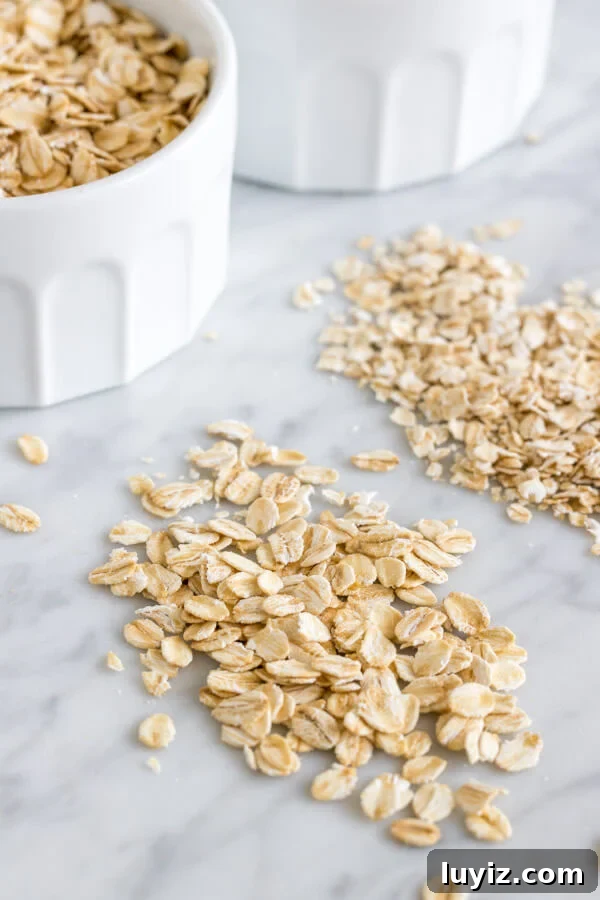
Quick oats vs rolled oats? If you’ve ever made oatmeal-raisin cookies or homemade granola bars, you’ve probably wondered which oats to use, why it matters, or whether you can skip them altogether. This guide explains baking with oats, the differences between oat types, and how they affect texture and flavor.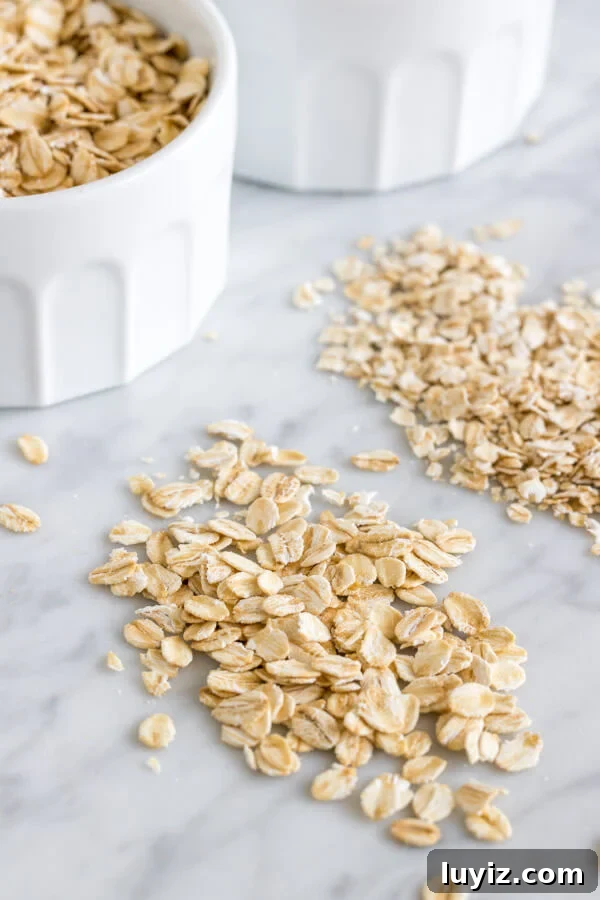
Whether you’re prepping apple crisp or chewy oatmeal cookies, picking the right oats makes a big difference. I often get questions about substitutions and modifications, so this article covers everything: which oat to use in baking, common swaps, measurements, and how oats influence the final result.
So grab an oatmeal cookie and let’s get started.
What do oats do in baking?
Oats add texture, moisture absorption, and a toasty, slightly nutty flavor to baked goods. Because they’re whole grain, oats also contribute a heartier, more wholesome feel. In many recipes they help balance fat and liquids, support structure, and create chewiness—qualities that flour alone doesn’t provide.
Types of oats
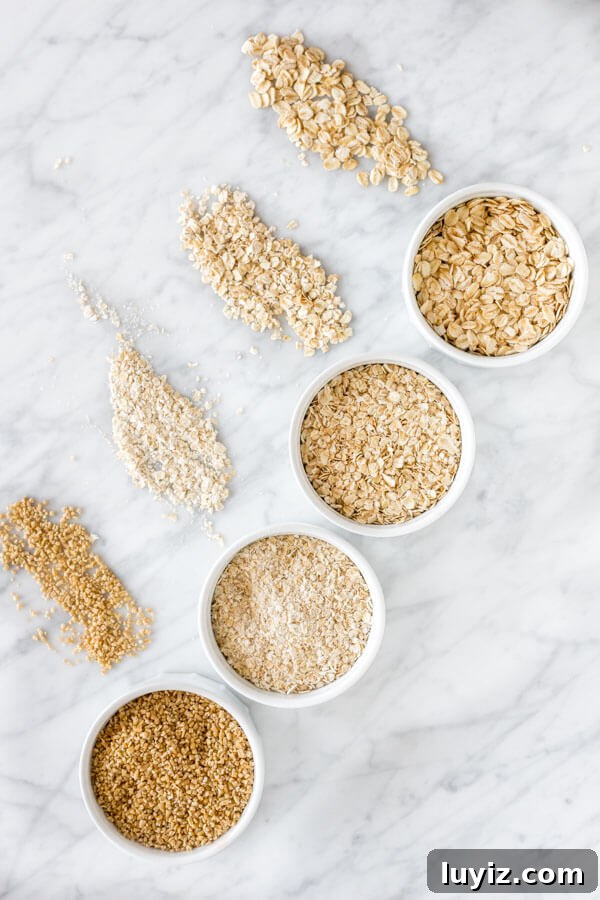
The most common choices for baking are varieties of rolled oats: old-fashioned and quick oats. Instant and steel-cut oats behave differently and are used less often in standard baked goods.
Old-Fashioned Oats
Also called large-flake or rolled oats, old-fashioned oats are steamed and rolled flat. They hold their texture in baking, creating chewy bits and a coarser crumb—ideal for crumbles, streusels, and cookies where you want visible oat pieces and a nutty bite.
Quick Oats
Quick oats are rolled oats that are steamed, flattened, and then chopped into smaller pieces. Their uniform, smaller size lets them hydrate and soften faster. In baking they produce a finer, less chewy texture than old-fashioned oats and are often chosen when a smoother crumb is desired.
Instant Oats
Instant oats are rolled and cut even finer than quick oats, often processed to cook very quickly. Their texture is much finer—near flour-like—so they behave differently in recipes. Because of that, instant oats are not a reliable substitute for rolled or quick oats in most baking recipes.
Steel-Cut Oats
Steel-cut oats are oat groats chopped into pieces rather than steamed and rolled. They are dense and chewy when cooked and remain quite crunchy if used raw. For that reason, steel-cut oats are generally unsuitable for typical baking unless a recipe explicitly calls for them.
Weights and measurements
- 1 cup uncooked old-fashioned oats = 90 grams (3.17 ounces)
- 1 cup uncooked quick oats = 90 grams (3.17 ounces)
- 1 cup uncooked instant oats = 120 grams (4.23 ounces)
- 1 cup uncooked steel-cut oats = 200 grams (7.05 ounces)
Common questions
I don’t like oats—can I leave them out? Generally no. Unless a recipe explicitly states oats are optional, they shouldn’t be omitted. Oats absorb liquid, add structure, and create texture. For example, oatmeal cookies without oats will be excessively buttery and lack body.
Can I substitute flour for oats? Not recommended. Flour and oats perform different roles: flour mainly provides structure while oats contribute texture and absorb moisture differently. Replacing oats with flour usually yields a drier, crumblier result.
Are old-fashioned oats and quick oats interchangeable? Often they can be swapped 1:1, but the texture will change. Old-fashioned oats give more chew and visible flakes; quick oats produce a finer texture. Follow the recipe when precision matters.
Are oats gluten-free? Oats themselves are naturally gluten-free, but cross-contamination can occur during processing. If you need gluten-free oats, choose products labeled gluten-free.
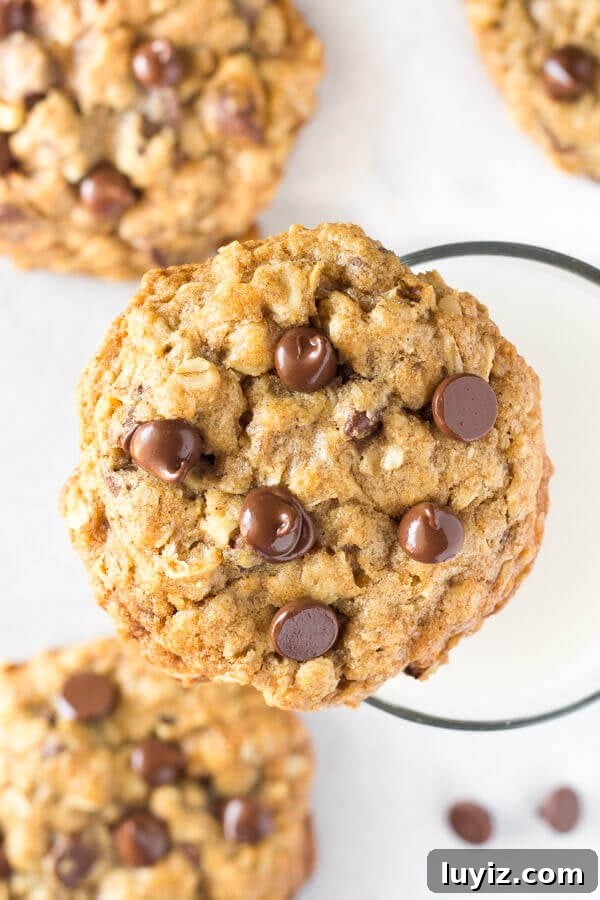
If you’re looking for oat recipes, try:
- Oatmeal Chocolate Chip Cookies
- Oatmeal Raisin Cookies
- Apple Crisp
- Berry Crumble Bars
- Strawberry Rhubarb Crisp
Using the right oat for your recipe ensures the texture and flavor you expect—chewy, tender, or fine—so you can get consistent, delicious results every time.