Fresh basil pesto is a versatile, aromatic sauce that pairs beautifully with pasta, sandwiches, pizza, roasted vegetables, and as a flavorful dip. Bright basil, garlic, and olive oil combine to create a fragrant, savory condiment that elevates simple dishes in minutes.
This recipe was inspired by generous summer basil harvests. If you, like me, receive armfuls of basil from friends or family, this pesto is an excellent way to use it while the leaves are at their peak. The recipe below is quick to make and easy to adjust to your taste.
If you make a large batch or don’t plan to use it right away, pesto stores well in the freezer. Portion it into small airtight containers or an ice cube tray for single-serve portions to enjoy later without waste.
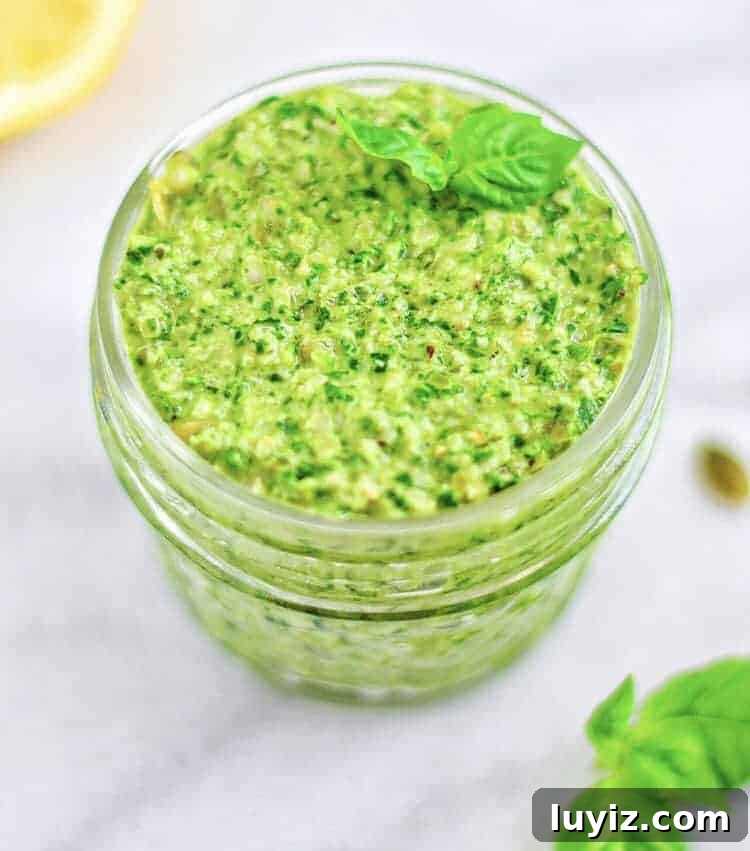
Basil Pesto
Author: Kelsey Riley
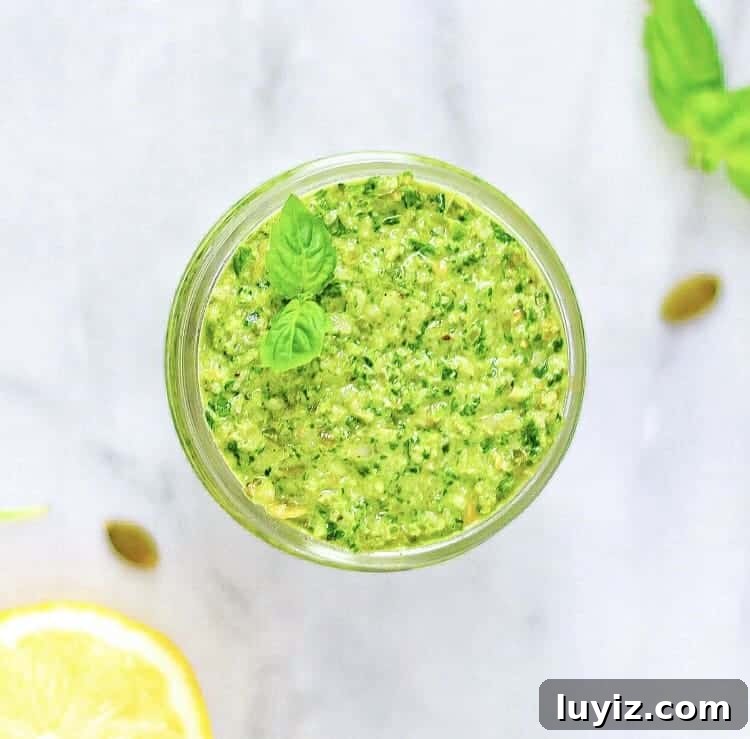
Fresh pesto is a bright, savory addition to many dishes. This version uses basil and a touch of kale for color and depth, pepitas for a nutty texture, garlic for bite, olive oil for silkiness, and lemon juice to brighten and help preserve the vibrant green color.
Prep Time: 10 mins
Total Time: 10 mins
Servings: 8
Course: Main Course / Condiment
Ingredients
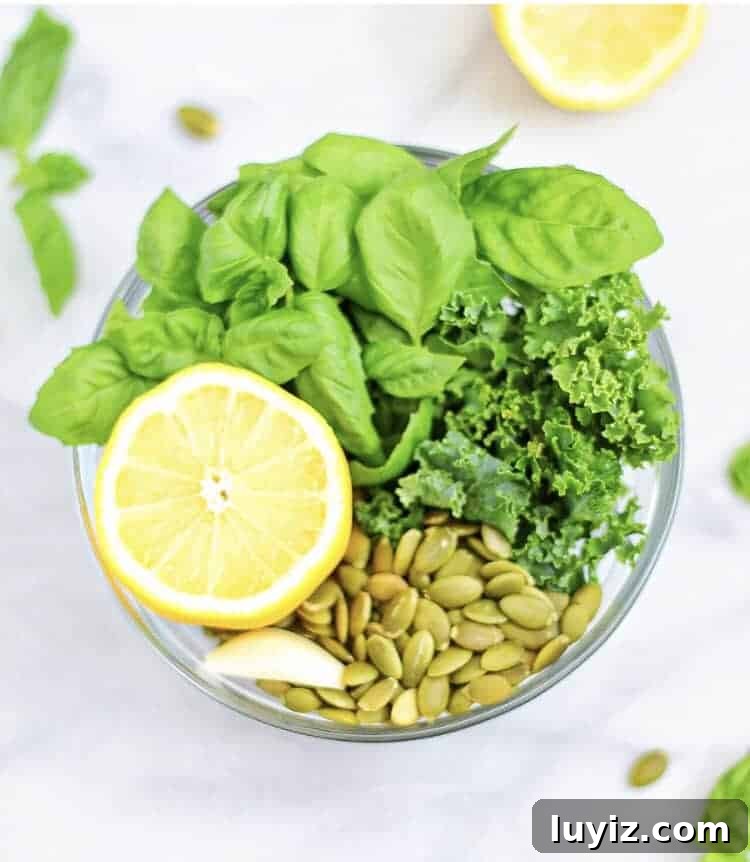
- 1 cup fresh basil leaves
- 1 cup kale (stems removed)
- 2 cloves garlic, medium
- ½ cup pepitas (pumpkin seeds) — can substitute pine nuts
- ¼ cup olive oil (add more for a smoother consistency)
- 2 tablespoons lemon juice
- ¼ teaspoon salt (adjust to taste)
- ¼ teaspoon black pepper (adjust to taste)
Instructions
- Combine all ingredients in a food processor. Pulse until the mixture comes together and reaches your preferred texture; about one minute of processing will yield a chunky, rustic pesto.
- If you prefer a smoother, more pourable pesto, add additional olive oil a tablespoon at a time and process until you reach the desired consistency.
- Taste and adjust seasoning as needed—more salt, pepper, or lemon juice can be added to balance the flavors.
- Serve tossed with pasta, spread on sandwiches, spooned over pizza, or used as a dip for vegetables and crackers.
Storage and Freezing
Store pesto in an airtight container in the refrigerator for up to one week. For longer storage, freeze pesto in small portions: spoon into an ice cube tray, freeze until solid, then transfer cubes to a freezer bag. Thaw as needed and stir in a little olive oil if the texture seems thick after thawing. Freezed portions are convenient for single servings and help prevent waste.
Variations and Tips
- Nut substitutes: pepitas work well and are more budget-friendly than pine nuts. Walnuts or almonds are also good alternatives.
- Greens: the recipe includes kale for boosted color and body, but you can use all basil if you prefer a purer basil flavor.
- Cheese options: if you eat dairy, stir in grated Parmesan or Pecorino for a richer, creamier pesto. For a dairy-free version, omit cheese or use a plant-based alternative.
- Texture tips: for a chunkier pesto, pulse the processor briefly; for a silky finish, blend longer and add more oil.
- Lemon juice helps preserve the bright green color; add it gradually and taste as you go.
Serving Suggestions
Toss pesto with hot pasta and a splash of pasta cooking water to create a glossy sauce. Spread on toasted bread for an easy bruschetta, mix into grain bowls, stir into soups for extra flavor, or serve alongside roasted vegetables and grilled proteins. Its concentrated flavor makes it a flexible finishing touch for many dishes.
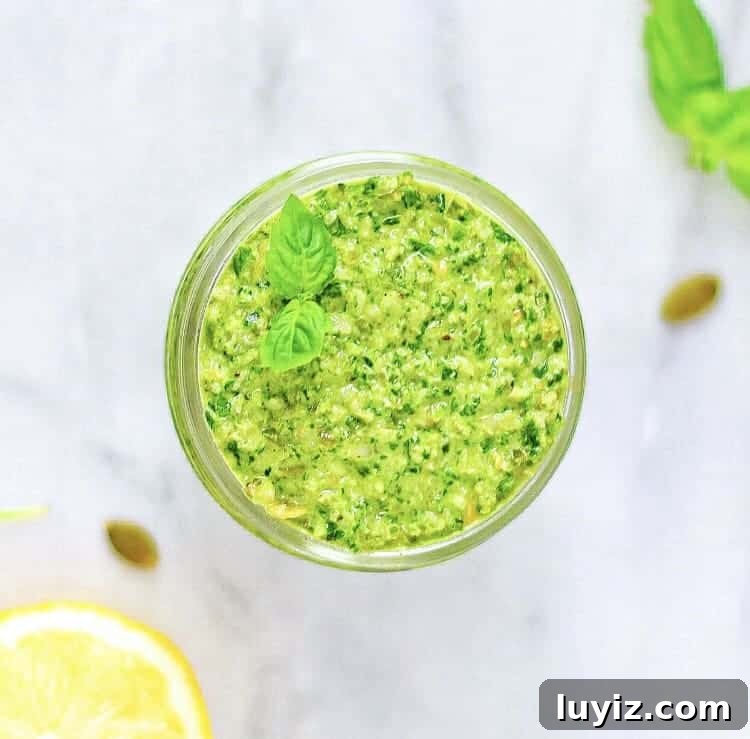
Enjoyed this pesto? Try pairing it with a hearty lentil bolognese or use it to brighten simple pasta dishes. If you make this recipe, I’d love to see how you serve it—share photos on social media and tag @plantedinthekitchen or use the hashtag #plantedinthekitchen.