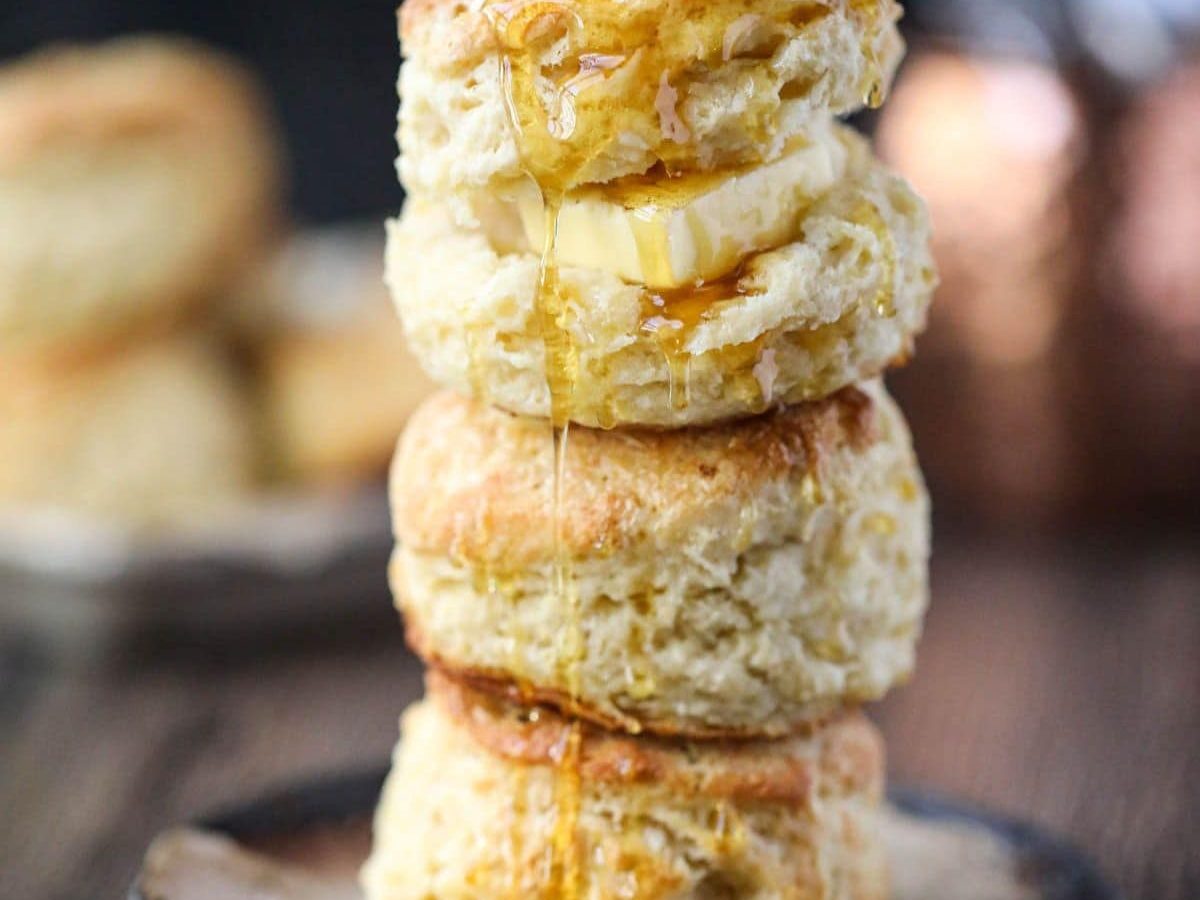
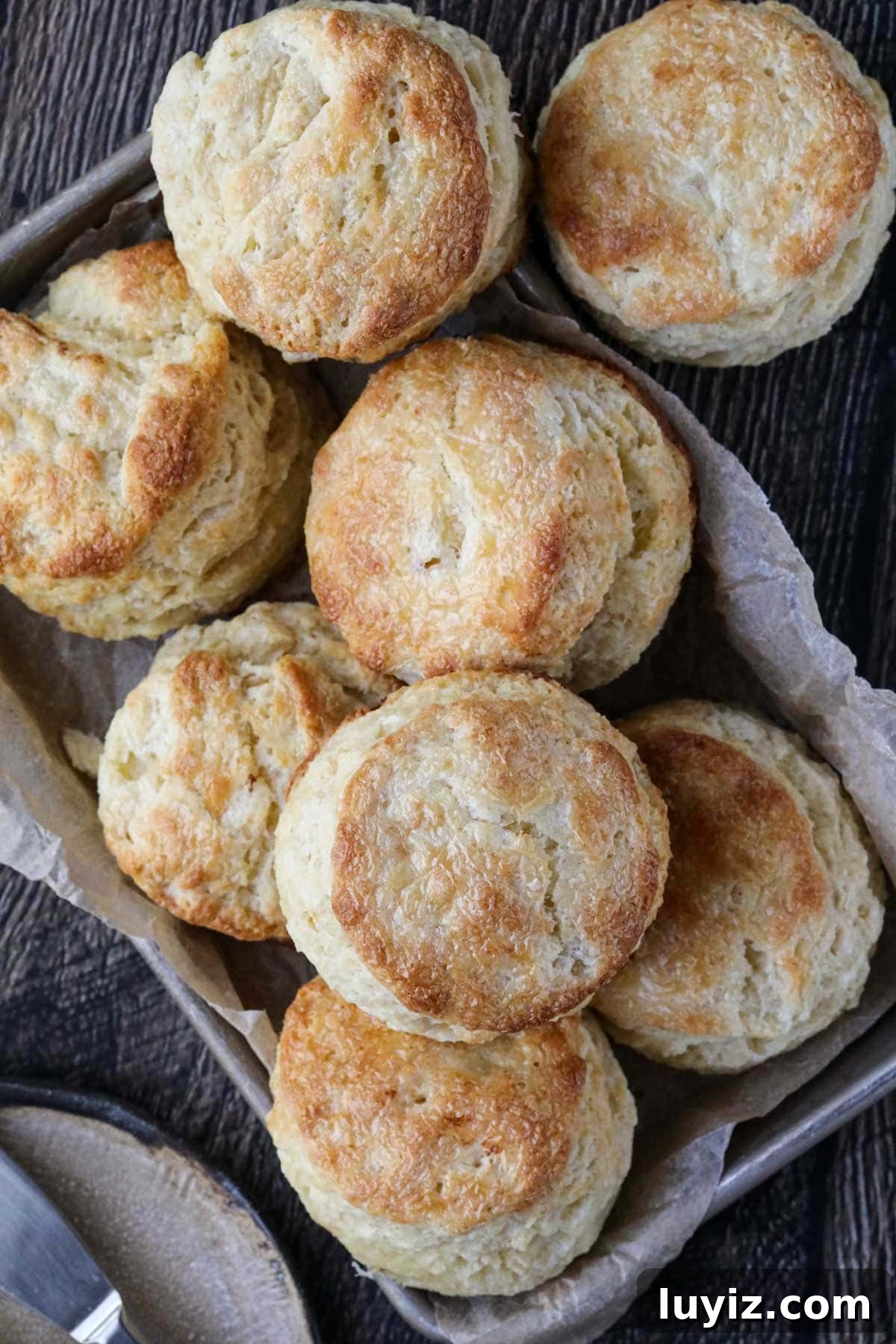
These scratch-made Southern Buttermilk Biscuits are extra buttery and layered for flakiness. Soft and fluffy inside with perfectly crisp bottoms, they’re ideal served warm with maple syrup, honey, or jam for an authentic Southern treat.
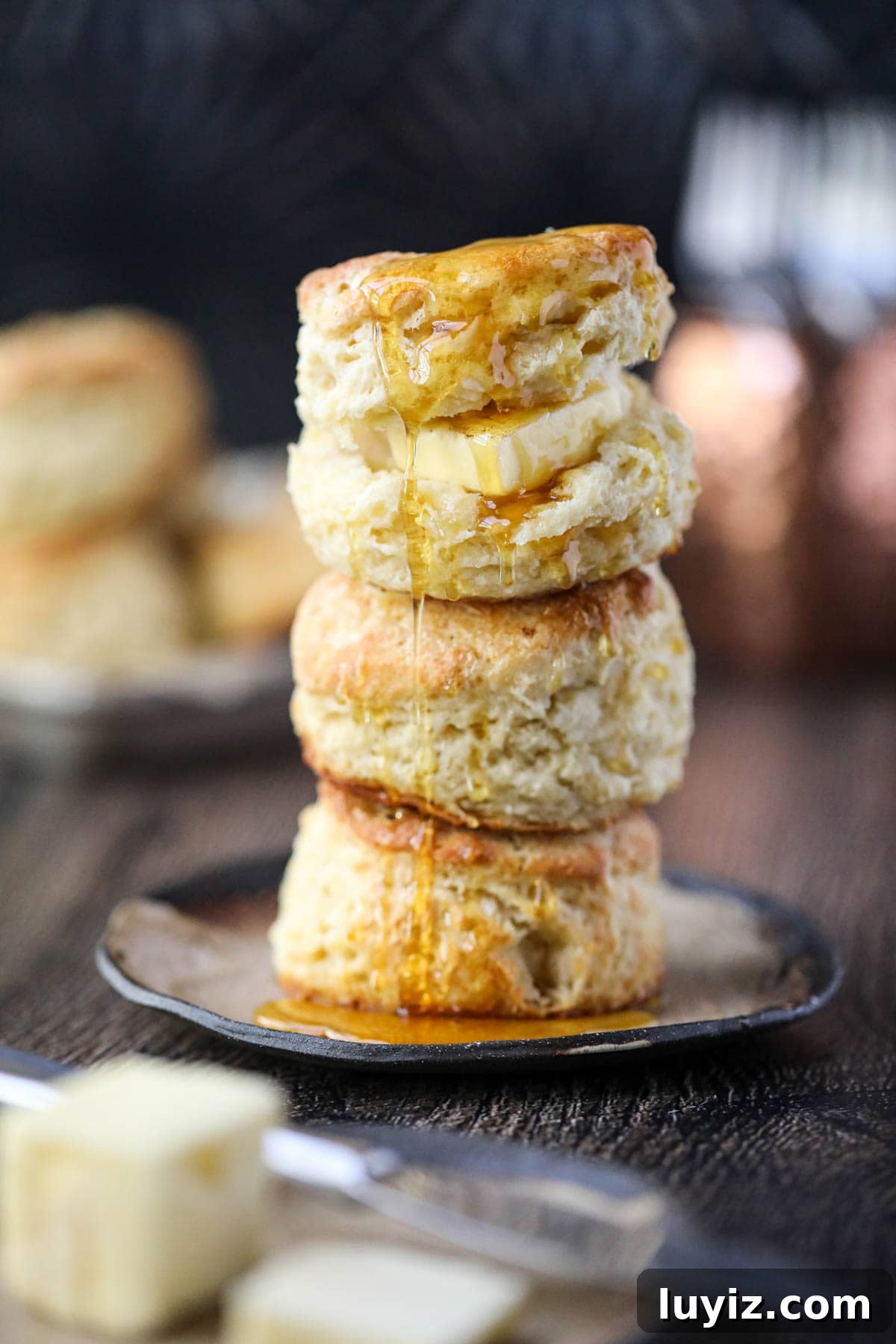
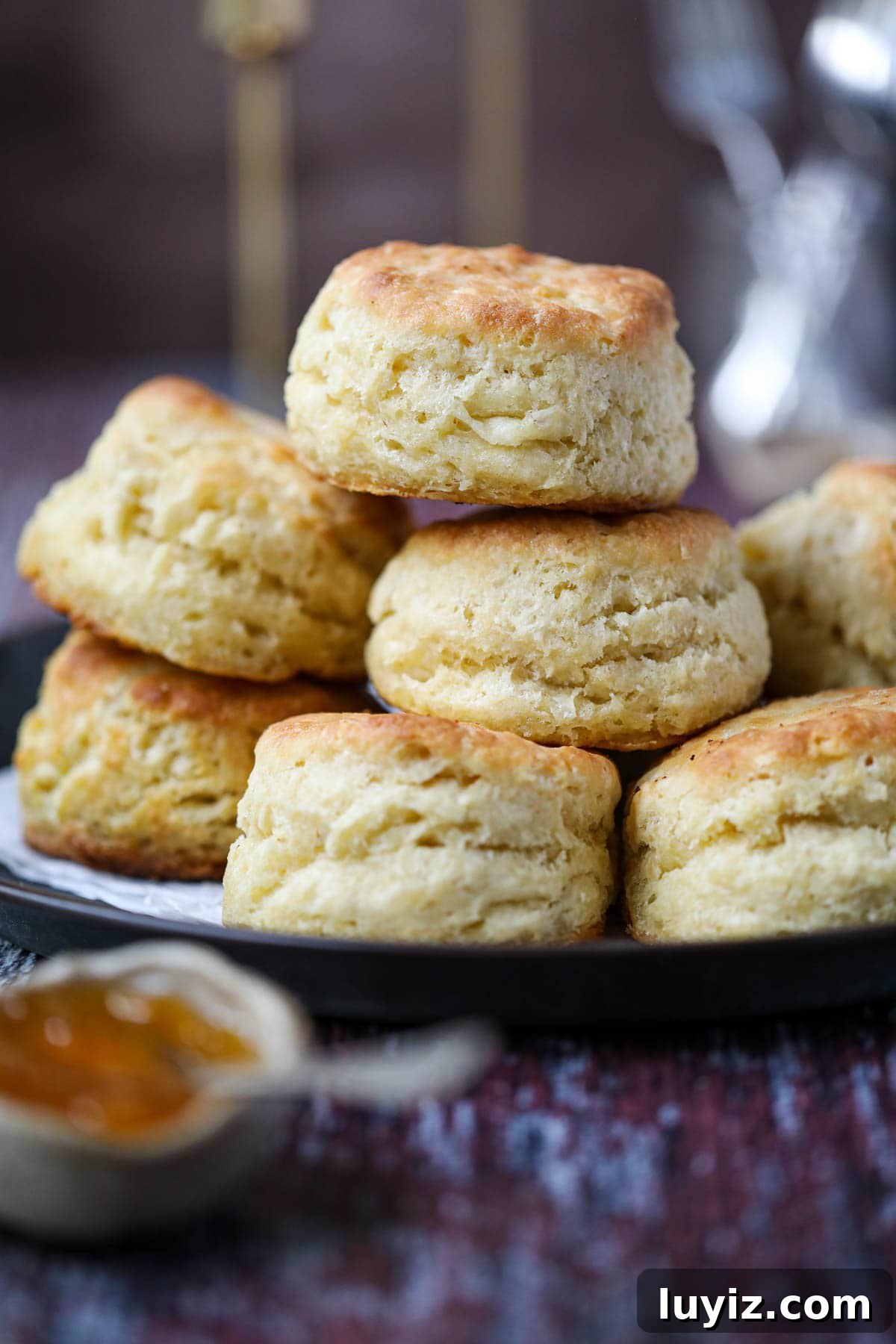
You can’t beat a good homemade biscuit in the South — we enjoy them at breakfast, lunch, and dinner. This recipe has been refined for tender layers, a buttery flavor, and consistent rise. Use it as a base for savory or sweet variations, or keep it classic for a perfect side.
Ingredients You Need To Make This Recipe
- All-purpose flour — provides the right protein content for flaky, tender biscuits.
- Baking powder and baking soda — leavening agents that help the biscuits rise.
- Salt — balances and enhances flavor.
- Granulated sugar — a touch of sweetness for tenderness and improved texture.
- Unsalted butter — very cold, cut into cubes for flaky layers and rich flavor.
- Buttermilk — cold, for tender crumb and slight tang.
- Heavy cream or melted butter — to brush the tops before baking for color and shine.
How To Make This Recipe
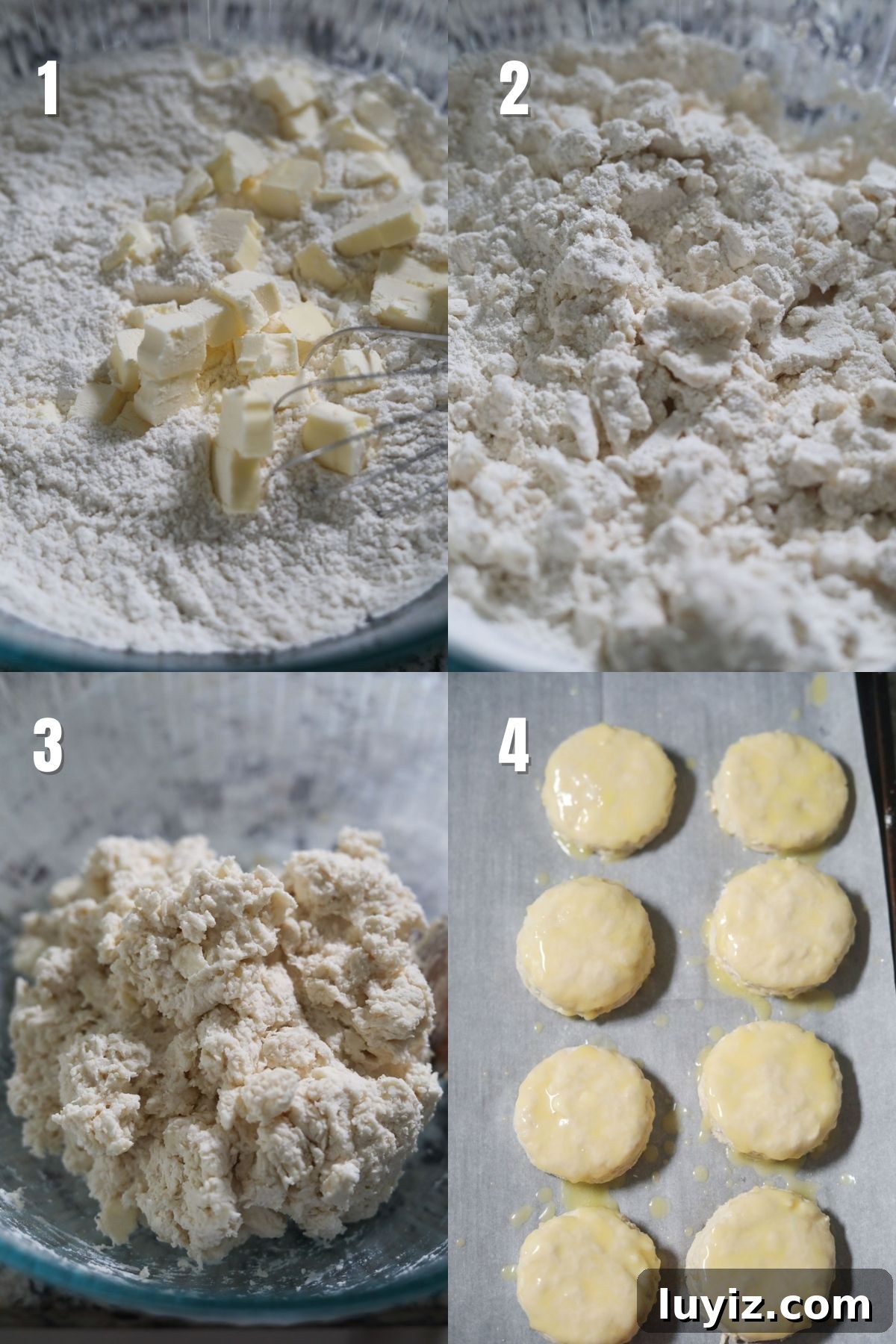
- Preheat oven to 450°F (232°C). Line a baking sheet with parchment paper. Cut the butter into cubes and chill in the freezer for about 5 minutes so it stays very cold.
- In a large bowl, whisk together the flour, baking powder, baking soda, salt, and sugar. Add the cold butter cubes and toss to coat with flour. Using your fingertips, pinch the butter pieces until the mixture resembles coarse crumbs. A few larger butter pieces are fine — they create flaky pockets.
- Pour 1 cup cold buttermilk into the dry ingredients and stir with a wooden spoon until the flour is moistened. Use your hands to assess the dough’s texture. If it’s too dry to come together, add up to 1/4 cup more buttermilk. The dough should be slightly sticky but not wet; a little crumbliness that can be pressed into a ball is ideal.
- Turn the dough onto a lightly floured surface and gently pat into a rectangle about 1 inch thick. Fold the top third over toward the center, then fold the bottom third up over that (like a letter). Rotate the dough 90 degrees, pat it back to 1 inch thickness, and repeat the fold two more times. These folds build the flaky layers.
- Use a 2 3/4-inch biscuit cutter to cut out 6 biscuits. Gather scraps, reshape gently, and cut 2 more for a total of 8 biscuits.
- Place the biscuits close together on the prepared baking sheet so they support each other and rise taller. Brush the tops with heavy cream or melted butter. Bake 12–15 minutes, until golden brown on top. Serve warm.
Variations and Substitutions
- Substitute whole milk or half-and-half for buttermilk in a pinch, but cold buttermilk gives the best tenderness.
- Shortening or lard can replace butter for a different texture and traditional flavor; butter gives the best taste and browning.
- Mix-ins and flavor variations: grated cheddar or parmesan, fresh or dried herbs, fresh fruit like blueberries, sun-dried tomatoes, pureed sweet potato, canned pumpkin, or warm spices such as cinnamon and nutmeg. Add cheese or fruit sparingly so the dough still comes together.
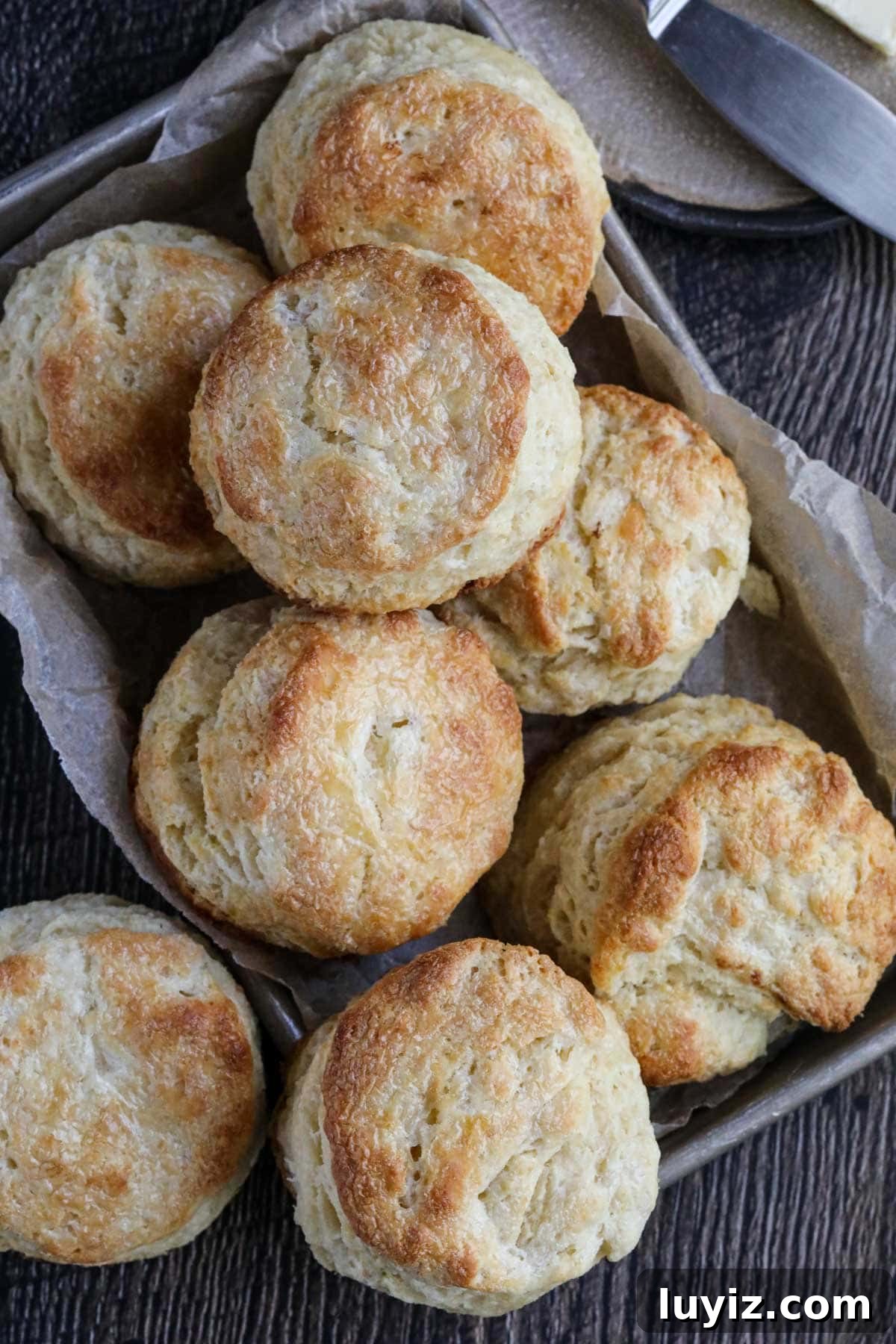
How To Make the Fluffiest Biscuits
- Measure flour correctly: spoon flour into the cup and level it, or use a kitchen scale. Too much flour makes dense biscuits.
- Use fresh leavening: baking powder and baking soda older than six months can lose potency and give poor rise.
- Keep butter very cold: solid butter creates steam pockets as it melts in the oven, producing flaky layers.
- Keep buttermilk cold: this helps the butter remain chilled until baking.
- Don’t overwork the dough: mix until just combined and avoid excessive handling to prevent tough biscuits.
- Cut straight down with the cutter: do not twist, which can seal edges and impede rising.
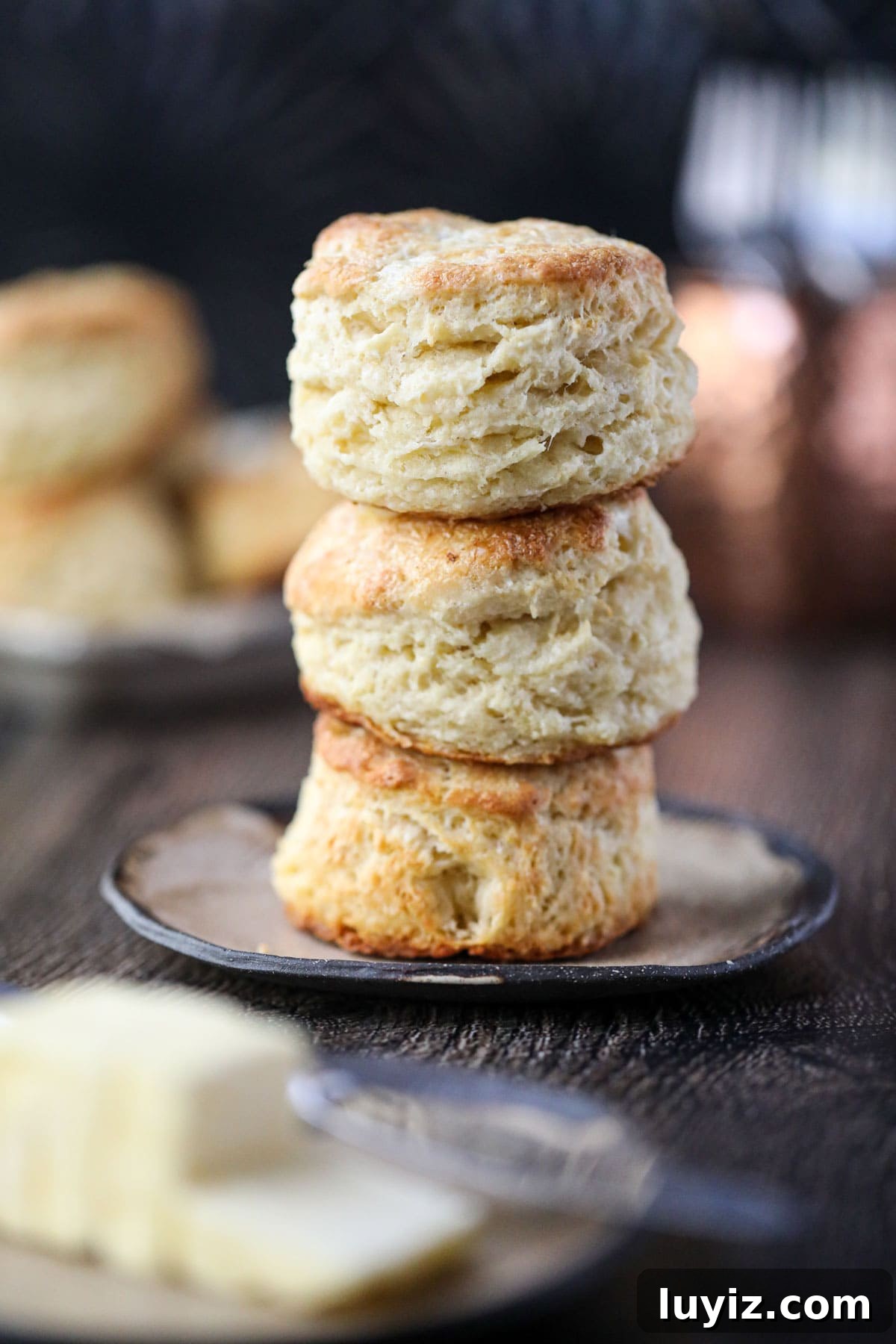
What Is the Best Flour For Homemade Biscuits?
All-purpose flour is recommended for biscuits because it typically contains about 10–12% protein, giving the right balance of tenderness and structure. Bread flour is higher in protein and can yield tough, chewier results, while cake flour is lower in protein and can be too delicate on its own. You can combine cake flour with all-purpose if you want an extra tender crumb, but all-purpose works best by itself for flaky, reliable biscuits.
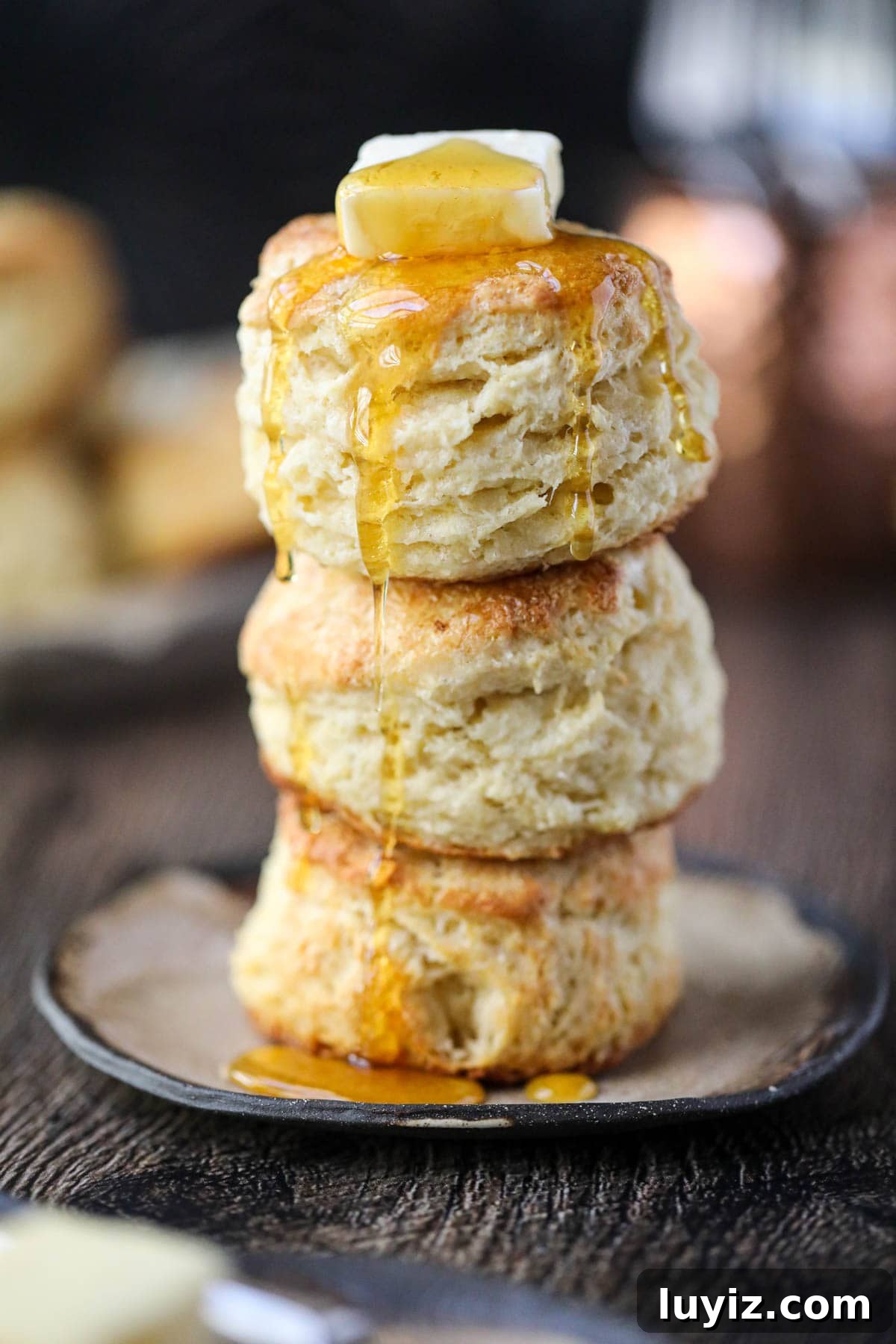
Do Biscuits Need To Rise Before Baking?
Biscuits are a quick bread and do not require a rising time before baking. Their lift comes from the leavening agents and the pockets of cold fat in the dough that steam during baking.
Make-Ahead and Storing Instructions
You can prepare the dough a day ahead: shape it into a disc, wrap tightly, and refrigerate until ready to roll and cut. Alternatively, cut the biscuits and store them, covered, in the baking pan in the refrigerator until baking. Leftovers keep in an airtight container at room temperature for up to two days or in the refrigerator for up to a week. Reheat gently in a low oven to refresh texture.
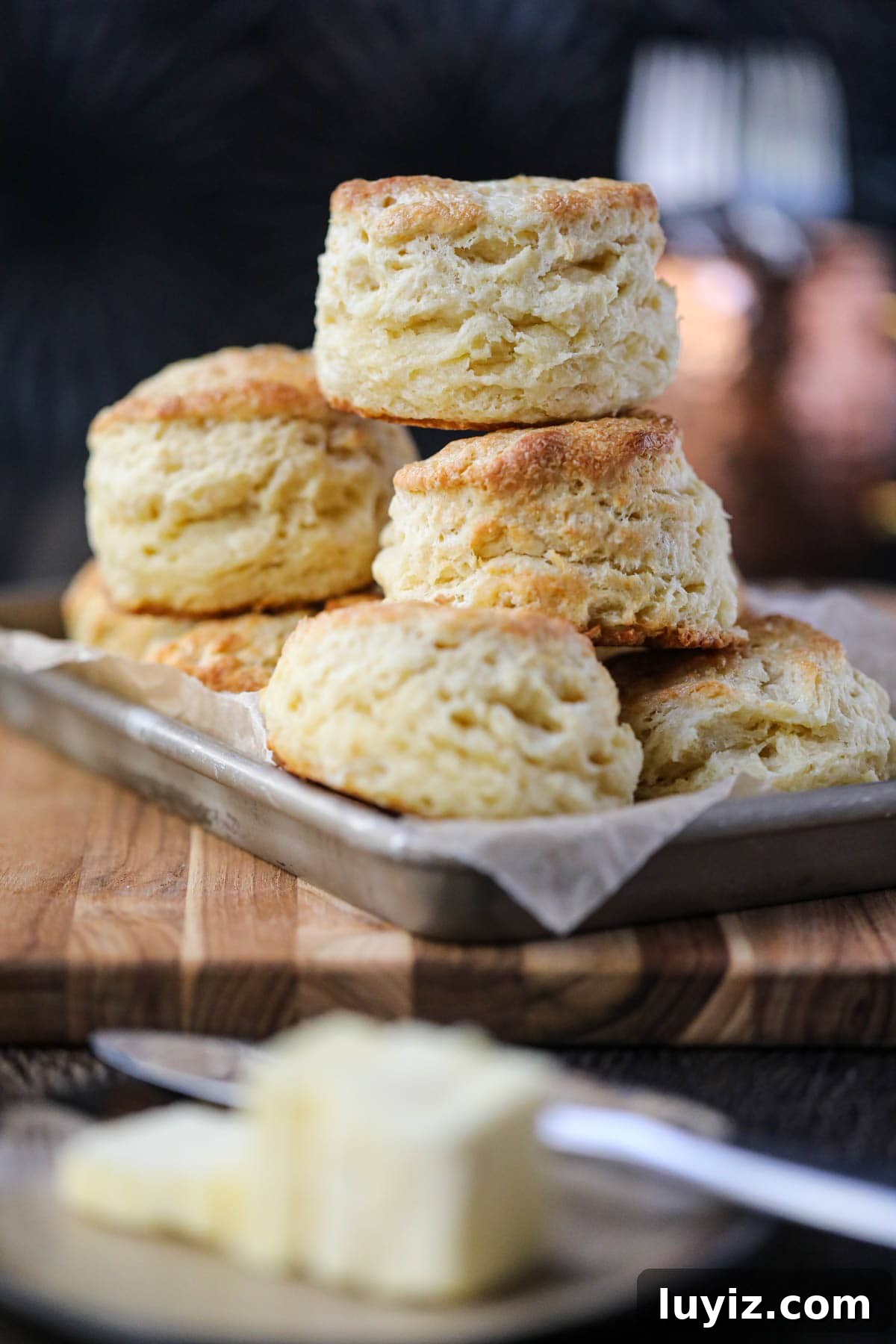
Recommended Tools For This Recipe
- Biscuit cutter (about 2 3/4 inches)
- Baking sheet lined with parchment
- Mixing bowls
- Pastry brush for glazing tops
- Kitchen scale (optional, for precise flour measurement)
What To Serve With Southern Buttermilk Biscuits
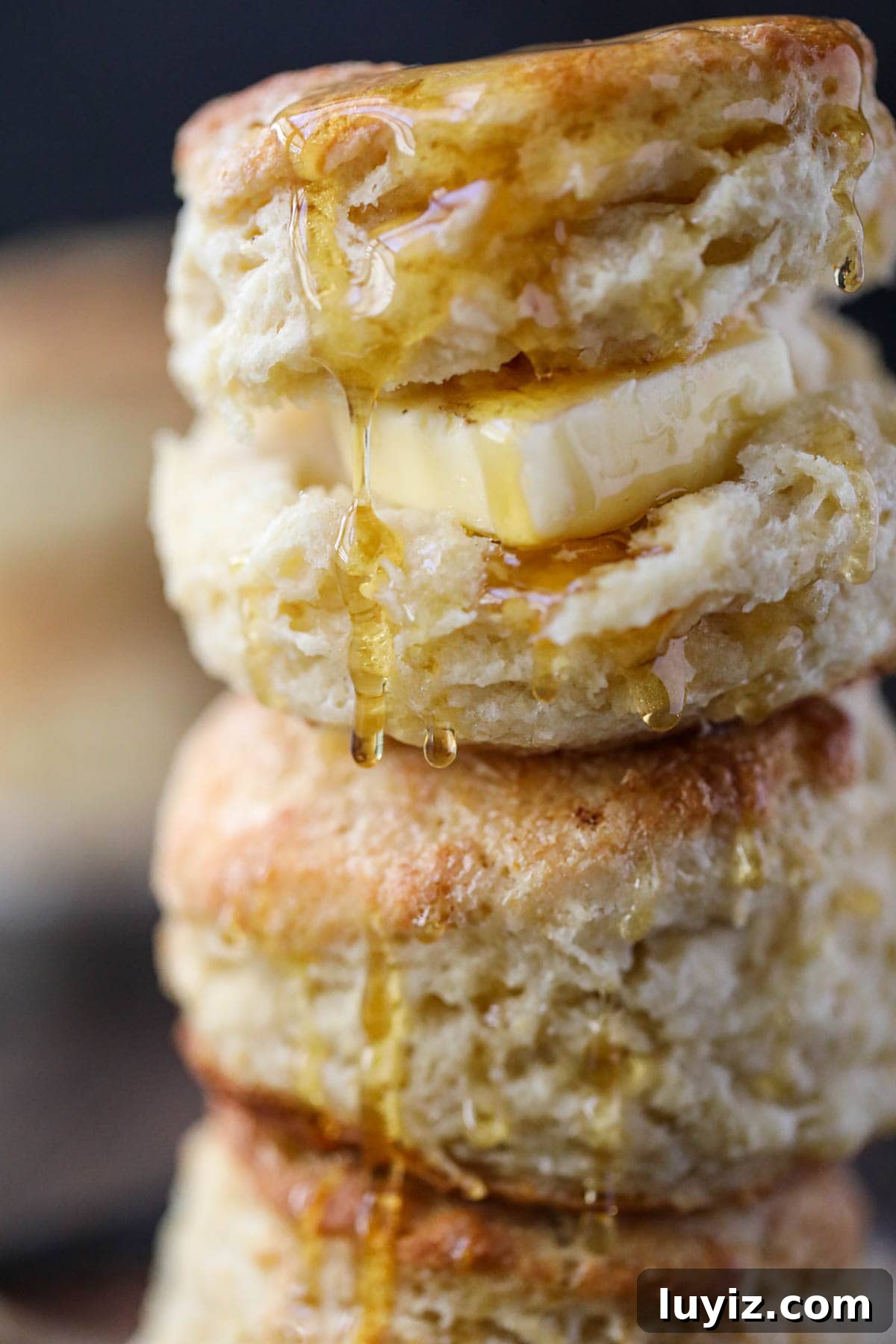
Buttermilk biscuits pair well with almost any Southern dish. Serve them with eggs and bacon for breakfast, smothered in sausage gravy for brunch, alongside fried or smothered chicken for dinner, or with greens and stews as a hearty side. They’re equally delightful with honey, butter, or preserves.
Recipe
Perfect Southern Buttermilk Biscuits
Author: Ashley Boyd
These biscuits are buttery, flaky, and tender—perfect warm with honey or as a hearty side.
Prep Time: 10 mins | Cook Time: 15 mins | Total Time: 25 mins
Course: Bread, Breakfast, Side Dish | Cuisine: American
Servings: 8 biscuits | Calories: 317 kcal per biscuit
Ingredients
- 2 1/2 cups all-purpose flour (spooned and leveled)
- 4 teaspoons baking powder
- 1/2 teaspoon baking soda
- 2 teaspoons granulated sugar
- 1 teaspoon salt
- 10 tablespoons unsalted butter, very cold, cut into cubes
- 1 to 1 1/4 cups cold buttermilk (whole or low-fat)
- Heavy cream or melted butter for brushing the tops
Instructions
- Preheat oven to 450°F (232°C). Line a baking sheet with parchment paper. Chill the cubed butter briefly if it has softened.
- Whisk flour, baking powder, baking soda, sugar, and salt in a large bowl. Add cold butter and work it into the flour with your fingertips until the mixture resembles coarse crumbs, leaving some larger pieces of butter.
- Pour in 1 cup cold buttermilk and stir until the dough comes together. Add up to 1/4 cup more buttermilk if needed — the dough should be slightly sticky but not wet.
- Turn the dough onto a lightly floured surface, pat into a 1-inch-thick rectangle, fold the top third over, then the bottom third. Rotate, pat to 1 inch, and repeat the folding two more times to build layers.
- Cut with a 2 3/4-inch cutter into 6 biscuits, reshape scraps to cut 2 more. Arrange biscuits close together on the sheet, brush tops with cream or melted butter.
- Bake 12–15 minutes until golden brown. Serve warm.
Notes
- Measure flour correctly to avoid dense biscuits. A kitchen scale gives best results.
- Keep butter and buttermilk cold for maximum flakiness.
- Avoid overmixing or overworking the dough to keep biscuits tender.
- Store leftovers in an airtight container at room temperature for up to two days or refrigerate up to a week. Reheat in a low oven to refresh.
Nutrition (per biscuit)
Calories: 317 kcal | Carbohydrates: 26.8 g | Protein: 4.4 g | Fat: 14.3 g | Saturated Fat: 8.6 g | Sodium: 351 mg | Fiber: 0.9 g | Sugar: 3.4 g