Buttery Chocolate Croissant Bread Loaf
This Chocolate Croissant Loaf brings the buttery, flaky layers of a croissant together with rich dark chocolate in one bread…
- Prep
- 30 mins
- Cook
- 1 hr
- Rise Time + Lamination
- 5 hrs 30 mins
- Total
- 7 hrs
- Makes
- 8
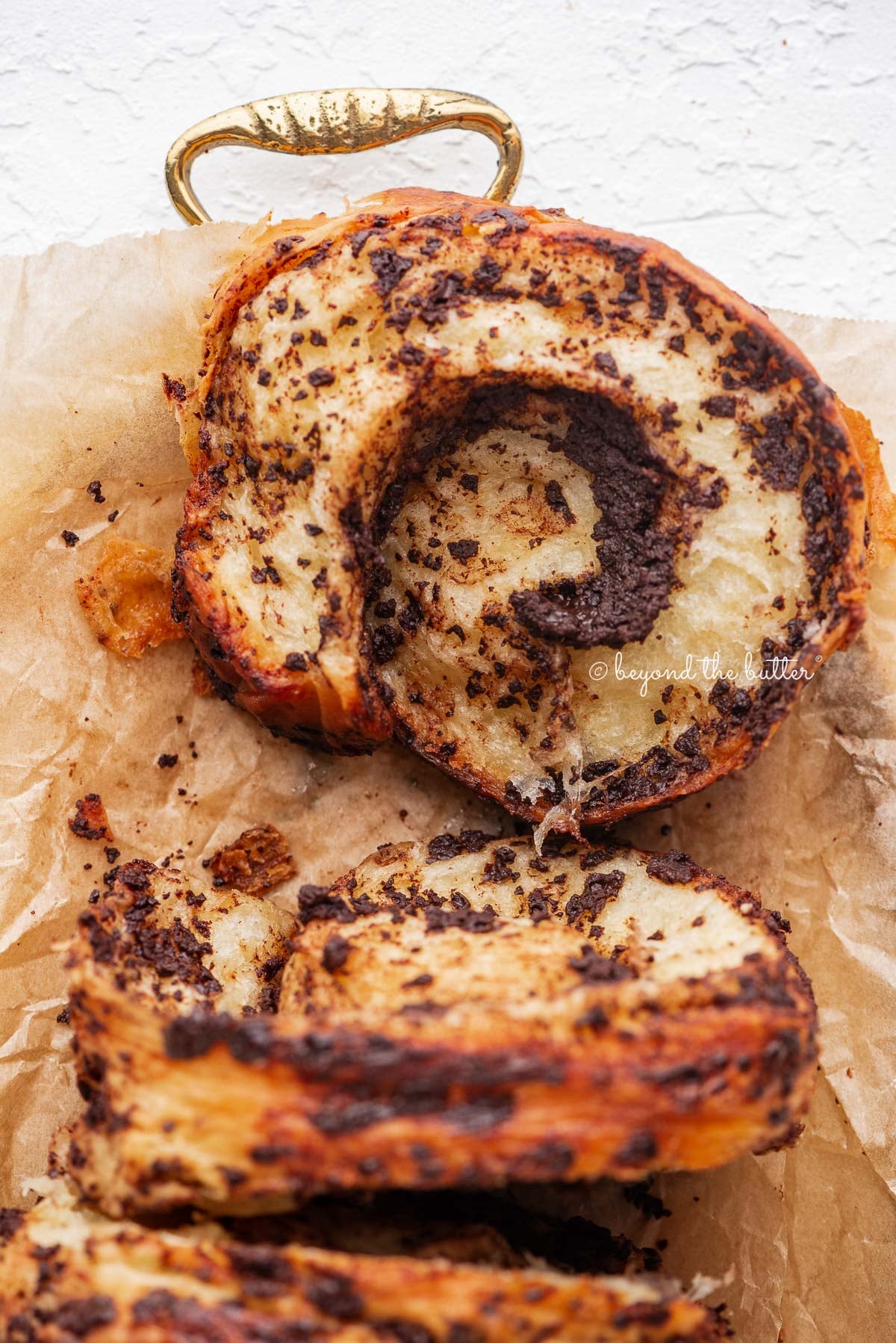
This Chocolate Croissant Loaf takes the classic croissant and turns it into a bread, with buttery, flaky layers wrapped around sweet dark chocolate. It is seriously delicious!
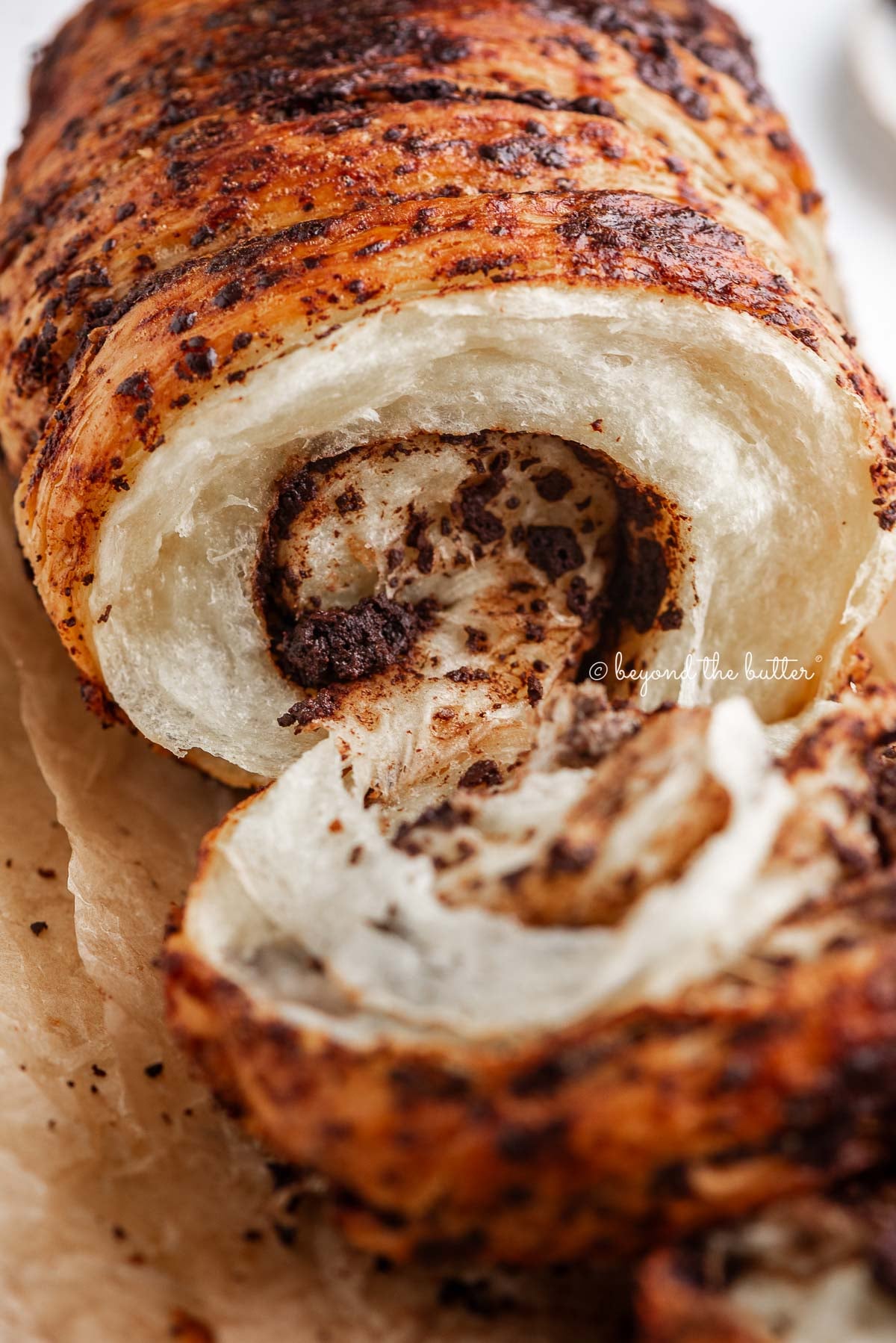
Why This Recipe Works

This chocolate croissant loaf recipe, adapted from Ankarsrum, is an absolute winner and a fitting pick for World Bread Day on October 16th! I’m also testing the new Ankarsrum Clay Baker in place of a standard baking tin. I’ll admit it felt a little daunting at first, but it turned out to be simple and easy to use! It goes on sale at Ankarsrum’s website on October 20th.
This croissant bread is loved for its very buttery and chocolatey taste, its light, airy texture that melts in your mouth, and its golden, flaky crust. It works for breakfast, brunch, or a sweet treat after dinner!
Keep in mind that this recipe has several steps and takes time and patience (about 6 hours). It is a bit less daunting than the classic version, and it lets you see the lamination process, which is essential for a truly good croissant, while being a little simpler since it is baked as a loaf. If you feel nervous, though, don’t worry. I’ve included step-by-step photos and handy tips below!
If you enjoy this chocolate croissant bread, check out my Classic Cream Puffs (also made with my Ankarsrum Assistent Original Mixer!), Chocolate Chip Scones, and Easy Homemade Donuts from Scratch recipes!
What You Will Need
You will need the following ingredients to make this buttery chocolate croissant loaf. The items in the bulleted list are the key ones that need a little more explanation.
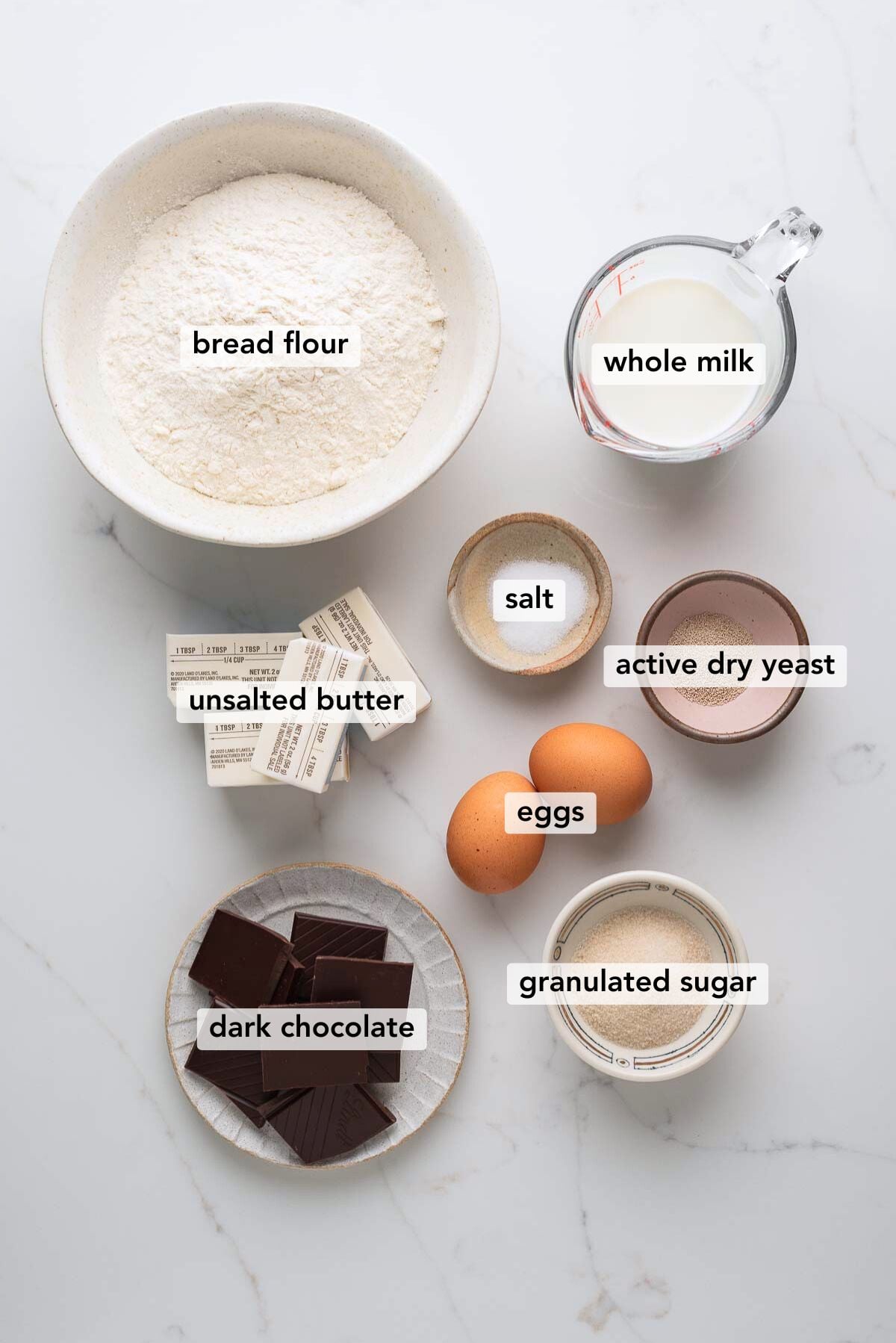
- Bread Flour. I tested this recipe with King Arthur Bread Flour only. It has more protein (12.7%) than all-purpose flour (11.7%), which builds stronger gluten. That matters during kneading and lamination, which create the thin, flaky layers. All-purpose flour works, but the texture and height, and possibly the taste, will differ.
- Whole Milk. I suggest whole milk because its higher fat content gives this chocolate croissant bread a softer, more tender crumb.
- Dark Chocolate. I suggest the Lindt 70% dark chocolate bar here, since it chops and melts more easily than chocolate chips. Ghirardelli chocolate bars are also a good choice.
- Unsalted Butter. Some goes into the dough, and the rest is used for lamination.
- Eggs. One egg goes into the dough, and the other is for the egg wash. The egg wash goes on halfway through baking, once you take off the clay baker lid.
For amounts and step-by-step directions, see the recipe card below.
How to Make This Recipe
Here is a quick overview of how to make this homemade chocolate croissant bread loaf. For the complete printable recipe, in US customary or metric measurements, see the recipe card below.
Croissant Dough
Recipe Tip: If you use your Ankarsrum Assistent Original Mixer, you will need the 7L stainless steel bowl, dough knife, and dough roller. Make sure your clay baker lid has finished its initial 30-minute soak before the first use.
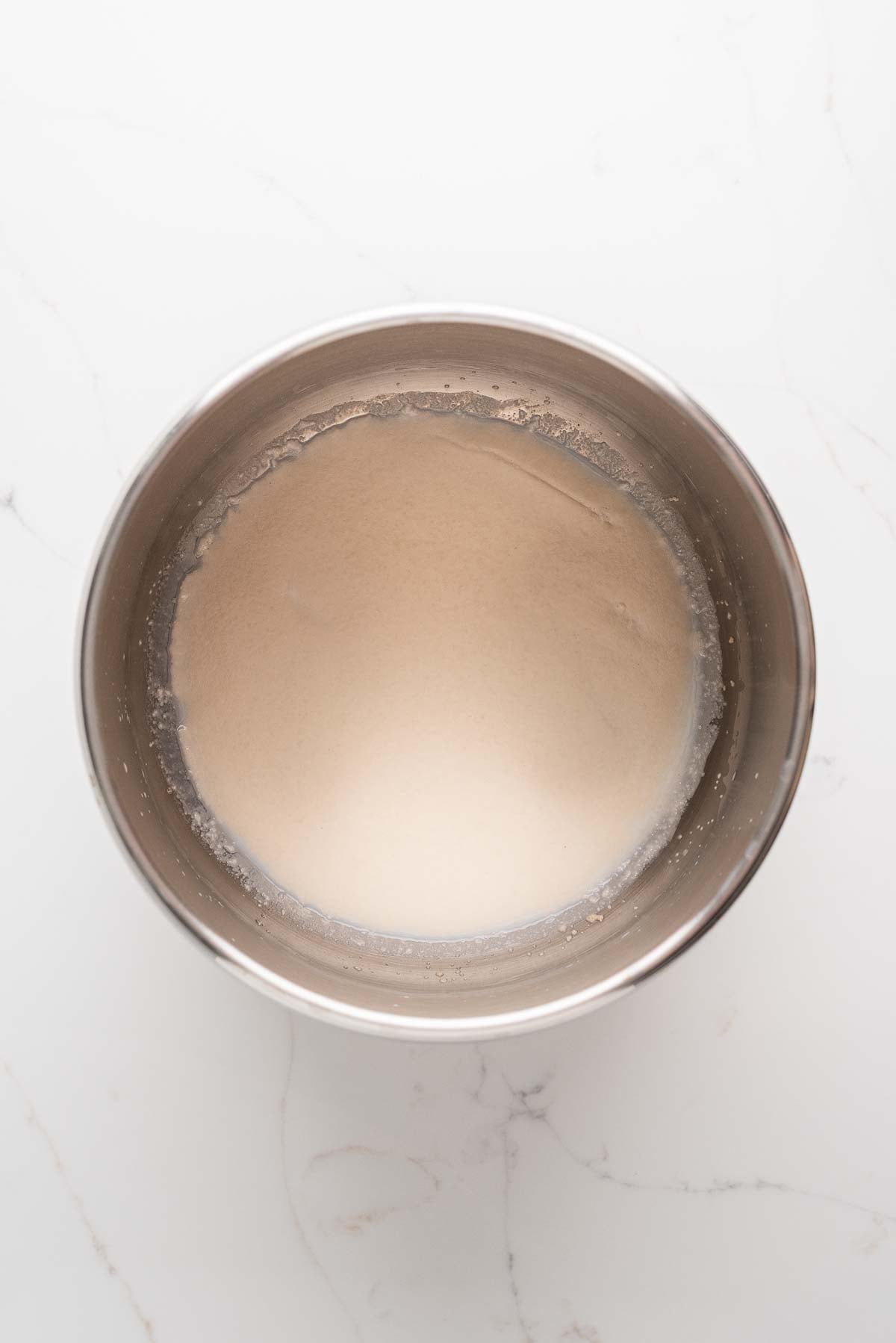
Step 1. Proof the yeast. Put the warm milk, sugar, and yeast in the bowl. Whisk, cover, and let it sit for 10 minutes so the yeast can bloom. It should look foamy on top.
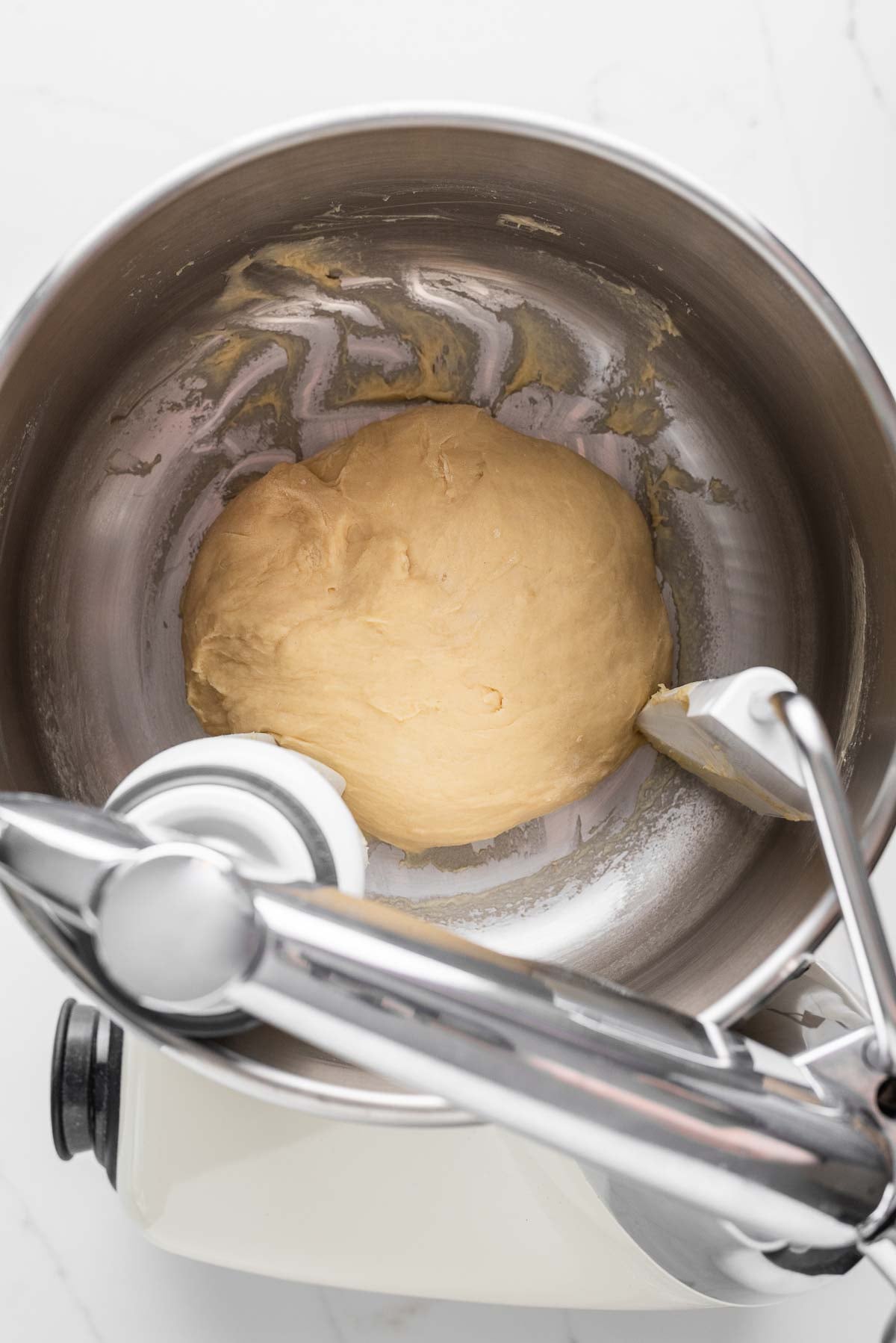
Step 2. Add the melted butter, egg, bread flour, and salt. Run the mixer on low until the dough starts to come together into a rough ball. Switch to medium speed and knead for another 8 to 10 minutes, until the dough is soft, shiny, and smooth.
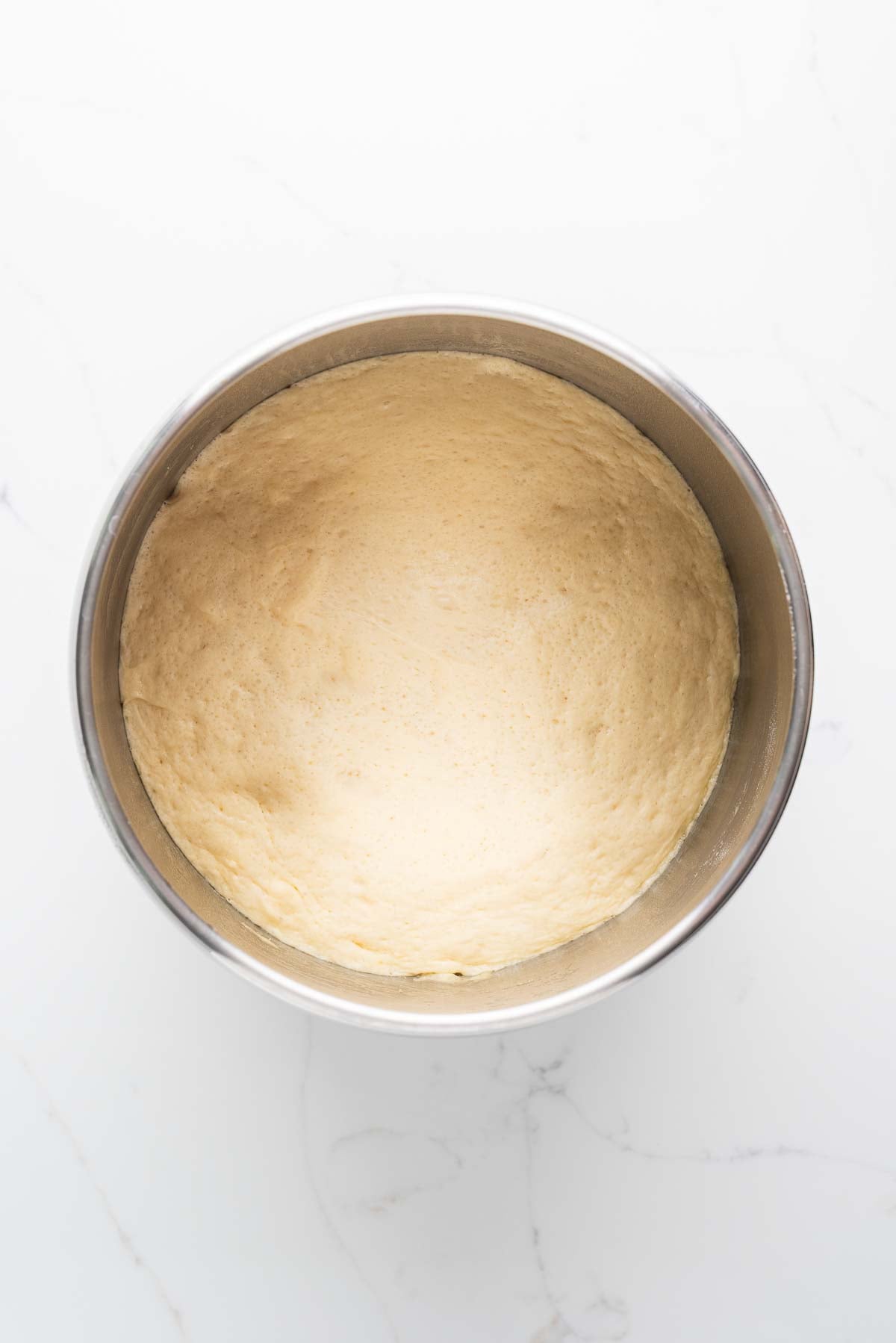
Step 3. First rise. Lightly oil the bowl, making sure to coat the dough too. Cover and let it rise for 90 to 120 minutes in a warm spot until doubled in size.
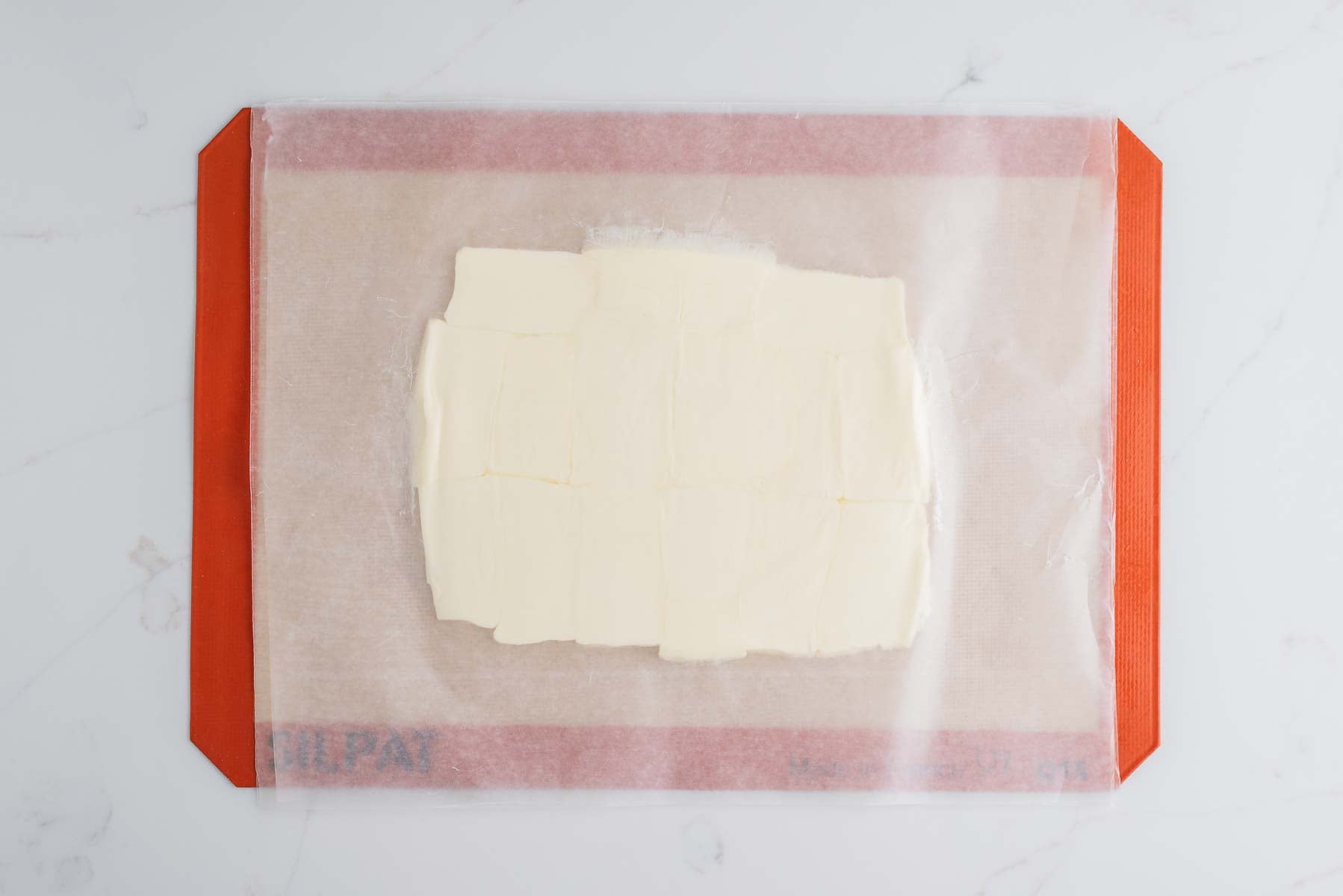
Step 4. Cut the butter into 1/4-inch thick slices and arrange them in a rectangular grid between two sheets of wax paper or parchment paper. Roll it with a rolling pin into a rectangle about 7 inches by 10 inches. Chill until firm but still pliable, about 15 minutes.
Recipe Tip: If your kitchen doesn’t have a warm spot, put the dough (uncovered) in the oven with a baking tin filled with boiling water. This creates a warm environment without really heating the oven, and the oven will be cool by the time you’re ready to bake the croissant bread.
Bonus: The steam helps loosen any burnt bits left in your oven from earlier bakes, so cleaning is easier.
Lamination
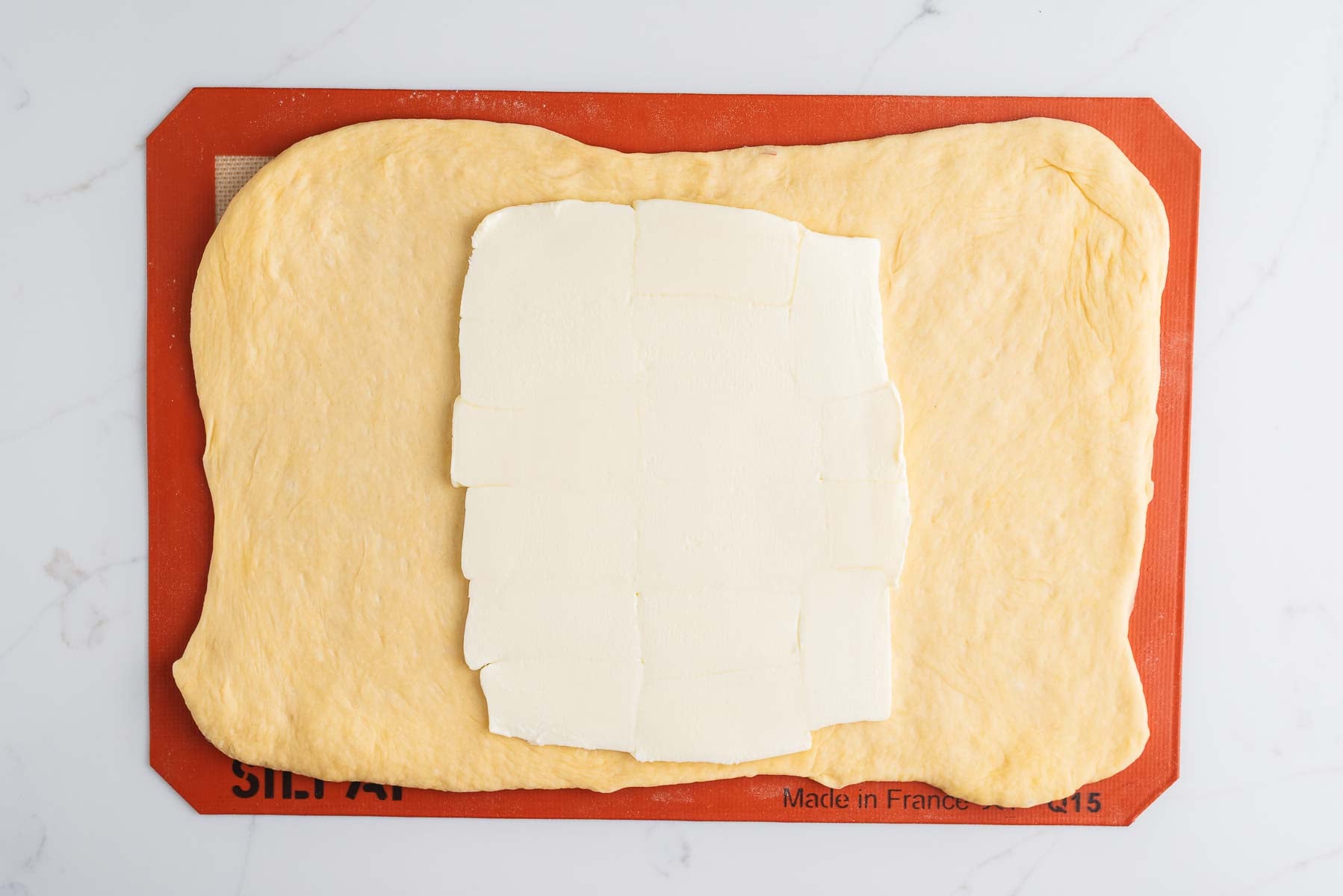
Step 5. Roll the dough into a 10-inch by 14-inch rectangle, then chill it for 20 minutes. I suggest a silicone mat or parchment lightly dusted with flour for rolling. Once it’s chilled, set the butter in the center third of the dough.
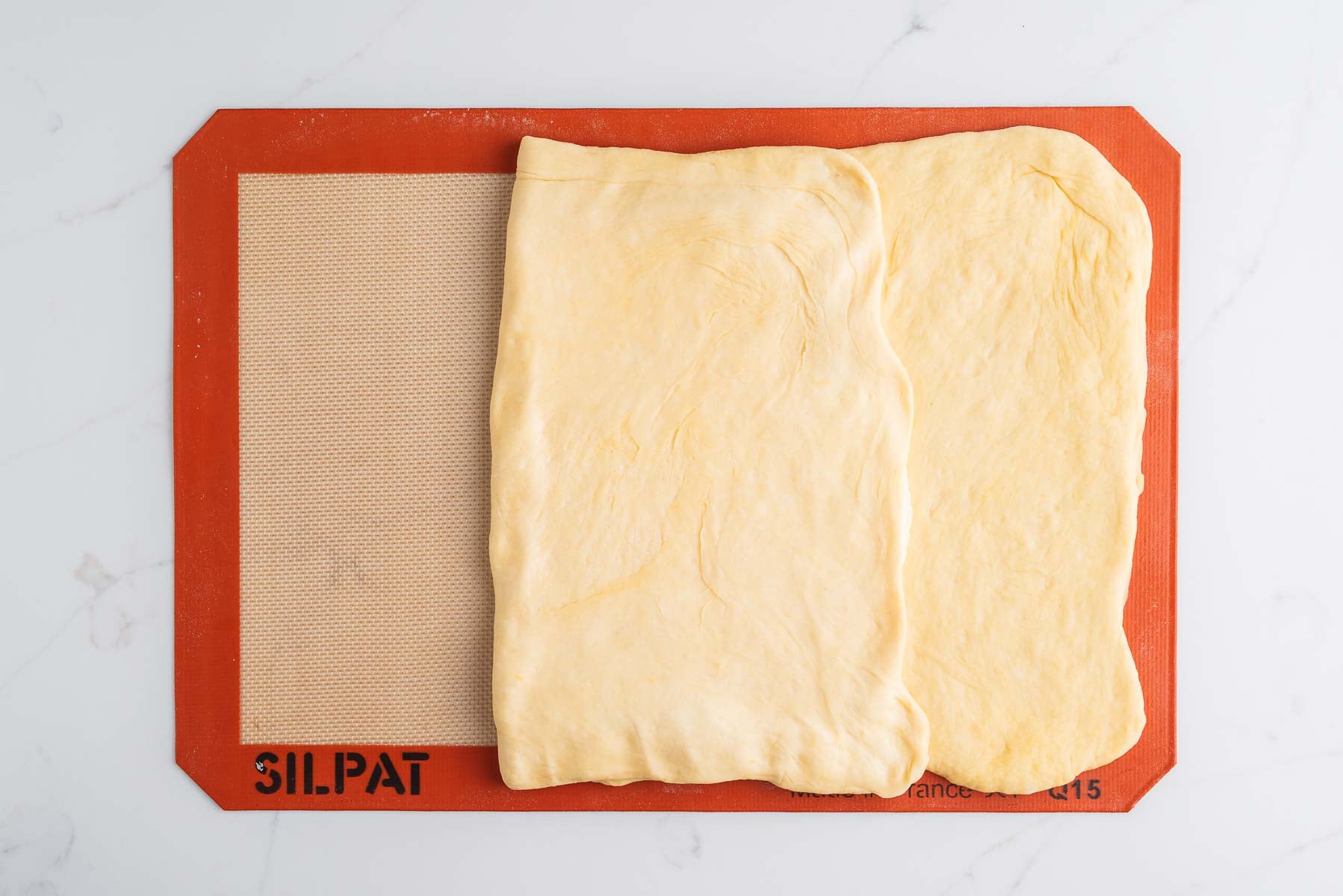
Step 6. Fold the dough over the butter from each side so it is fully covered. Fold it like a letter, then pinch the seams shut.
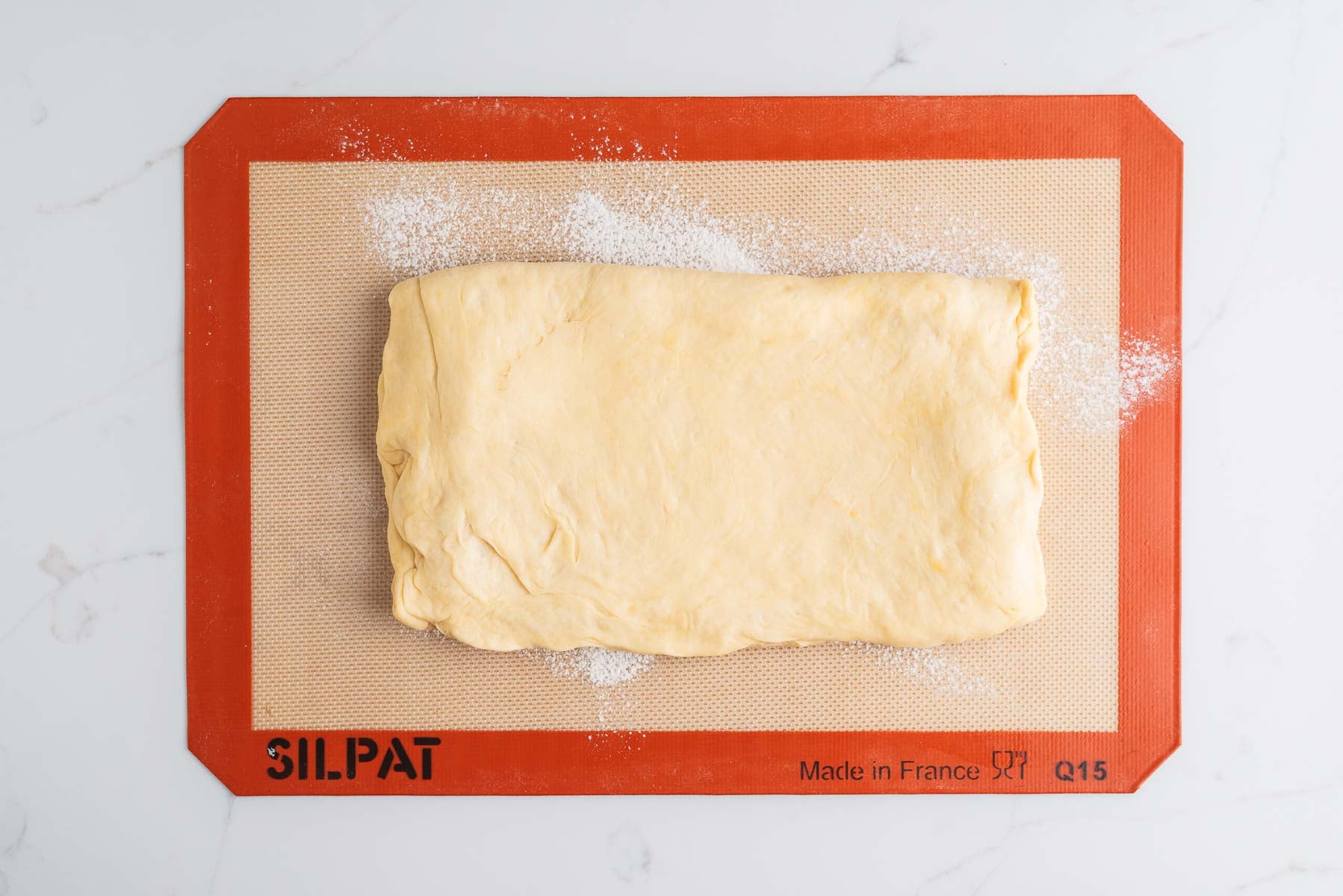
Step 7. Turn the dough so the long edge faces you. Roll it into a 9-inch by 12-inch rectangle.
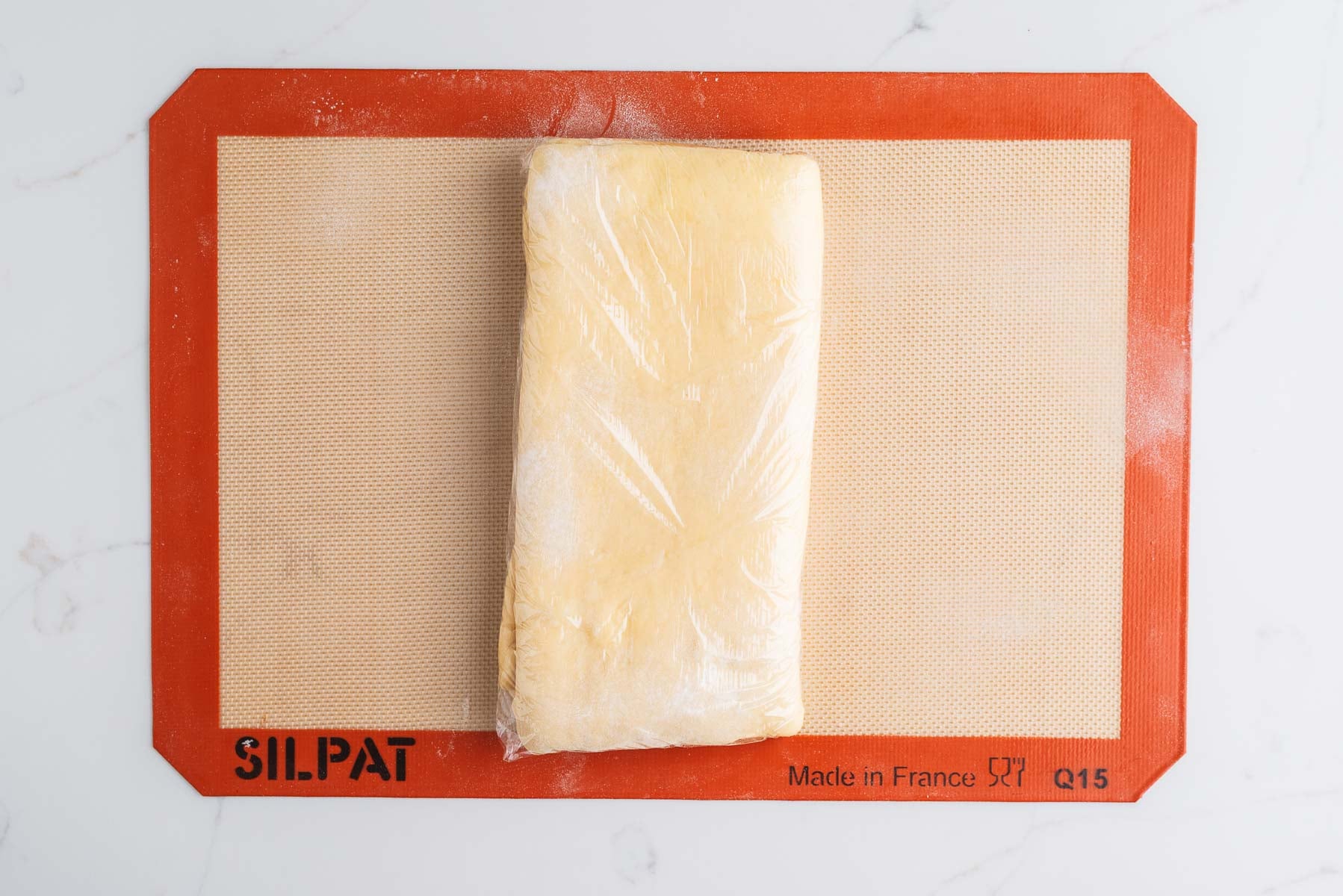
Step 8. Fold the dough over the butter from each side again. Fold it like a letter, wrap it in plastic wrap, and chill it in the refrigerator for 30 minutes.
That completes the first turn of lamination. Repeat the rolling, folding, and chilling two more times. After the third turn, chill the dough for another 30 minutes before shaping.
Shaping and 2nd Rise
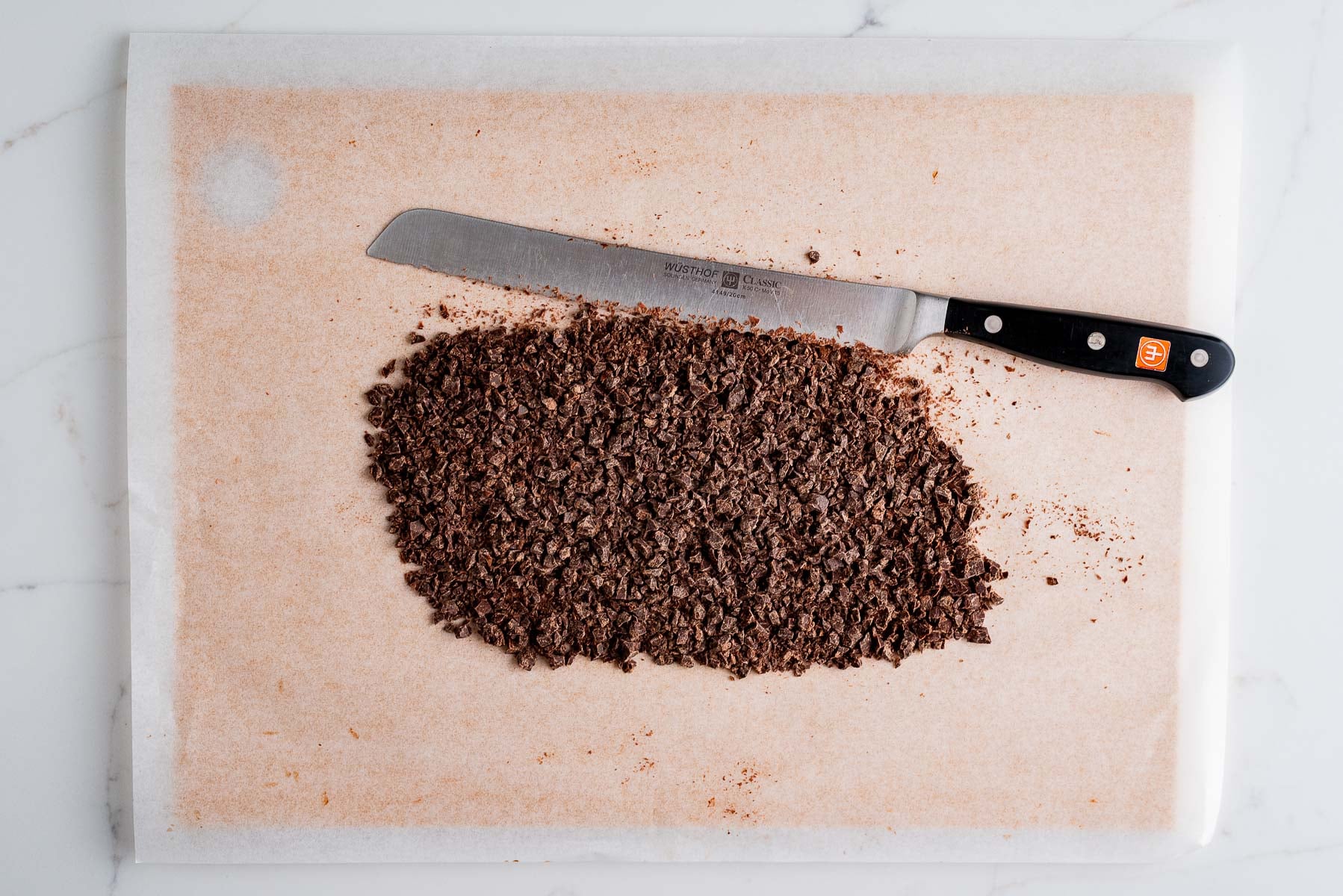
Step 9. Finely chop the dark chocolate with a serrated knife. The goal is a mix of fine chocolate powder and tiny chunks.
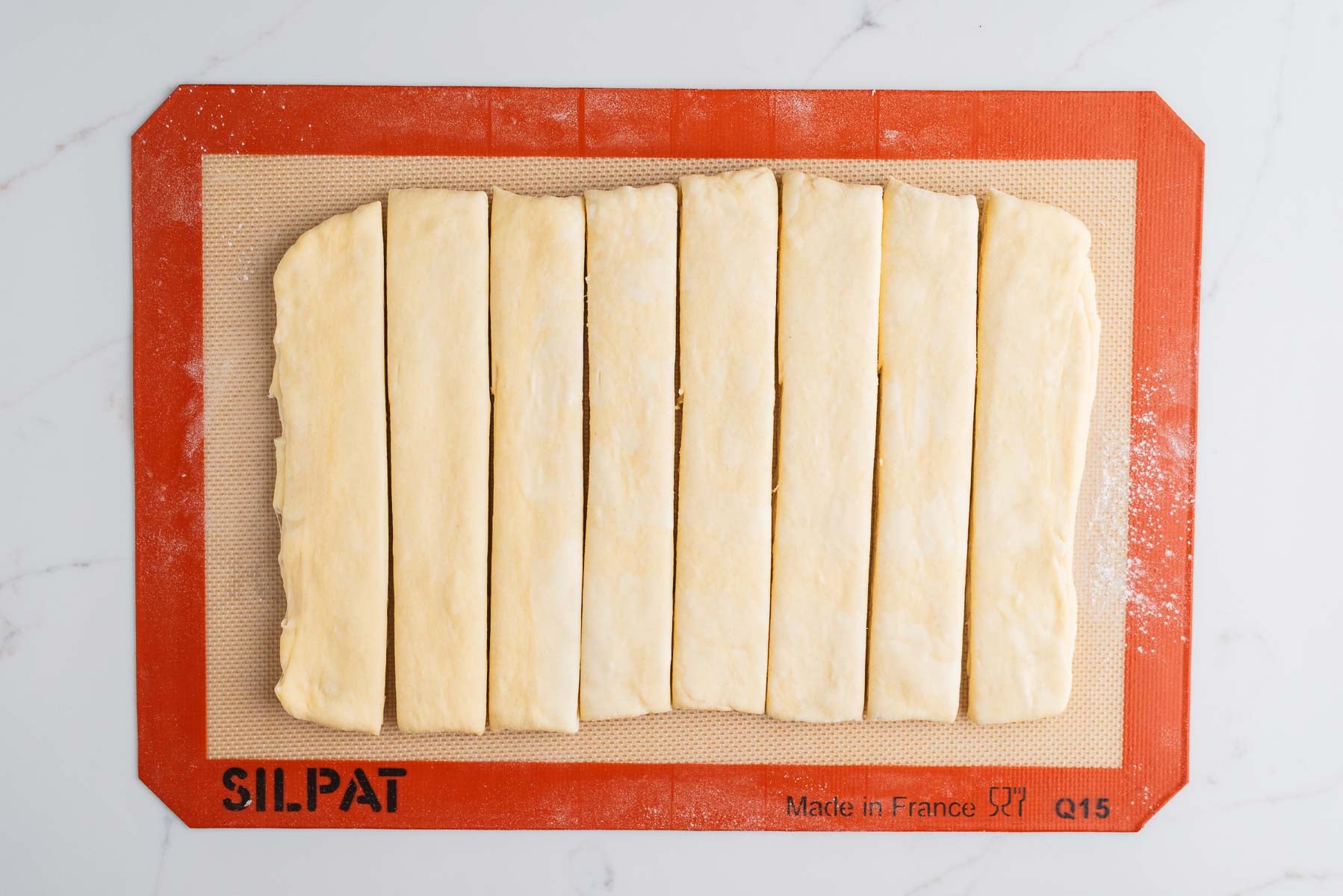
Step 10. Roll the dough into a 9-inch by 12-inch rectangle. Cut it into 8 even strips, about 1 1/2 inches wide. Lightly brush the strips with water.
Recipe Tip: Chop the dark chocolate on a cutting board lined with parchment paper. Cleanup is easier, and the fine chocolate dust won’t get pressed into the board.
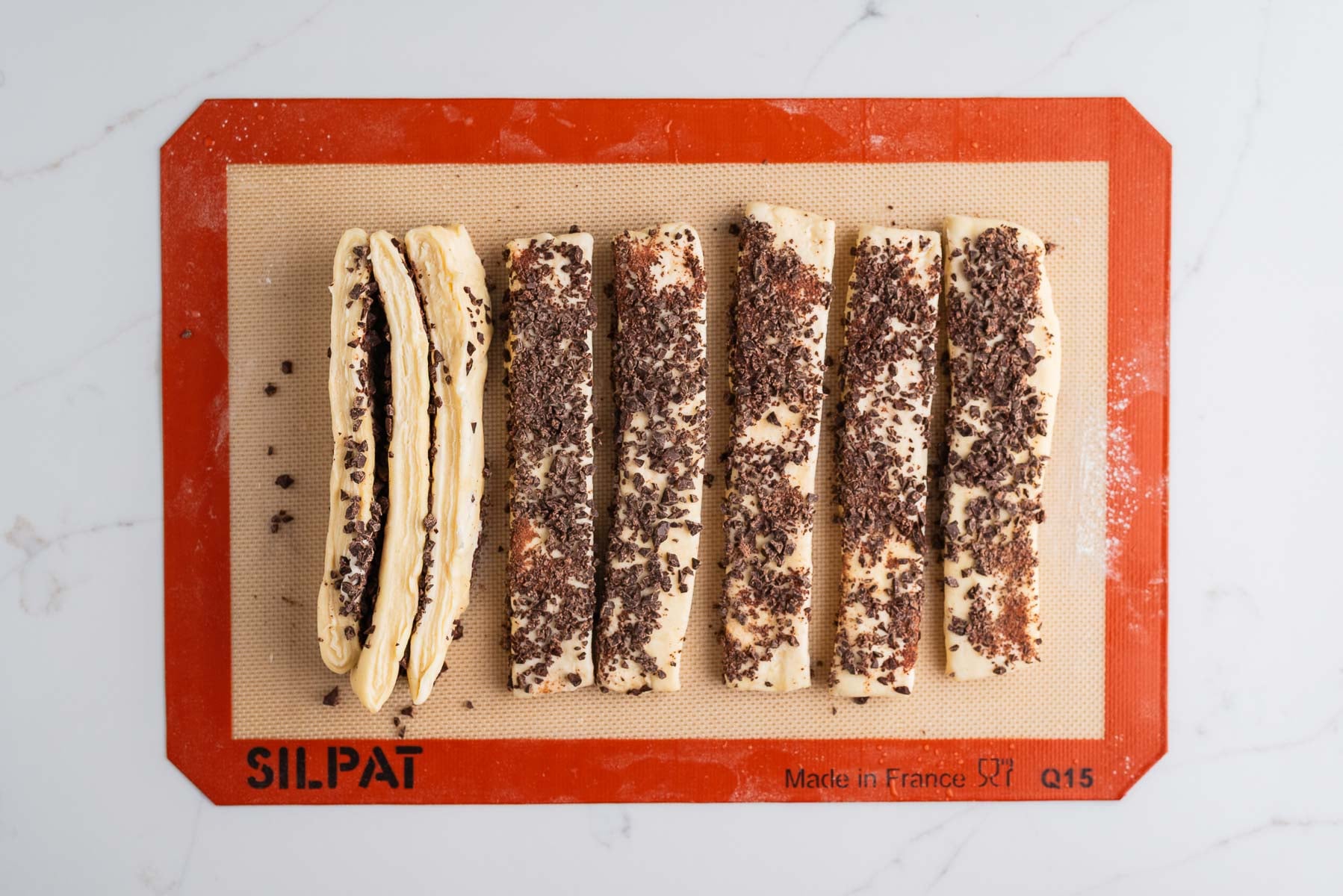
Step 11. Press the chopped chocolate onto the front side of the dough strips (skip the first strip). Turn the strips on their sides and press them together lengthwise to form one sheet with the layers facing up.
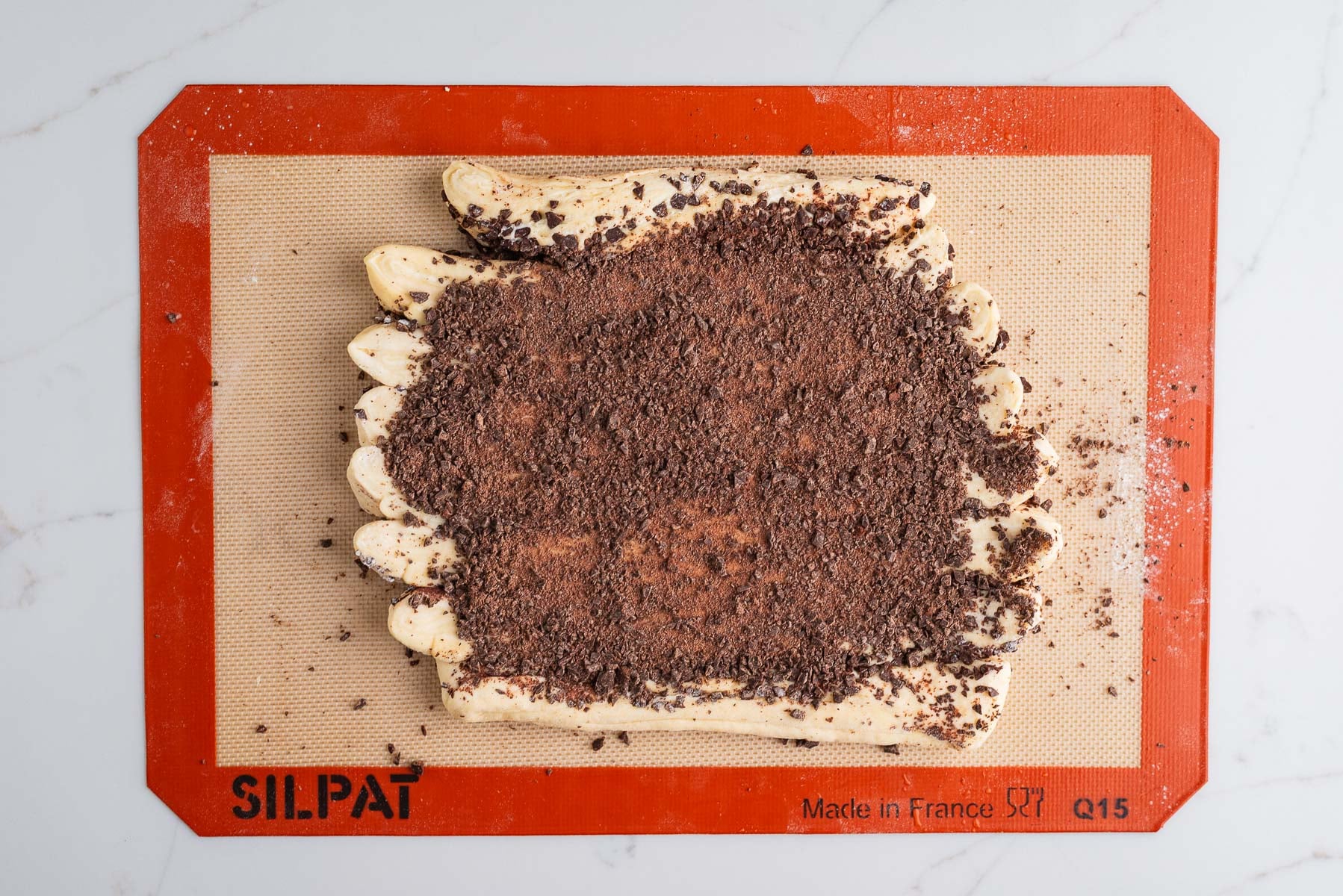
Step 12. Dust lightly with flour and gently roll into a 9-inch-wide rectangle. Sprinkle the leftover chopped chocolate (powder and bits) on top. Press gently so the chocolate sticks to the dough.
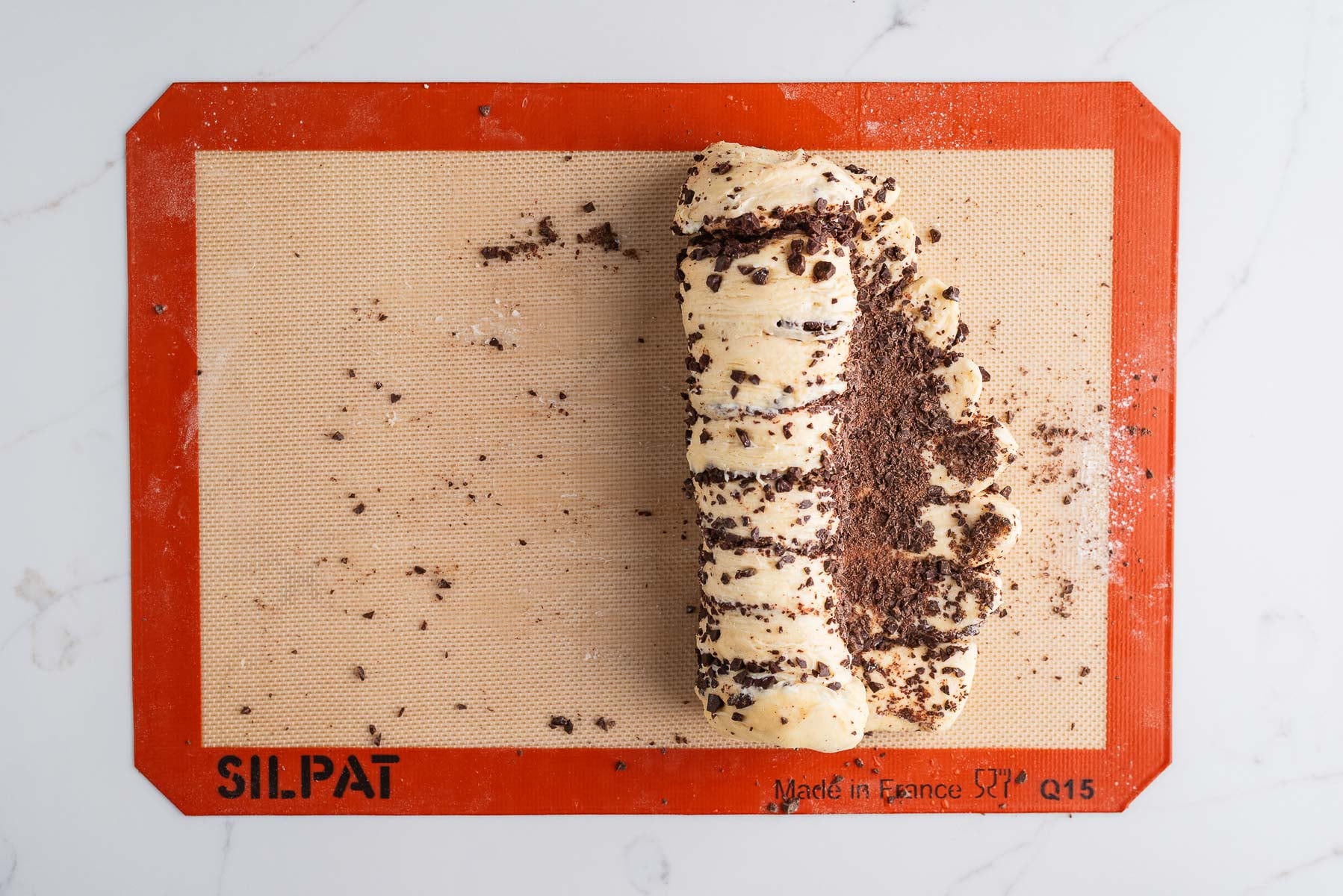
Step 13. Roll into a tight log and place it in the parchment-lined Ankarsrum Clay Baker. Cover with the lid and let it rise until nearly doubled, about 60 to 90 minutes. Move it to the refrigerator for another hour to firm up the butter, which helps define the layers as it bakes.
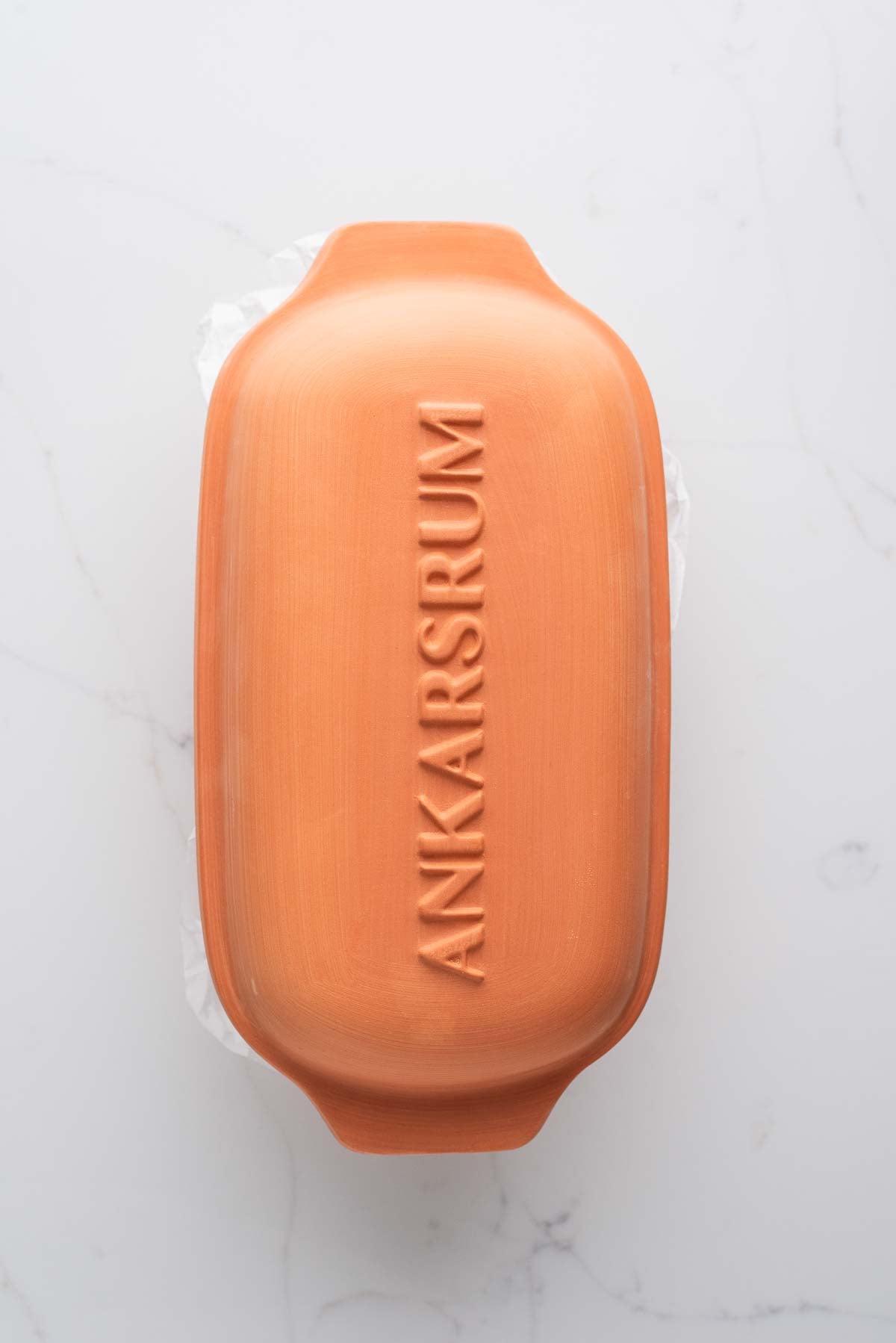
Step 14. Take off the lid and soak it for 10 minutes in the sink. Then pat it dry and set it back on the clay baker.
Recipe Tip: Crumple the parchment paper a bit so it fits into the clay baker more easily.
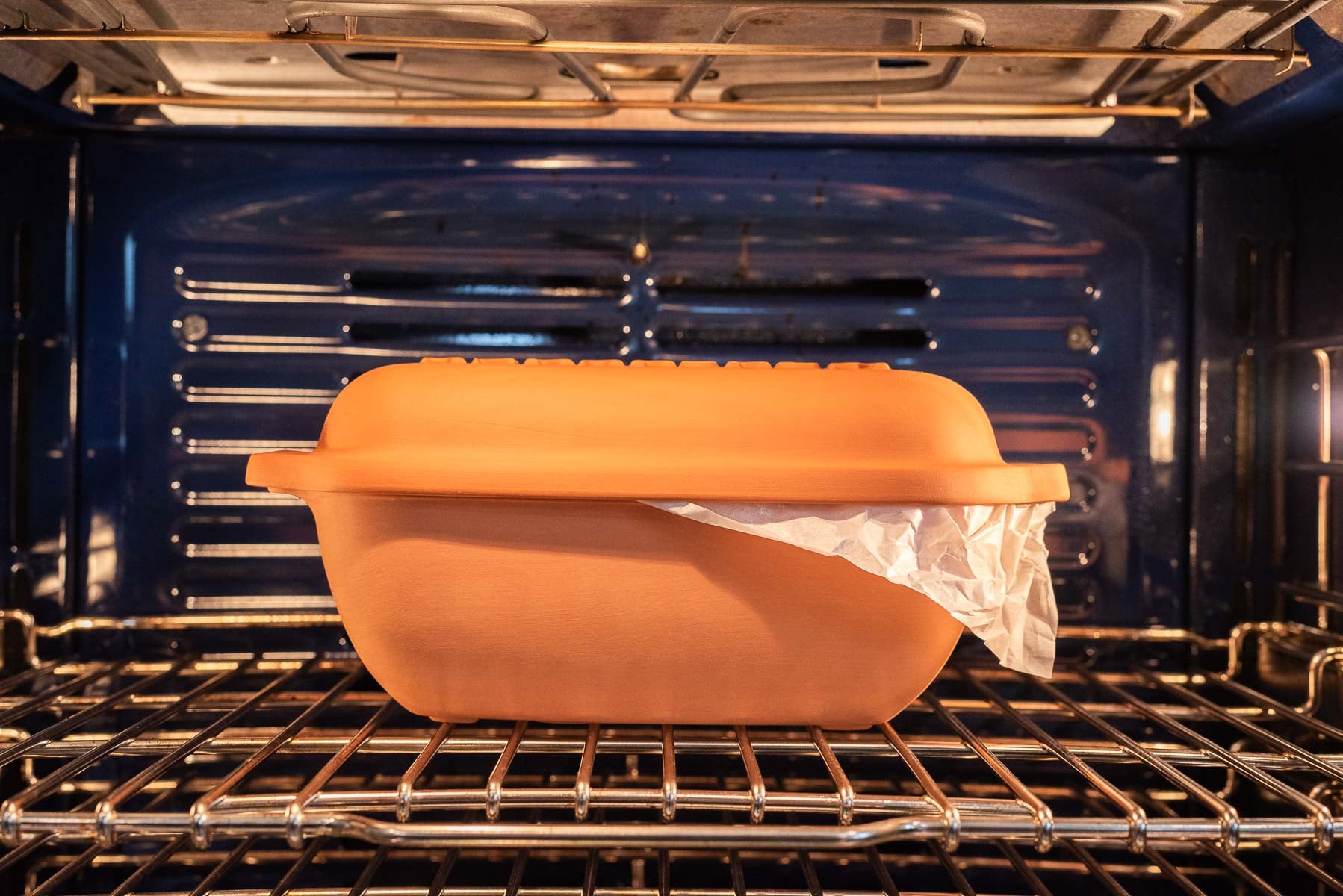
Step 15. Put the clay baker in a cold oven, then set the temperature to 375ºF. Bake for 25 minutes. While it bakes, whisk the egg wash in a small bowl.
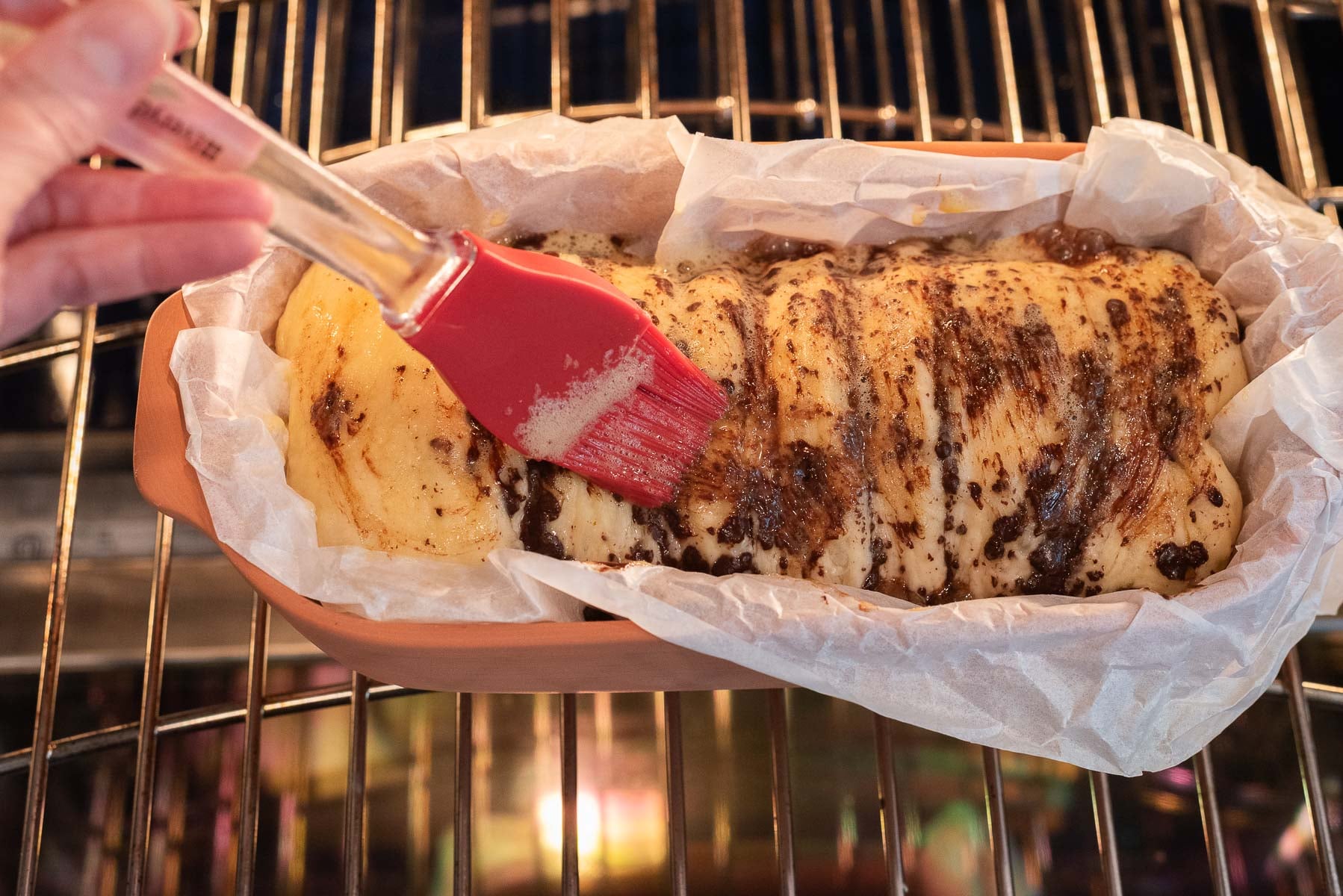
Step 16. Remove the lid and gently brush the top of the chocolate croissant loaf with egg wash. Bake uncovered for another 25-30 minutes, until deep golden brown and crisp on top. Let it cool for 10 minutes before taking it out of the clay baker. Cool it fully before slicing.
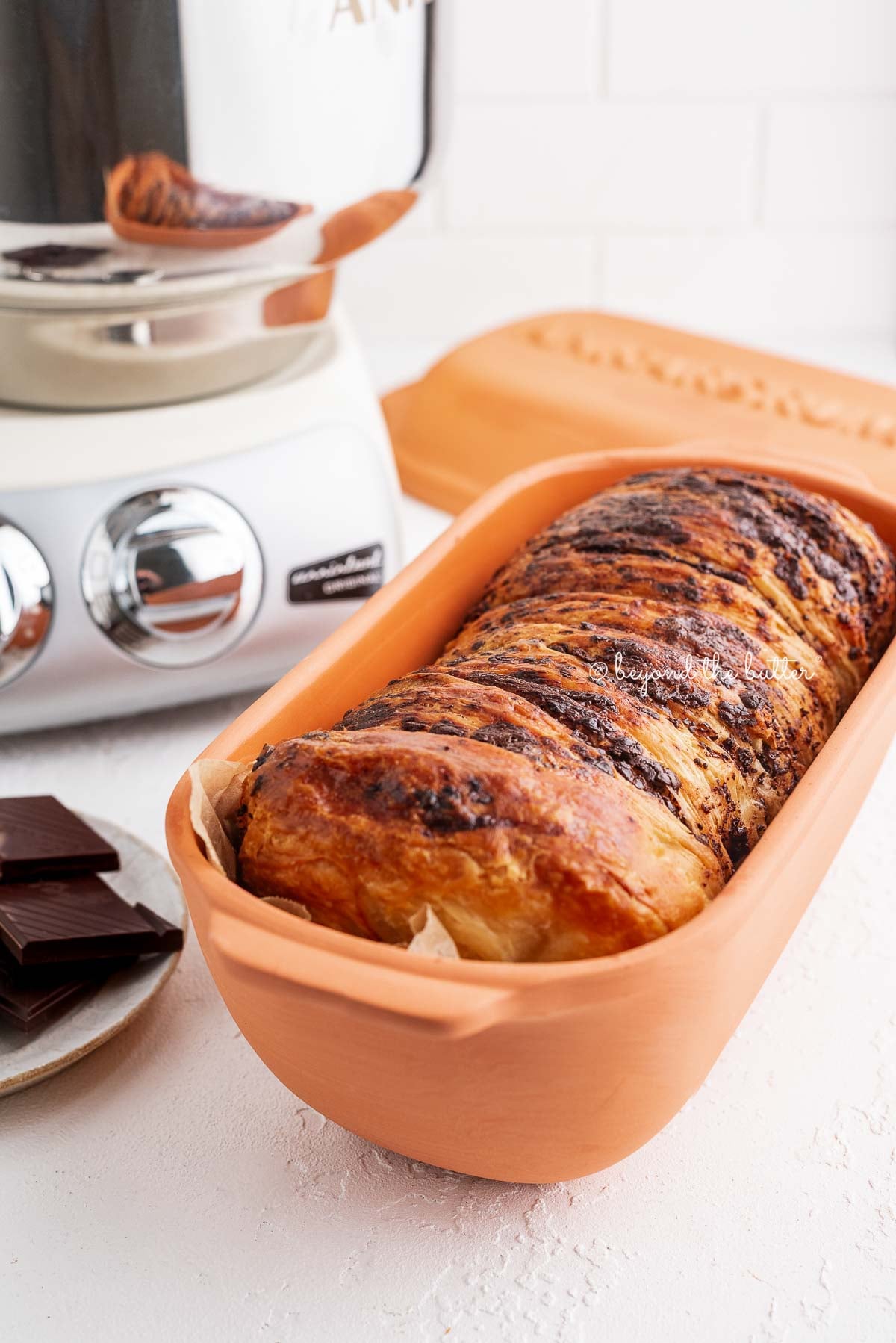
Clay Baker Tips
Here are a few helpful tips if this is your first time using a clay baker (also called a clay roaster).
- First Time Use. Before using your Ankarsrum Clay Baker, it’s important to soak the lid with water and let it sit for 30 minutes. After the 30-minute soak is complete, use a nylon brush to gently remove any remaining clay dust particles left from the manufacturing process from both parts of the roaster. For later uses, soak the lid for only 10 minutes.
- How It Works. Steam escapes from the pre-soaked lid while baking, which gives bread a crusty exterior with a light crumb, fall-off-the-bone osso buco, juicy chicken with crispy golden skin, and more. Whether you’re baking bread or cooking vegetables or meat, this clay baker helps you make great meals.
- How to Clean. Let the clay baker cool fully before cleaning. Use liquid dish soap on the bottom, the glass frit-lined section of the baker, and plain water on the unglazed lid. Set the lid upside down on the base and store both completely dry, in a spot with good airflow.
- Temperature Tips. The Ankarsrum Clay Baker is safe for the oven and microwave up to 550ºF, but it can’t handle sudden temperature changes. To avoid damage, always start with a cold oven (375ºF-550ºF), never a preheated one. Don’t add cold ingredients while the baker is in use. When you take the hot clay baker out of the oven, set it on a towel, trivet, or wooden cutting board, never directly on a cold countertop. Finally, don’t use it on the stovetop or grill.
Frequently Asked Questions
Can I use a regular loaf pan instead of clay baker?Yes! The steps are the same through the second rise. Brush on the egg wash, then bake for 25-30 minutes at 375ºF. Halfway through baking, cover the top with an aluminum foil tent to keep it from burning.
Can I use instant yeast instead of active dry yeast?Yes, you can use instant yeast (a 1:1 swap), but it won’t speed things up much for this chocolate croissant loaf, since the repeated chilling and lamination take most of the time. Using instant yeast only skips the initial proofing step.
What is a clay baker and what is it made of?This 2-quart Ankarsrum Clay Baker is made to high standards by Reston Lloyd and carries on the work Rita Bolle started. Bolle, the founder of Reston Lloyd, brought clay pot cooking to US retail stores in the late 1960s and created the first frit-glazed base for easy cleaning.
It pairs naturally with anyone who likes to bake or cook with their Ankarsrum Assistent Original Stand Mixer. Made in Portugal from natural clay, the baker has a two-part design. The unglazed lid is soaked in water before use and releases steam slowly during baking. The inside of the base has a safety-tested glass frit lining, which makes it easy to clean.
Almost anything you like! Along with bread and pastries, it makes easy one-pot meals such as chicken with rice, vegetables, or braised artichokes. Just add all the ingredients and let the clay baker do the work!
What are the dimensions of the Ankarsrum Clay Baker?With the lid in place, the dimensions are 11.75″ L x 6.37″ W x 5.25″ H.
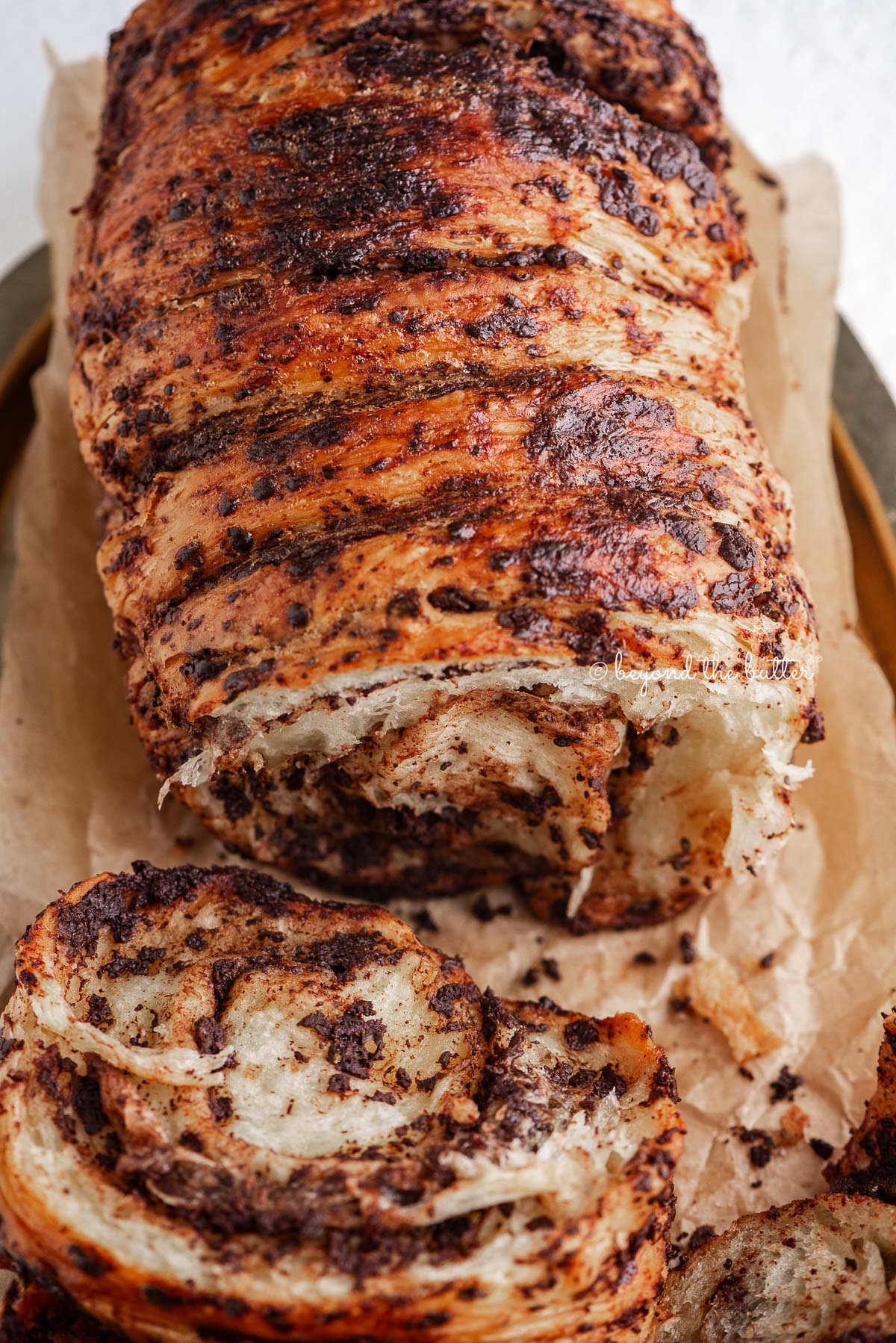
If you try this Chocolate Croissant Loaf Recipe or any other recipe on my site, please leave a star rating and tell me what you thought in the comments below. Thanks for stopping by!
Buttery Chocolate Croissant Bread Loaf
This Chocolate Croissant Loaf takes the classic pastry and makes it into bread, blending flaky, buttery croissant layers with sweet dark chocolate. It’s seriously delicious!
- Prep
- 30 mins
- Cook
- 1 hr
- Rise Time + Lamination
- 5 hrs 30 mins
- Total
- 7 hrs
- Makes
- 8
Ingredients
Croissant Dough
- 1/2 cup + 1 tbsp Whole Milk, warmed to 110ºF-115ºF
- 2 tbsp Granulated Sugar
- 1 1/2 tsp Active Dry Yeast
- 2 tbsp Unsalted Butter, melted
- 1 large Egg, room temperature
- 2 cups Bread Flour
- 1 tsp Salt
- 3 oz Dark Chocolate Bar, finely chopped
Lamination
- 14 tbsp Unsalted Butter
Egg Wash
- 1 large Egg
- 1 tbsp Water
Method
- Put the warm milk, sugar, and yeast into the Ankarsrum 7L mixing bowl. Whisk, cover, and let it sit for 10 minutes so it can bloom. It should look foamy on top.
- Add the melted butter, egg, bread flour, and salt. Attach the dough knife and dough roller to the mixer, then run it on low until the dough forms a rough ball. Switch to medium speed and knead for another 8 to 10 minutes, until the dough is soft, shiny, and smooth.
- While the dough rises, cut the unsalted butter into 1/4-inch thick slices and set them between two sheets of wax or parchment paper. Roll with a rolling pin into a 7-inch by 10-inch rectangle. Chill in the refrigerator until firm but still pliable, about 15 minutes.
- Lightly grease the bowl, making sure the dough is coated too. Cover and let the dough rise for 90 to 120 minutes in a warm spot, until doubled in size.
- When it’s ready, punch the dough down and roll it out on a lightly floured silicone baking mat (use bread flour). Move it to the refrigerator to chill for 20 minutes. With about 5-10 minutes left, take out the butter slab that’s been chilling.
- Set the chilled, rolled-out dough with the long edge facing you. Picture the dough in thirds, then place the butter slab in the center. Fold the dough over the butter from each side to fully enclose it, like a letter. Pinch the seams shut.
- Turn the dough so the long edge faces you again. Dust the silicone mat with a little more bread flour if needed. Roll the dough into a 10-inch by 12-inch rectangle, then fold the left side over the center, then the right side, like a letter (just as in the last step). Wrap in plastic wrap and chill in the refrigerator for 30 minutes.
- Repeat the last step: roll out the dough, fold it like a letter, wrap it in plastic wrap, and chill it in the refrigerator for 30 minutes.
- Do the rolling, folding, wrapping, and chilling one more time, again for 30 minutes in the refrigerator.
- Finely chop the dark chocolate with a serrated knife. You want a mix of fine chocolate powder and tiny bits. I suggest chopping on a cutting board lined with parchment paper.
- Roll the dough into a 9-inch by 12-inch rectangle. Cut it into 8 even strips, about 1 1/2 inches wide. Lightly brush the strips with water. Press the finely chopped chocolate onto the front of the strips (skip the first strip). Turn them on their sides and press them together lengthwise to form one sheet with the layers facing up.
- Lightly dust the top with flour and gently roll into a 9-inch-wide rectangle. Its length can be anywhere from 10 to 12 inches. Sprinkle the leftover chopped chocolate (powder and bits) on top. Press gently so it sticks to the dough.
- Roll into a tight log and set it in the parchment-lined Ankarsrum Clay Baker. Cover with the lid and let it rise at room temperature until nearly doubled, about 60 to 90 minutes. Move it to the refrigerator for another hour to firm up the butter, which helps define the layers while baking.
- After chilling the loaf, take off the lid and soak it for 10 minutes. Pat it dry, then set it back on the clay baker. Place the pan in a cold oven on the middle rack (DO NOT PREHEAT THE OVEN), set the temperature to 375ºF, and bake for 25 minutes. While it bakes, whisk the egg and water together in a small bowl for the egg wash. Set it aside with a pastry brush.
- Carefully remove the lid and set it on hot pads or a folded towel to cool. Then brush the egg wash over the top of the chocolate croissant loaf. The chocolate may spread when you brush it, which is fine. Close the oven door and bake for another 25-30 minutes, or until golden brown and crisp on top.
- Take it out of the oven and let it cool for 10 minutes before removing it from the clay baker. Cool completely before slicing. Store any leftover croissant loaf in an airtight container for up to 1 day.
Baker’s notes
- If you use your Ankarsrum Assistent Original Mixer for this recipe, you will need the 7L mixing bowl, dough roller, and dough knife. No Ankarsrum mixer? Any mixer with a dough hook works, or you can make it by hand with a dough whisk. I suggest the Lindt 70% Cacao Dark Chocolate Bar, since it’s easy to chop into fine bits and melts more smoothly than chocolate chips. Ghirardelli is another brand I like. If you’d rather skip chocolate, a cinnamon sugar croissant loaf is a lovely variation! If you use a bread tin instead of the Ankarsrum Clay Baker, follow the steps listed in the Recipe FAQs section above the recipe card. Recipe adapted from Ankarsrum.