

These almond crescent cookies are buttery, melt-in-your-mouth shortbread-style cookies with a bright almond flavor. Lightly dusted with powdered sugar, they’re ideal for a holiday cookie tray or a morning coffee any time of year. 
Almond crescent cookies are essentially shortbread with part of the flour replaced by almond flour, shaped into small crescents and baked until just set. After cooling slightly, they’re coated in powdered sugar for a delicate finish. Also known as Viennese crescent cookies, these treats offer a rich butter-and-almond taste with a tender, crumbly texture that melts on the tongue. If you enjoy a cookie that’s not overly sweet but full of buttery flavor, these are a must-try.
Shortbread belongs on every cookie platter, and these almond crescents are a simple way to add extra flavor and interest if plain shortbread feels too basic.
Recipe Notes
This recipe follows a shortbread-style method: there are no eggs and no chemical leavening (no baking powder or baking soda). That lack of leavening is deliberate — it keeps the cookies dense, tender and slightly crumbly rather than puffy. The texture and shape come from avoiding rising agents, so this is intentional and not a mistake. 
Dealing with crumbly dough: These cookies can become too dry if too much flour is used. For best results, weigh flour if possible. Start with 2 1/4 cups all-purpose flour and 1 cup almond flour. When the dry ingredients are mixed in, the dough should feel slightly crumbly and be a bit difficult to fully incorporate. Squeeze a portion in your palm — it should hold together into a ball without sticking to your hand. If it sticks, add 1–2 tablespoons more flour. If it remains too crumbly and won’t bind, add milk a tablespoon at a time until the dough holds together.
It’s important that the dry ingredients are somewhat difficult to incorporate; otherwise the cookies won’t keep their shape.
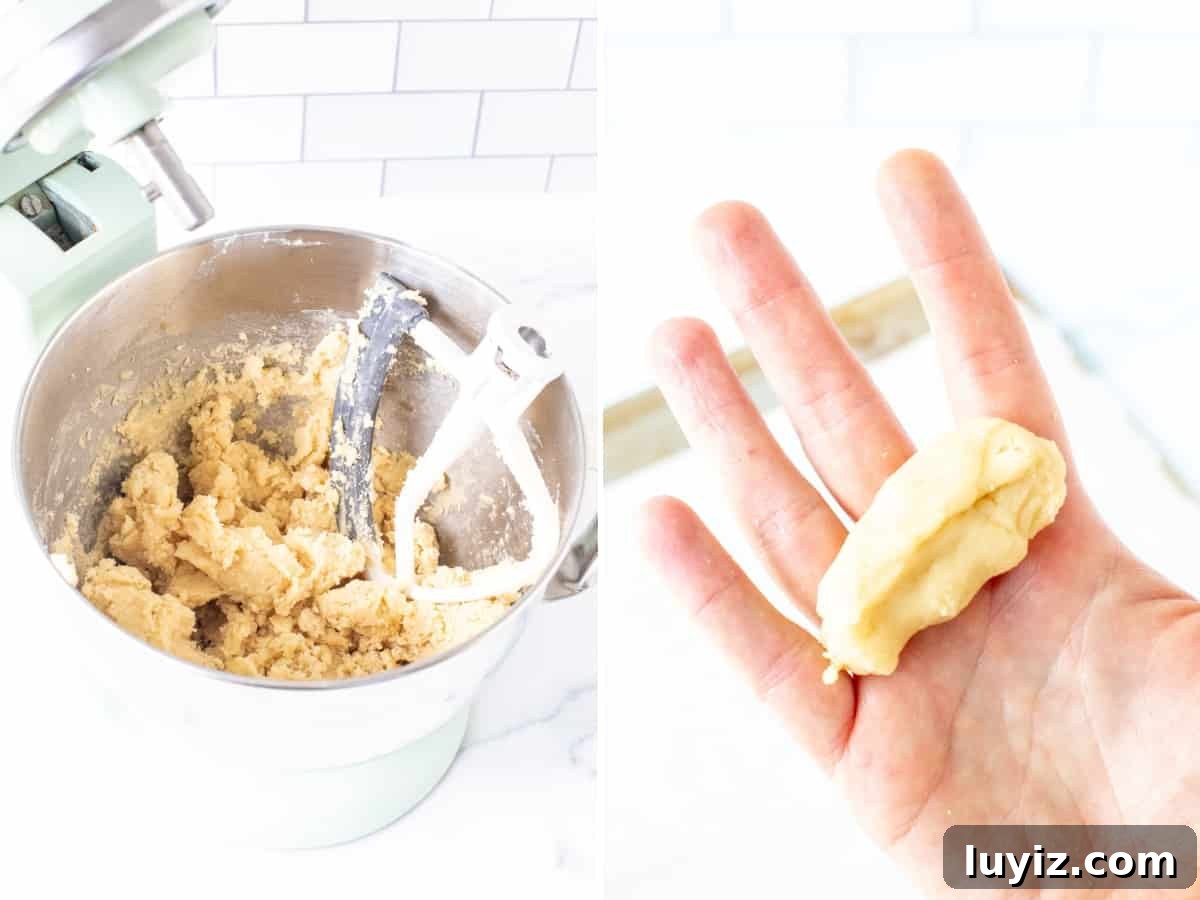
Forming crescents: This step takes the most time. Break off pieces of dough about 1 to 1.5 tablespoons each. Roll into a ball, then gently pinch into a crescent. Small cracks are fine — the cookies will still look charming after baking. 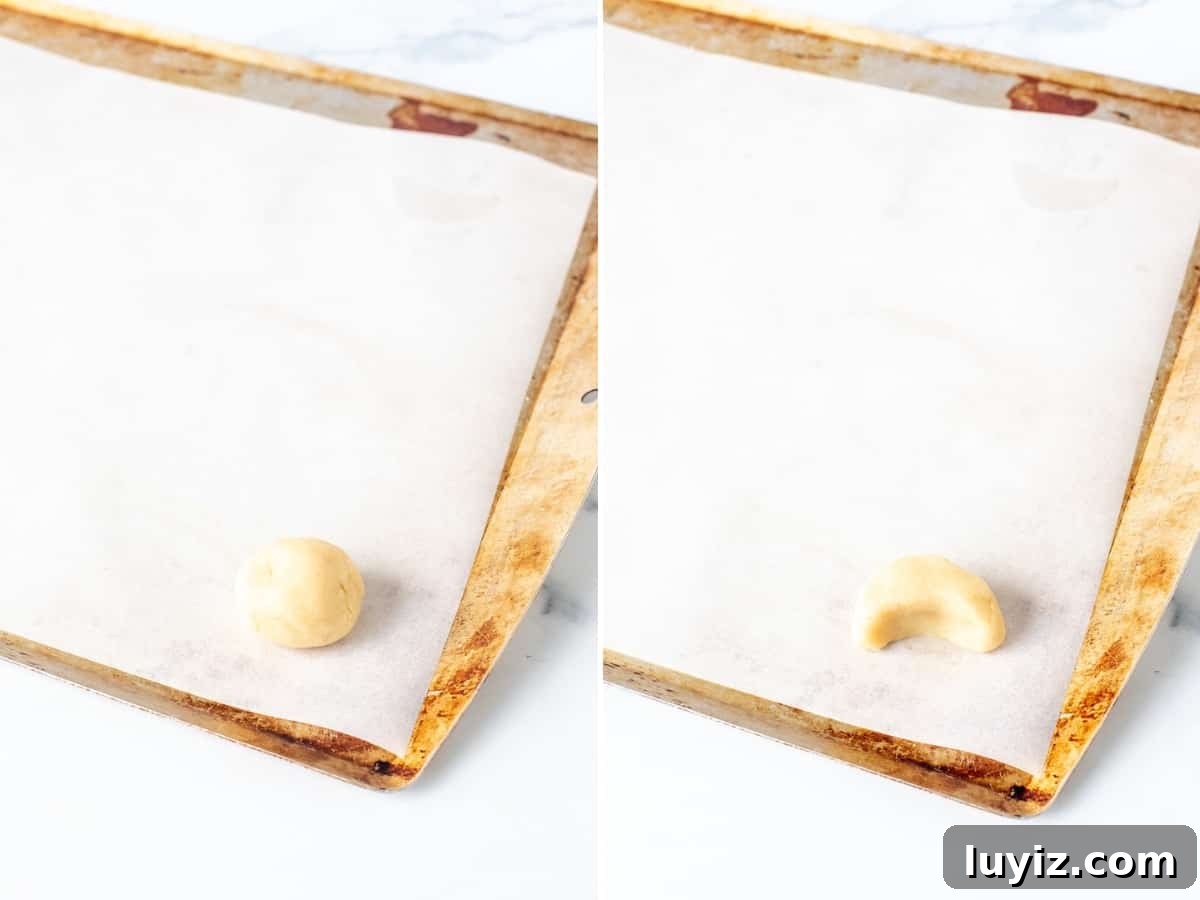
Freezing and Make Ahead Tips
You can prepare the dough up to 48 hours before baking. Cover the bowl and refrigerate until you’re ready to work with it. Bring the dough to room temperature before shaping so it’s pliable enough to form crescents.
Store baked cookies in an airtight container at room temperature for up to 5 days. For longer storage, freeze in an airtight container or freezer bag for up to 2 months. Thaw cookies in the fridge rather than at room temperature — slow thawing helps preserve texture.

If you enjoy shortbread-style cookies, also consider trying other variations such as whipped shortbread, chocolate shortbread, or cranberry pistachio shortbread.

Almond Crescent Cookies
Fiona Dowling
30 mins
14 mins
1 hr
30 cookies
Equipment
-
Cookie sheets
Ingredients
- 1 cup unsalted butter (226 grams), softened
- 2/3 cup superfine sugar (133 grams) — granulated sugar works too
- 1 teaspoon vanilla extract
- 1/2 teaspoon almond extract
- 1/4 teaspoon salt
- 2 1/4 cups all-purpose flour (281 grams) — you may need 1–2 extra tablespoons
- 1 cup almond flour (95 grams) — almond meal works too
- 1/4 cup powdered sugar (27 grams) for dusting
Instructions
- Preheat the oven to 350°F (180°C) or 325°F (170°C) for convection ovens. Line cookie sheets with parchment paper or silicone mats.
- In a large bowl, beat the softened butter and sugar together until combined. Mix in the vanilla, almond extract and salt.
- Add the all-purpose flour and almond flour. Start the mixer on low and increase speed gradually until you no longer see flour. The dough should be somewhat difficult to fully incorporate.
- Turn off the mixer and test the dough by squeezing a portion in your hand. If it holds together, it’s ready. If it crumbles, add 1–2 tablespoons of milk slowly until it binds. If it becomes sticky, add flour 1 tablespoon at a time.
- Pinch off portions about 1 to 1.5 tablespoons each. Roll into balls, then gently shape into crescents. Small cracks are fine.
- Place crescents about 1.5 inches (3 cm) apart on prepared baking sheets. Bake one sheet at a time for 12–14 minutes, or until the tops no longer appear doughy. Do not brown the cookies.
- Allow cookies to cool on the sheet for 5–10 minutes, then dust with powdered sugar using a sifter in small amounts for even coverage.
Notes
- Butter: Use real butter for best flavor. If you use salted butter, omit the added salt in the recipe.
- Almond extract: Adds a stronger almond aroma; it can be omitted if unavailable, but the almond note will be milder.
- Almond flour vs. almond meal: Both work. If you make almond meal at home, pulse almonds with a few tablespoons of flour to avoid creating almond butter.
- Storage: Store in an airtight container up to 5 days, or freeze up to 2 months.
- Nutrition: Nutritional information is an estimate per cookie, assuming 30 cookies total.
Nutrition
Like this recipe? Rate and comment below!