
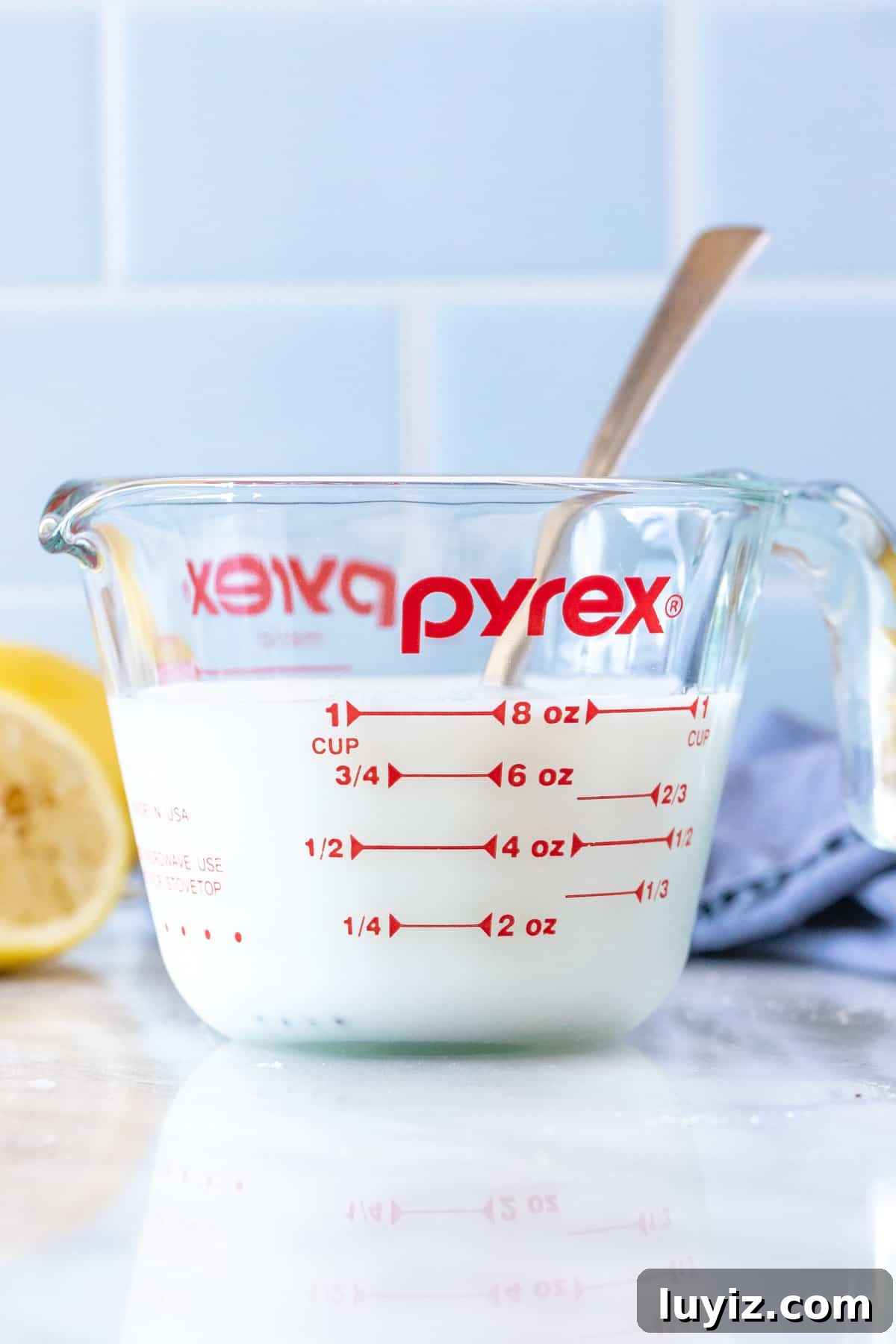
Learn how to make buttermilk for pancakes, cakes, and more. This simple substitution saves a grocery trip and helps you achieve tender, moist baked goods. 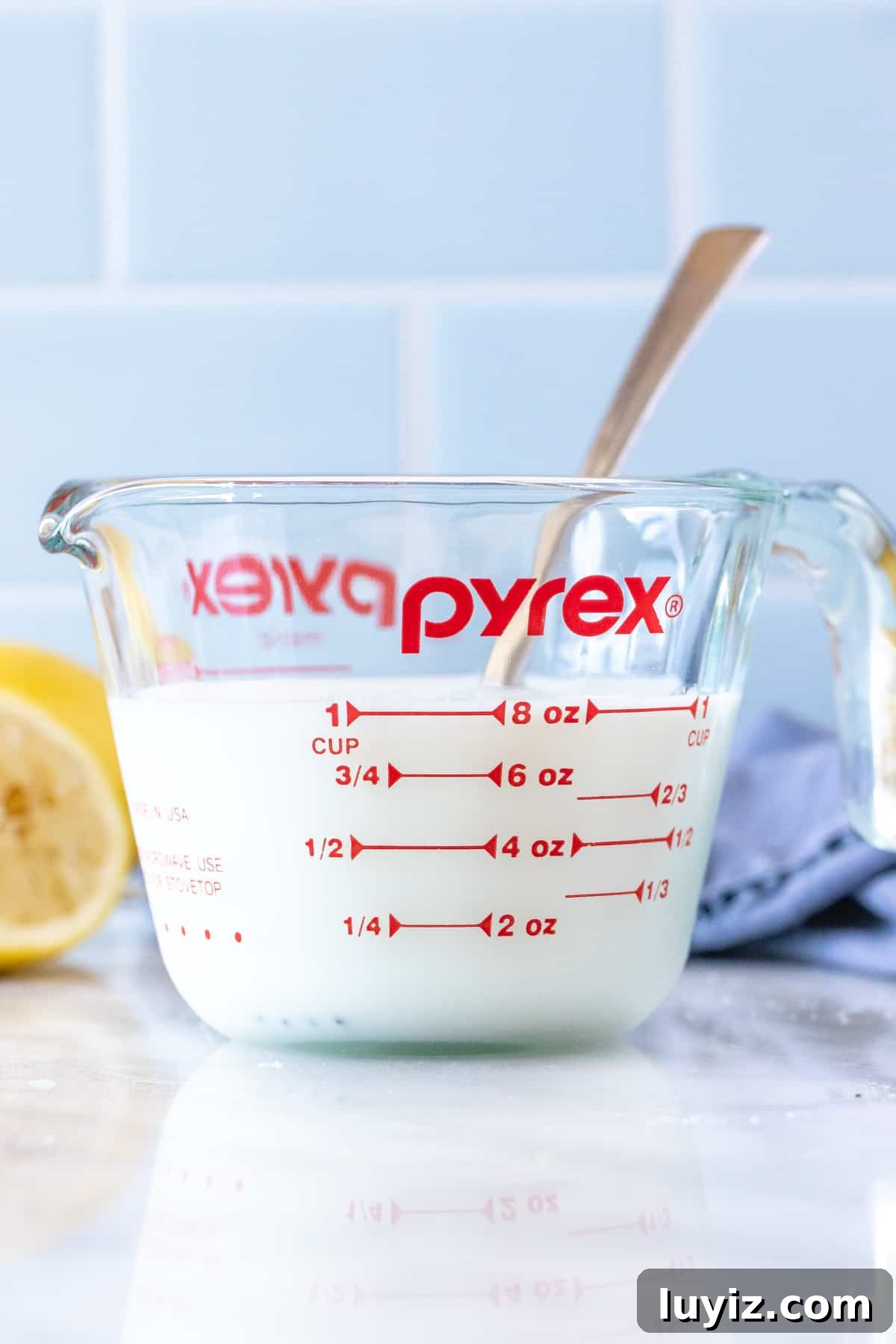
If you want light, fluffy pancakes, a moist red velvet cake, or tender muffins, buttermilk often appears on the ingredient list. Its subtle tang and acidity help create a soft crumb and keep baked goods moist. Buttermilk is especially useful in recipes that pair it with baking soda, where the acid reacts with the base to produce rise and a finer texture.
What is Buttermilk?
Originally, buttermilk was the liquid left behind after churning butter. That traditional version contained live cultures and had a pronounced tang while being lower in fat because the butter held most of the milkfat. Modern commercial buttermilk is cultured milk—similar to yogurt or kefir—produced specifically for sale rather than as a butter byproduct. It remains tangy and acidic, and fat content varies depending on the product.
Why Bake with Buttermilk?
Buttermilk contributes both flavor and texture. Its mild acidity gives a pleasant tang and, when combined with baking soda, helps batters and doughs rise more effectively. That reaction enhances volume and gives cakes, pancakes, and quick breads a tender crumb and lighter structure.
Can You Substitute Buttermilk with Milk?
Regular milk is not an ideal direct substitute because it lacks the acidity and distinctive tang of buttermilk. Recipes written for buttermilk often rely on its acidity to react with baking soda; using plain milk can alter flavor and affect leavening. If you don’t have buttermilk, use a quick acidic milk substitute (below) to mimic its properties.
How to Make Buttermilk
When a recipe calls for buttermilk and you don’t have any, you can easily make a reliable substitute using lemon juice or vinegar and milk. This quick stand-in adds the acidity needed for proper reactions with leavening agents and gives a similar tang in the finished product.
To make 1 cup of buttermilk:
- Add 1 tablespoon of distilled vinegar, white vinegar, or freshly squeezed lemon juice to a liquid measuring cup.
- Pour milk (1% or 2% works best) up to the 1-cup line.
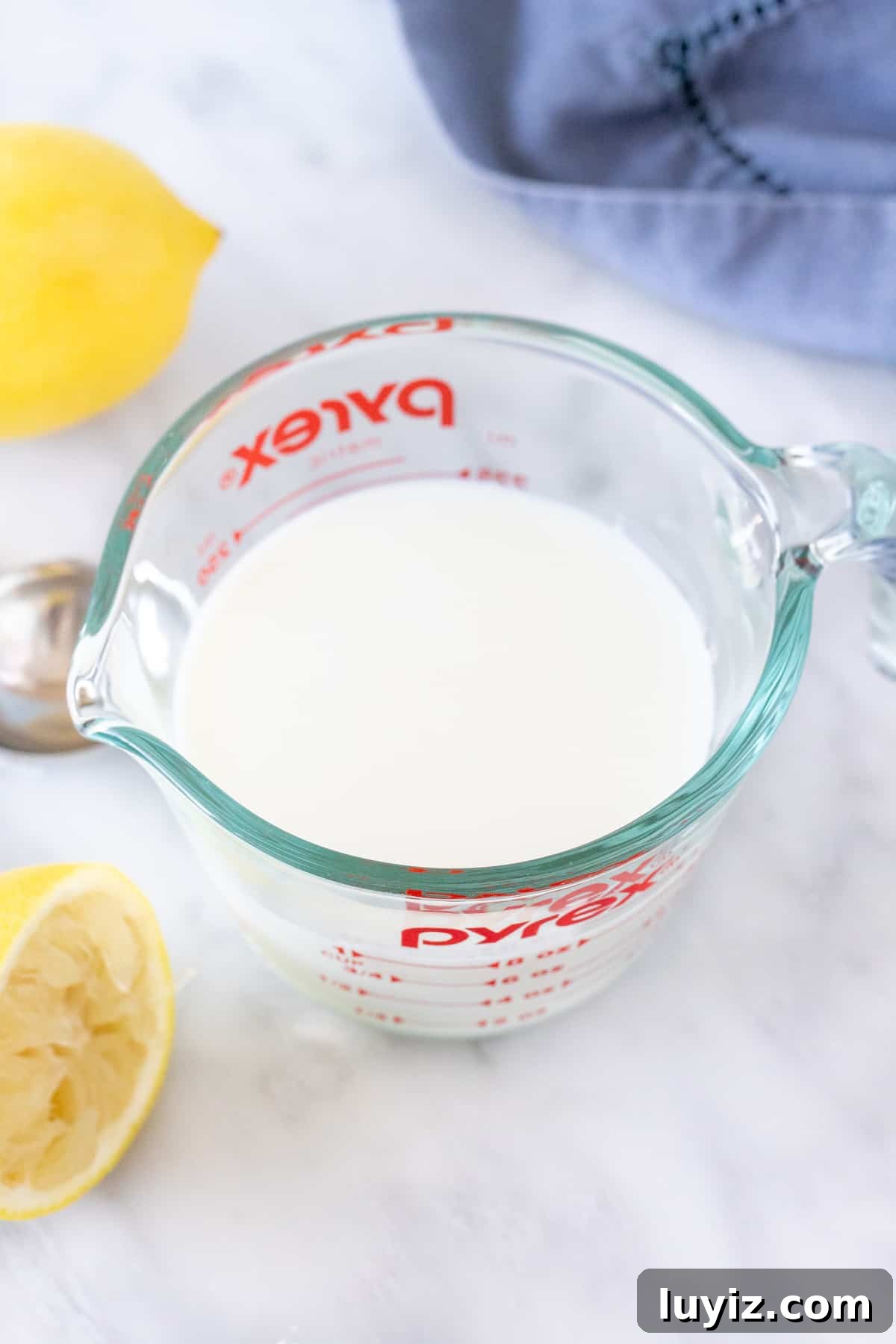
- Whisk together and let the mixture sit for 5 minutes so the milk slightly thickens and sours.
Lactose-free milk works well in this substitute, and many readers report success with unsweetened dairy-free milks too. The acid in lemon juice or vinegar sours the milk and makes it behave more like cultured buttermilk in recipes.
Some favorite recipes that use buttermilk include:
- Red Velvet Cupcakes
- Double Chocolate Cake
- Buttermilk Pancakes
- Chocolate Chip Muffins
How To Make Buttermilk
Equipment
- liquid measuring cup
Ingredients
- 1 tablespoon lemon juice (15 ml) or white/distilled vinegar
- 1 cup milk (240 ml) — 1% or 2% recommended
Instructions
- Add the lemon juice or vinegar to a liquid measuring cup.
- Pour milk to the 1-cup line.
- Whisk to combine.
- Let the mixture sit for 5 minutes before using in your recipe.
Notes
- Lemon Juice: Freshly squeezed lemon juice is preferred; bottled lemon juice can be overly tart.
- Milk: I usually use 1% or 2% (low-fat). Lactose-free milk works well, and many find unsweetened dairy-free milks acceptable.
- Adjusting Quantities:
- For 1/2 cup: use 1/2 tablespoon (1 1/2 teaspoons) acid + 1/2 cup milk.
- For 1/3 cup: use 1 teaspoon acid + 1/3 cup milk.
- Nutrition: Values are estimates for 1 cup of the prepared substitute.