
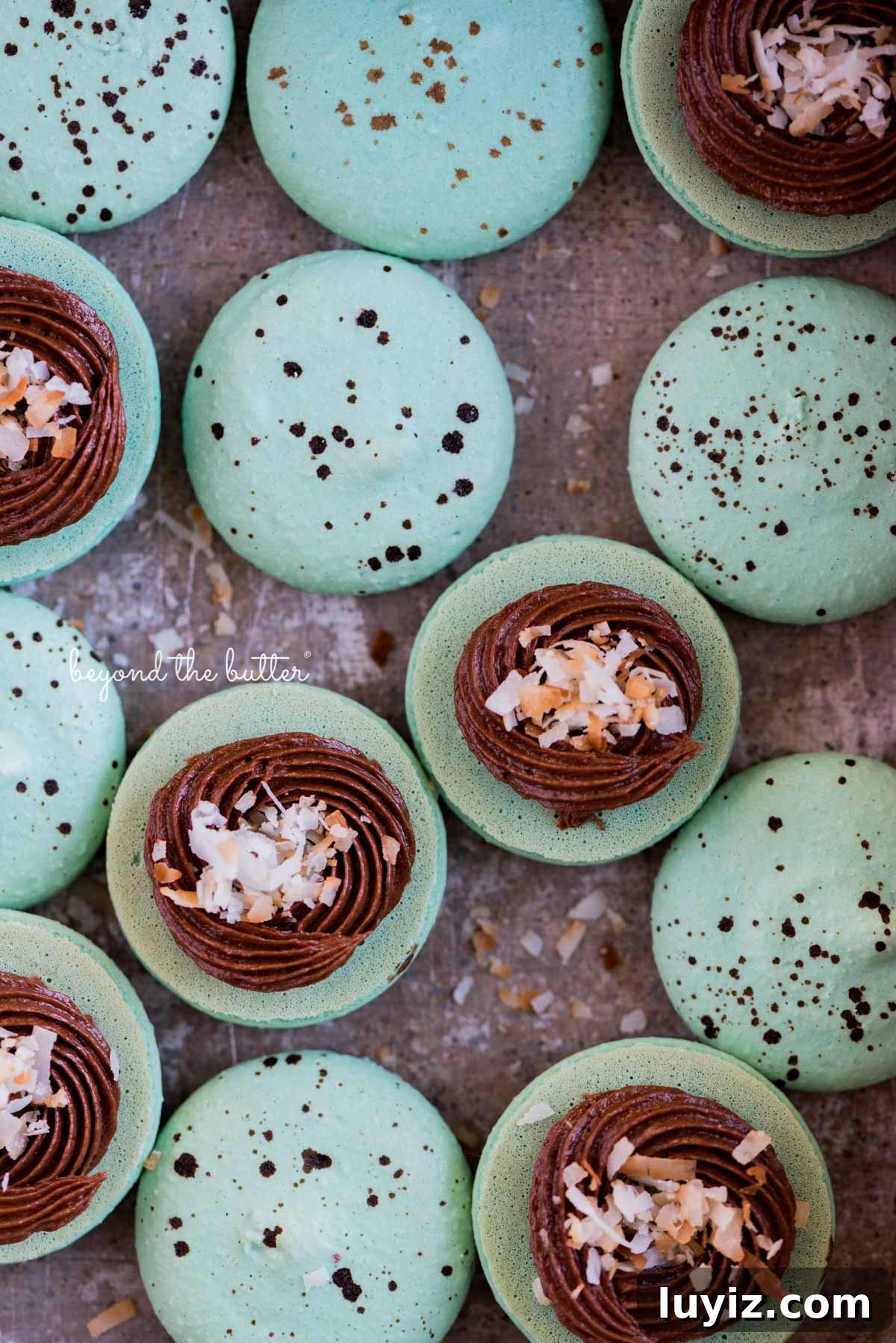
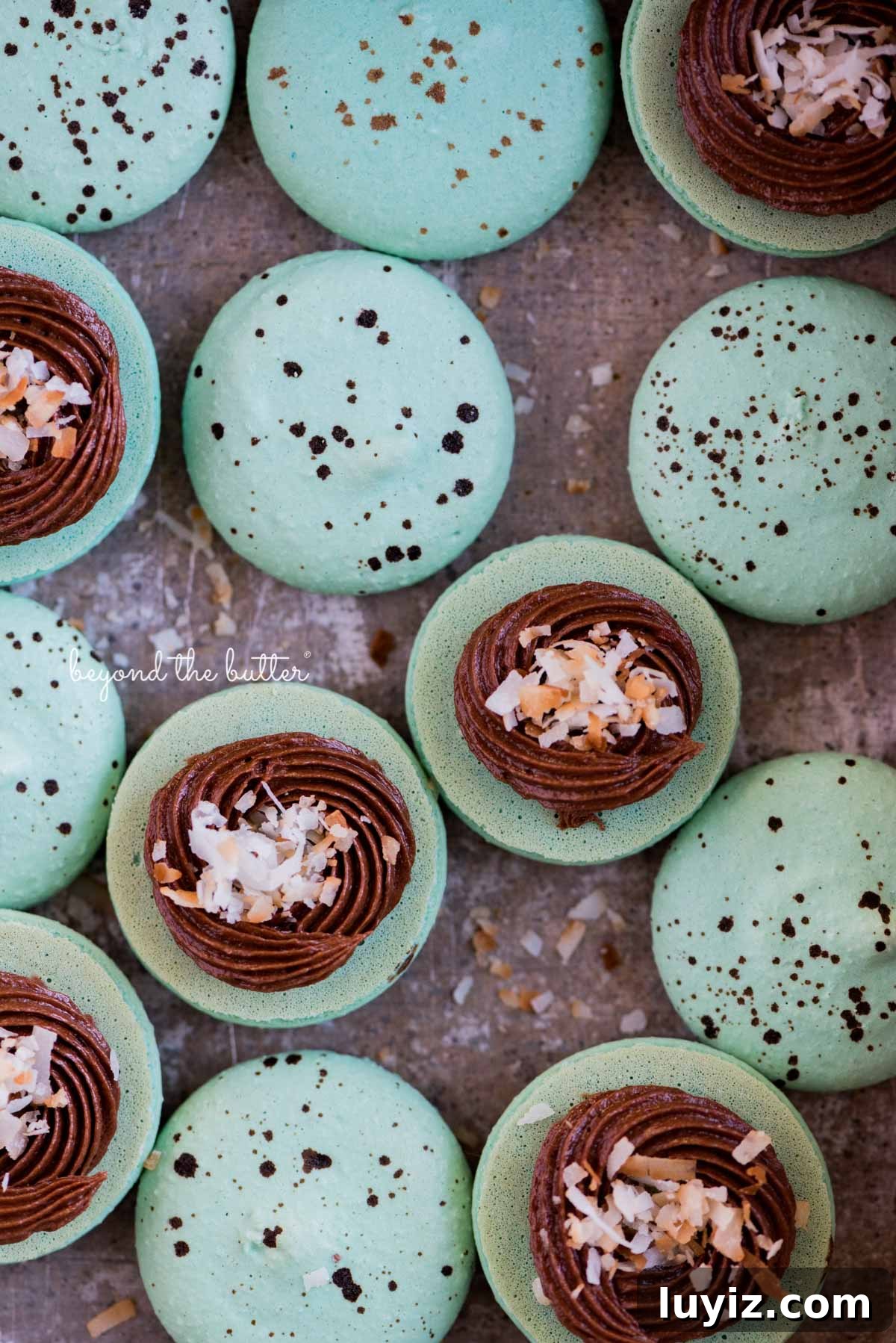
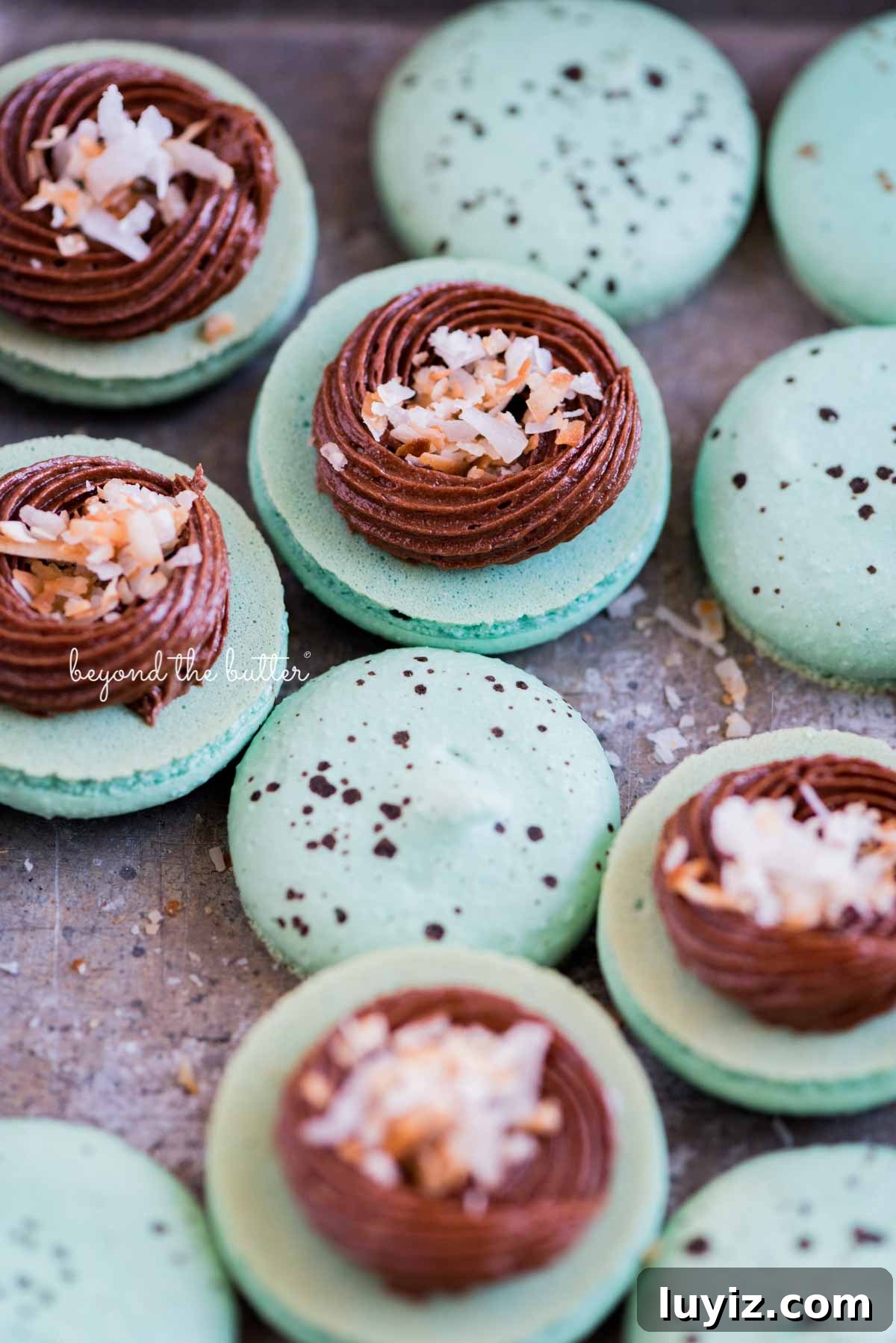
This Robin’s Egg Macarons recipe produces delicate vanilla macaron shells tinted robin’s egg blue, filled with a creamy milk chocolate fudge frosting and a sprinkle of toasted coconut flakes. They make a lovely addition to Easter baskets or springtime gatherings.
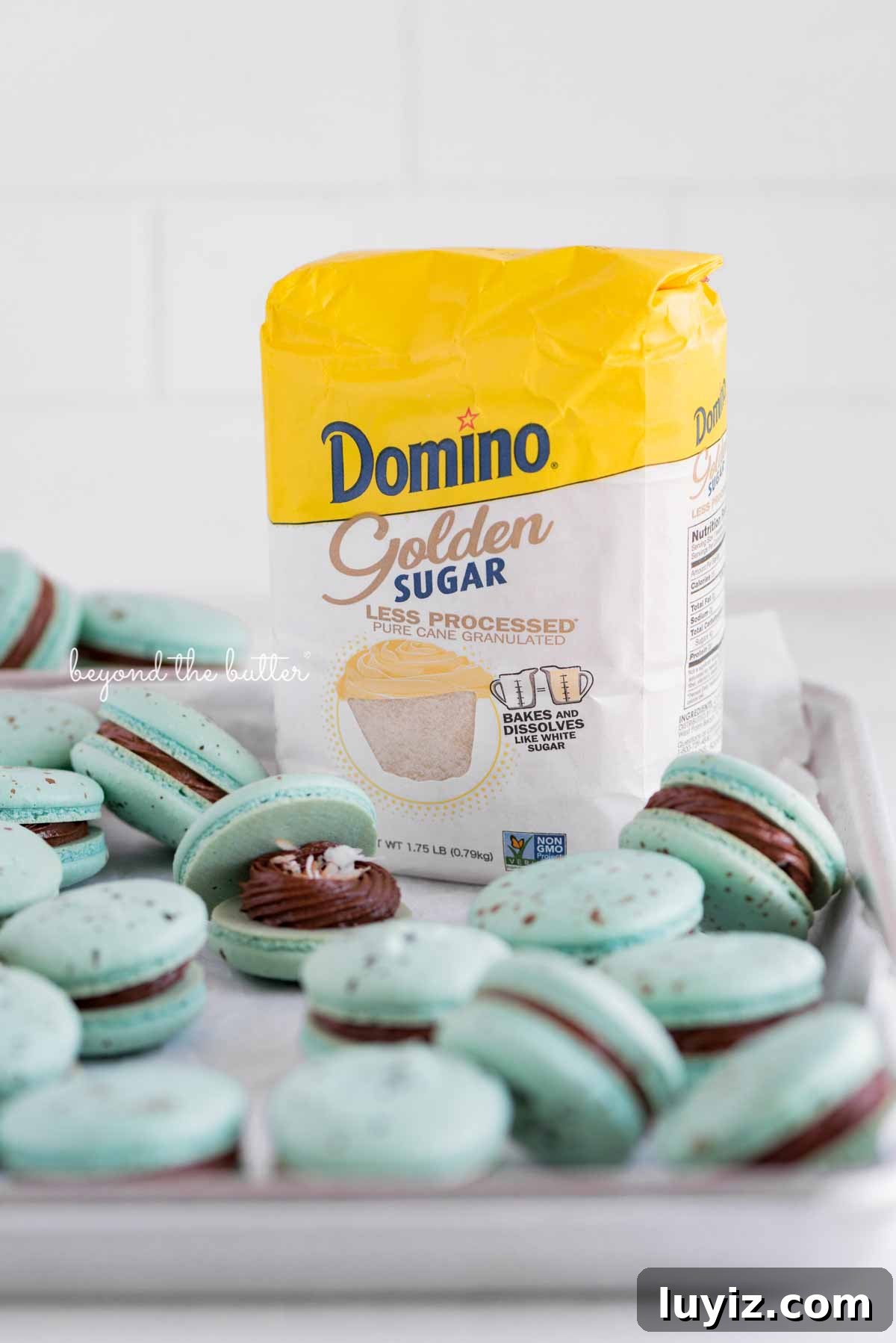
This post was created in partnership with Domino® Sugar. All opinions are the author’s own.
Table of Contents
- Recipe Overview
- Ingredients Needed
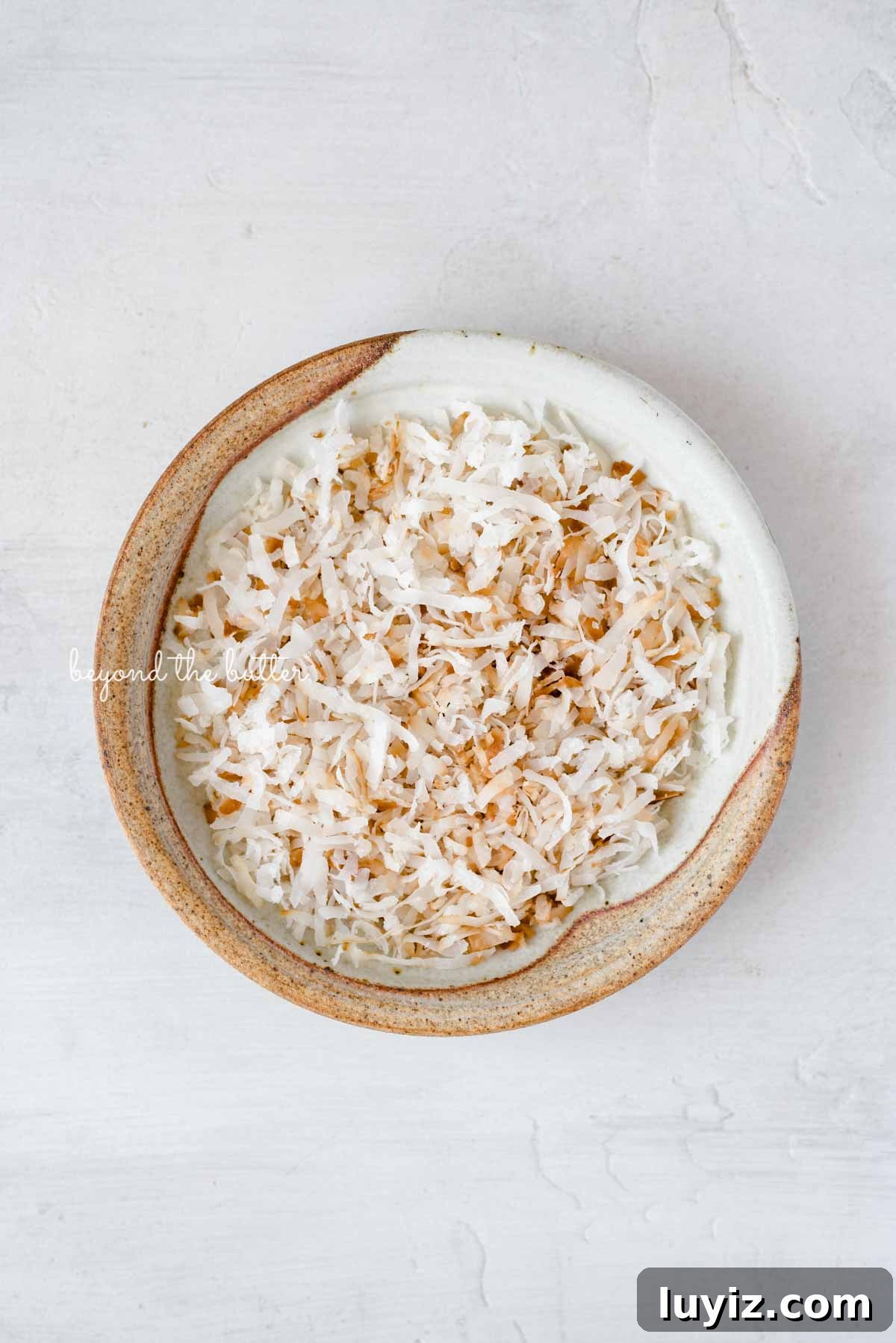
- Toasting Coconut Flakes
- Essential Baking Tools
- Helpful Tips
- Storage
- Troubleshooting / FAQs
- More Macaron Recipes to Enjoy!
- Robin’s Egg Macarons Recipe
Recipe Overview
This recipe uses the Swiss meringue method, which is a great introduction to macarons for beginners. The Swiss method creates a stable, glossy meringue and yields shells with a crisp exterior and tender, chewy interior.
The shells have pronounced vanilla flavor and a subtle robin’s egg blue tint with brown speckles for a natural egg-like appearance. Paired with a smooth milk chocolate fudge frosting and optional toasted coconut, these macarons are festive and indulgent.
Yield: Approximately 22 fully assembled macarons. Prep about 25 minutes; bake 14 minutes per sheet; resting time 40 minutes; total ~1 hour 19 minutes.
Ingredients Needed
Macarons require surprisingly few ingredients. Below are what you’ll need for the shells, the frosting, and optional toasted coconut.
Macaron Shells
- Almond Flour: Sift at least twice to remove lumps.
- Domino® Powdered Sugar: Sifted; combine and sift with almond flour for a fine texture.
- Domino® Golden Sugar: Used to dissolve in the egg whites; its light molasses note is lovely in this recipe.
- Egg Whites: Room temperature (or aged) for best volume—sit out 1–2 hours before starting.
- Vanilla Extract: Use pure vanilla for the best flavor; it accentuates the shell and can be used to thin the brown speckle color if needed.
- Blue Food Coloring: Gel recommended—very concentrated, 2–3 drops are usually enough.
- Brown Food Coloring: A single drop makes speckles; dilute with 1/4 tsp vanilla if you want a lighter brown.
Frosting
- Unsalted Butter: Room temperature.
- Domino® Powdered Sugar: Sift for a smooth buttercream.
- Unsweetened Cocoa Powder: Sift to avoid lumps.
- Salt: A pinch to balance sweetness.
- Light Corn Syrup: Adds shine and smooth texture.
- Vanilla Extract: Use pure vanilla for best flavor.
- Milk Chocolate: About 2 oz, melted and cooled—use good-quality chocolate.
Coconut Flakes: Optional; toasted coconut adds a pleasant crunch and flavor contrast. Use less if you want fewer macarons with coconut.
Toasting Coconut Flakes
Two simple methods:
Small Skillet: Heat flakes over low–medium heat, stirring constantly 2–5 minutes until golden and fragrant. Remove and cool on a plate.
Microwave: Spread flakes on a microwave-safe plate and heat in 30-second increments, stirring between each, until golden. Do not exceed 30-second intervals to avoid burning. Cool before using.
Essential Baking Tools
- Food Scale: Accurate weighing is crucial—use a scale rather than measuring cups.
- Large flat baking sheets: Allow even airflow and baking.
- Double Boiler: Needed to gently warm egg whites with sugar until dissolved.
- Silicone Baking Mats: Provide a reliable nonstick surface; parchment will also work.
- Sifter or Fine Mesh: For almond flour and powdered sugar.
- Oven Thermometer: Ensures correct oven temperature.
- Piping Bags and Tips: A large bag with a round tip for shells; a small tip for frosting.



Helpful Tips
These practical tips will improve your macaron success rate:
- Keep everything clean: Any grease left on bowls or utensils can prevent stiff peaks. Wipe tools with a little white vinegar if needed.
- Sift thoroughly: Sift almond flour and powdered sugar at least twice and mix well to remove lumps. A food processor can help achieve a fine texture.
- Room-temperature egg whites: They whip more easily and give better volume—separate and rest 1–2 hours before starting.
- No yolk contamination: Even a trace of yolk will inhibit meringue formation.
- Finger test for dissolved sugar: Rub a bit of the warmed egg white and sugar between thumb and forefinger—if you feel granules, continue whisking over the double boiler.
- Macaronage test: Fold the dry ingredients into the meringue until the batter flows like lava and forms a ribbon or figure-8 without breaking.
- Pipe perpendicular: Hold the bag straight up to pipe even, round shells.
- Release air bubbles: Tap baking sheets 3–4 times and pop any visible bubbles with a toothpick.
- Rest the shells: Let the piped shells dry 40 minutes (longer if humid) until the tops are no longer sticky. A gentle fan helps.
- Piping bag holder: Use a pint glass to stabilize the bag while filling and working.
Storage
Store macaron shells or fully assembled macarons in an airtight container in the refrigerator or freezer. Assembled macarons benefit from resting 2–3 days in the refrigerator for the best texture and flavor. Frosting can be refrigerated for up to one week; bring it to room temperature and re-whip briefly before using.
Troubleshooting / FAQs
Check that bowls and whisk are grease-free and that egg whites are at room temperature. Also ensure the sugar has fully dissolved by warming over simmering water and testing between your fingers.
With the Swiss method it can take up to 10 minutes on high speed once the mixture is warm and frothy. Watch for glossy, stiff peaks that hold their shape.
The batter should flow like lava and form ribbons or a figure-8 without breaking. If it holds shape too firmly, fold a few more times.
Lumps usually come from insufficient sifting or blending of the dry ingredients. Remove any remaining bits rather than forcing them through a sifter.
Causes include over- or under-mixing, piping at an angle, opening the oven frequently, or uneven airflow on the baking sheet. Bake one tray at a time for best results.
Let shells cool completely before attempting removal. If they still stick, freeze for 15–20 minutes and try again. Imperfect bottoms can be masked with extra frosting.
More Macaron Recipes to Enjoy!
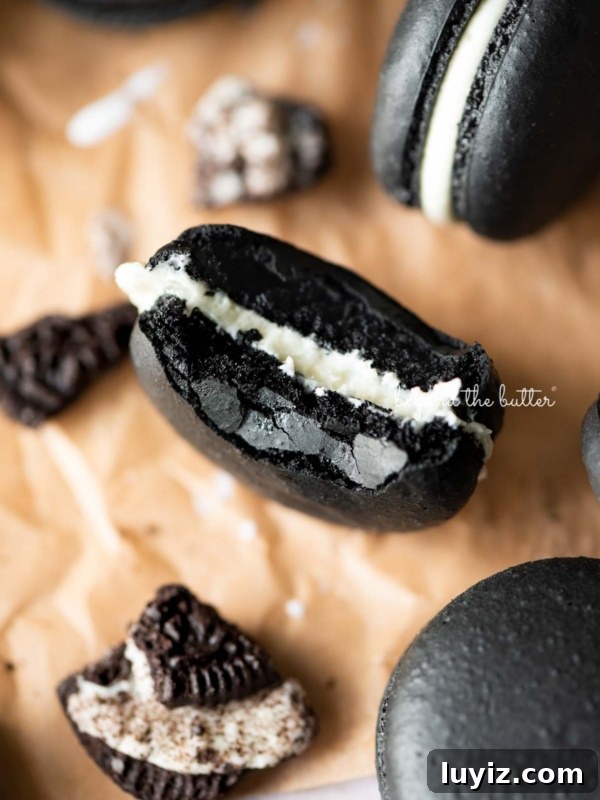
Oreo Macarons
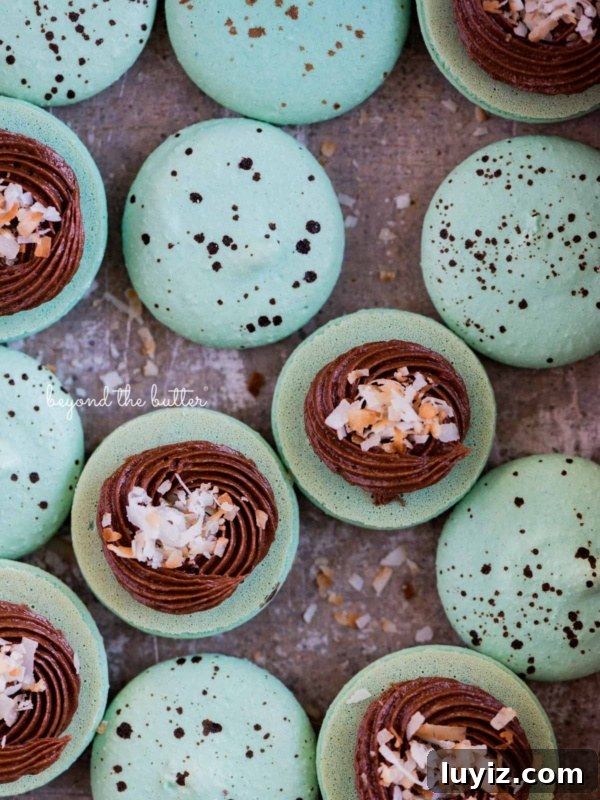
Robin’s Egg Macarons
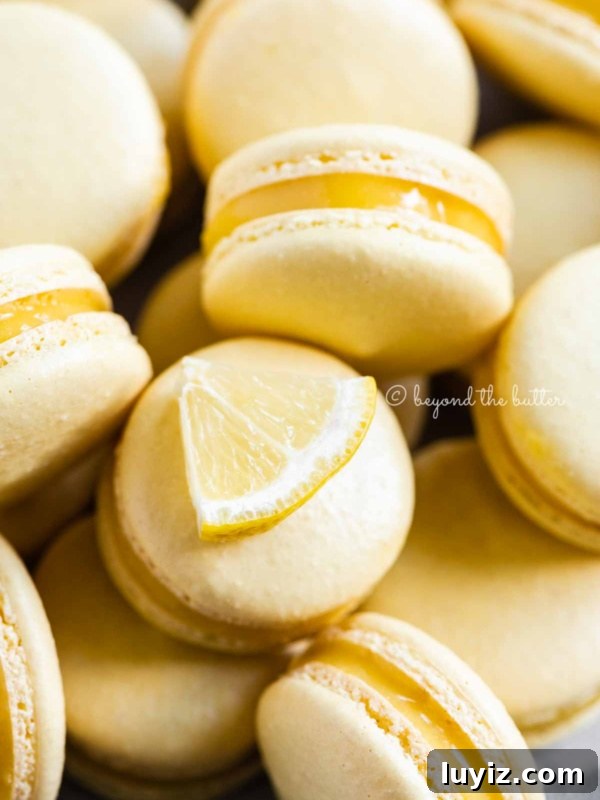
Lemon Bar Macarons
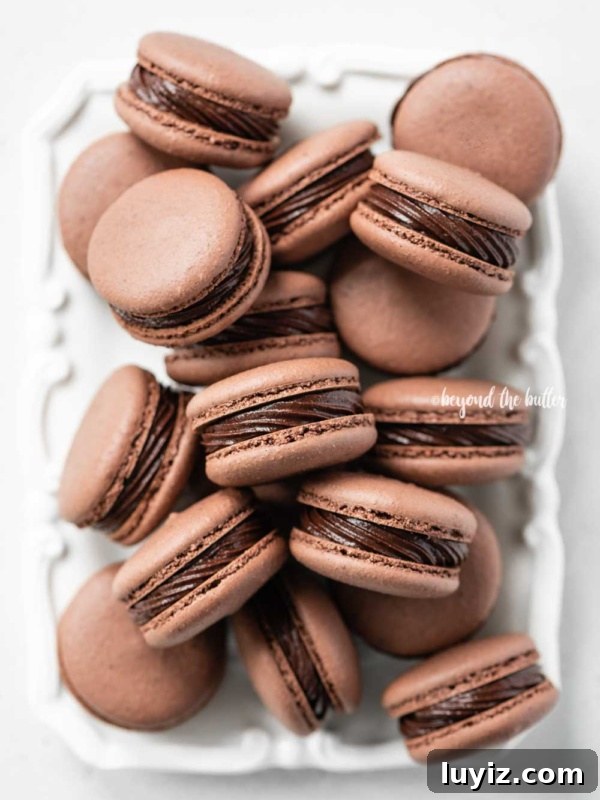
Dark Chocolate Macarons
Robin’s Egg Macarons

Ingredients
Robin’s egg macaron shells
- 1 cup Almond Flour, sifted
- ¾ cup Domino® Powdered Sugar, sifted
- 3 Large Egg Whites, room temperature
- ½ cup Domino® Golden Sugar
- 2 tsp Vanilla Extract
- 2–3 drops Blue Food Coloring (gel preferred)
- 1 drop Brown Food Coloring (plus 1/4 tsp vanilla to thin if desired)
- 1/3 cup Coconut Flakes, toasted (optional)
Milk chocolate fudge frosting
- ⅓ cup Unsalted Butter, room temperature
- ⅔ cup Domino® Powdered Sugar
- ¼ cup Unsweetened Cocoa Powder
- ⅛ tsp Salt
- ¼ cup Light Corn Syrup
- ½ tsp Vanilla Extract
- 2 oz Milk Chocolate, melted and cooled
Instructions
Robin’s egg macaron shells
- Line two baking sheets with silicone mats or parchment and fit a large piping bag with a round tip. Weigh ingredients on a food scale.
- Sift almond flour and powdered sugar together twice, then whisk or pulse in a food processor to combine.
- In a double boiler, heat the egg whites and Golden Sugar over 1–1½ inches of simmering water, whisking constantly until the sugar dissolves and the mixture is frothy (about 5–6 minutes). Test by rubbing a drop between thumb and finger—no granules should be felt.
- Transfer the hot mixture to a stand mixer with the whisk attachment. Beat on high until soft peaks form, add vanilla, then continue to beat until stiff, glossy peaks form (about 10 minutes). Add blue gel coloring and blend.
- Prepare the brown speckle: place 1 drop brown food coloring in a small bowl and add 1/4 tsp vanilla if you want a lighter shade. Set aside.
- Fold half of the dry ingredients into the meringue with a spatula, then fold in the remainder. Fold until the batter flows like lava and can form a ribbon or figure-8 without breaking.
- Pipe 1.5-inch circles onto the prepared sheets, holding the bag perpendicular. Tap the sheets on the counter 3–4 times to release air bubbles and pop any with a toothpick.
- Dip a small brush into the brown coloring mixture and flick over the shells from 6–8 inches above to create speckles.
- Let shells rest in a cool, dry place for about 40 minutes, until a dry skin forms and they are not sticky to the touch. Resting time varies with humidity.
- Preheat the oven to 300°F and position the rack just above center. Bake one tray at a time for 14 minutes, rotating the sheet at 7 minutes. Avoid opening the oven except to rotate.
- Cool on the sheet for 10–15 minutes. If bottoms are still sticky, let them cool longer at room temperature or freeze 15–20 minutes.
- Store cooled shells in an airtight container in the fridge or freezer until you’re ready to fill them.
Toasted coconut flakes (optional)
- Toast coconut in a small skillet over low–medium heat, stirring until golden (about 4–5 minutes). Cool and store airtight if made ahead.
Milk chocolate fudge frosting
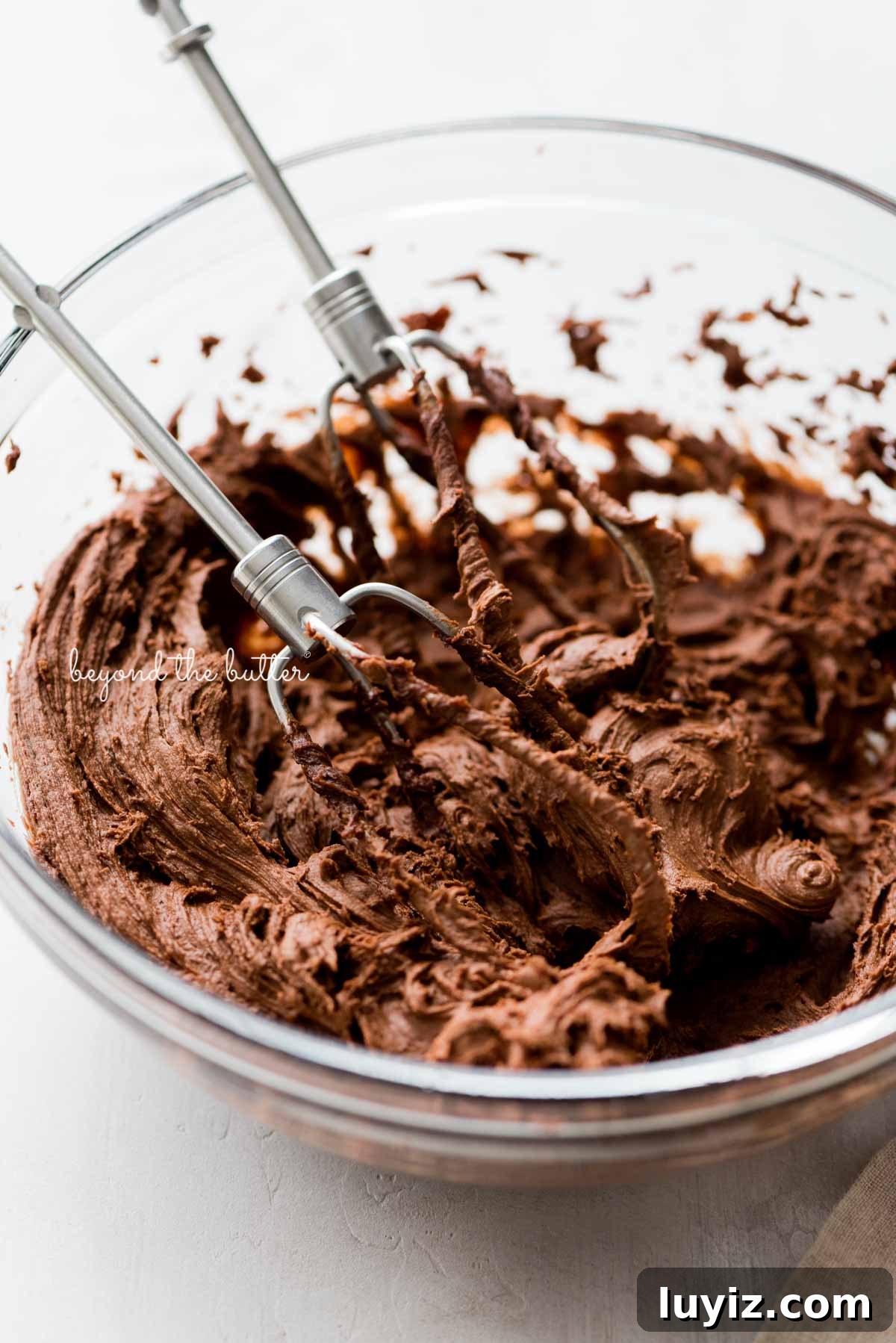
- Beat butter, sifted powdered sugar, sifted cocoa, salt, corn syrup, vanilla, and melted cooled milk chocolate on low until smooth. Scrape down the bowl as needed.
Assembling the robin’s macarons
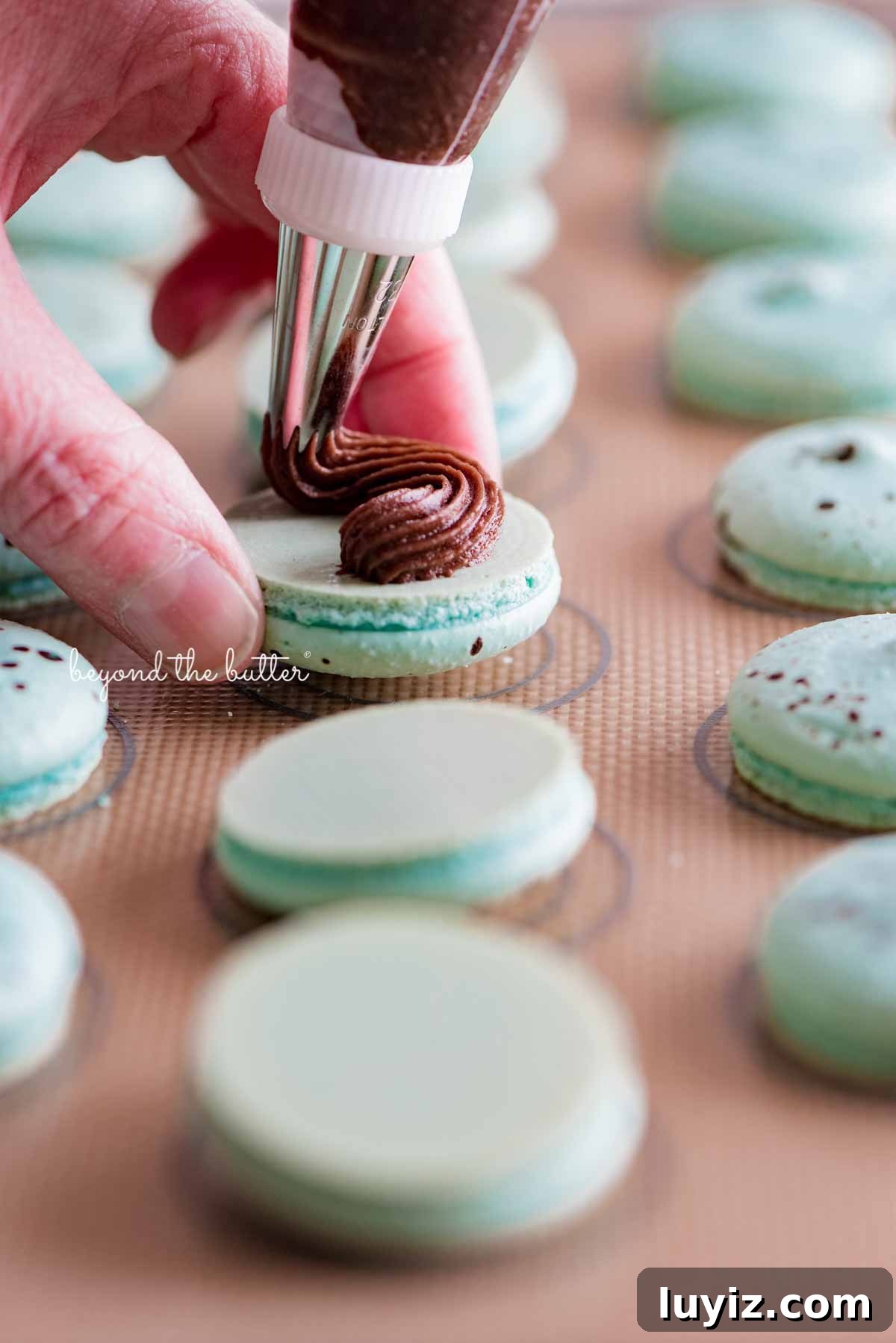
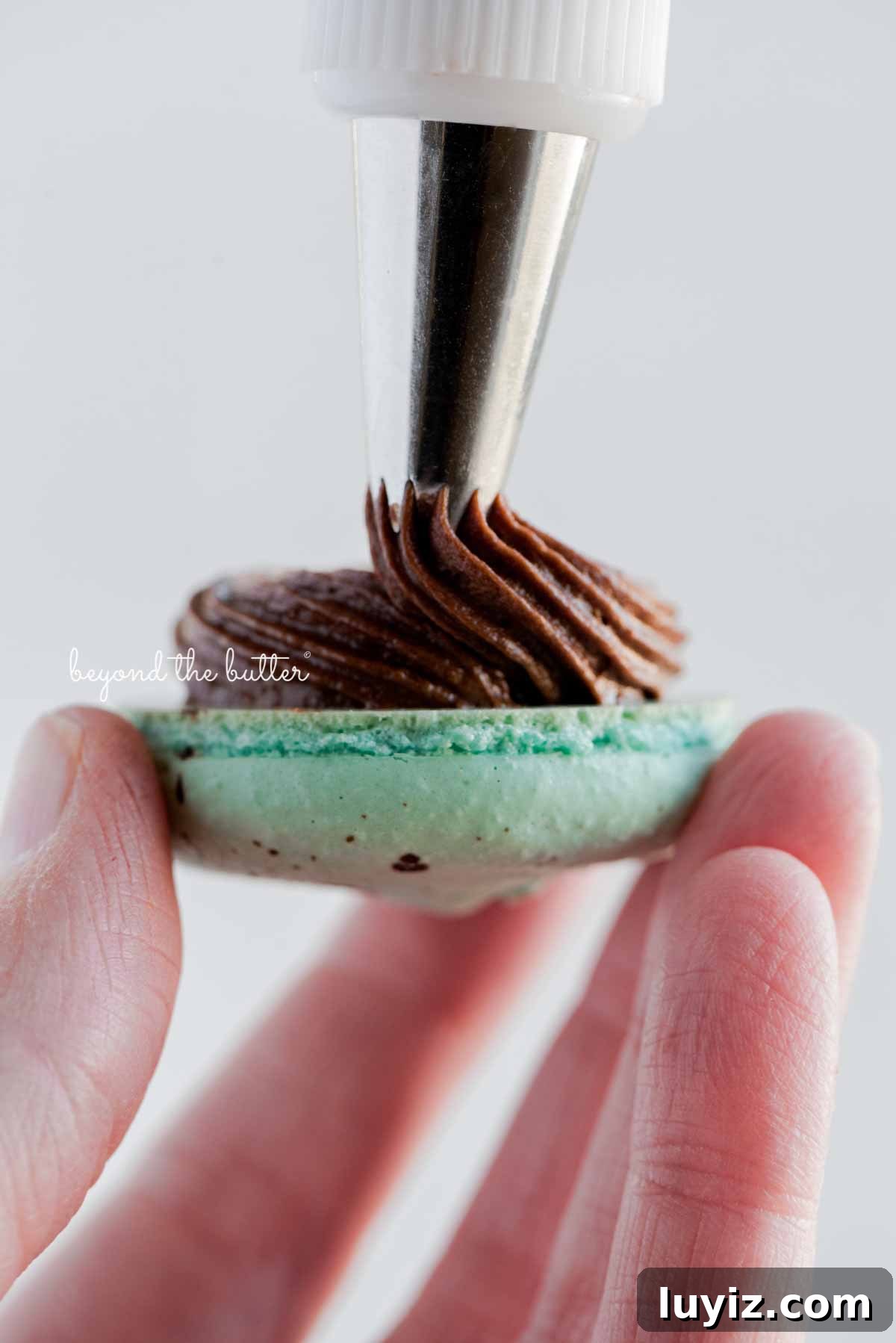
- Fit a small piping bag with a small tip and fill with about ¾ of the frosting. Pipe a ring or dollop of frosting onto a shell, add a pinch of toasted coconut, and top with a matching shell. Repeat until assembled. Keep leftover frosting refrigerated up to 1 week.
- Store assembled macarons in an airtight container in the refrigerator. Flavor and texture improve after 2–3 days chilling.
Video
Notes
- Thoroughly clean tools before starting to avoid any grease contamination.
- Do not skip sifting the almond flour and powdered sugar.
- Room-temperature egg whites produce better meringue.
- Be careful to avoid yolk when separating eggs.
- Test that the sugar has dissolved by rubbing a small amount of the warmed mixture between finger and thumb.
- When batter can form ribbons or a figure-8, stop folding and pipe immediately.
- Expect some splatter when adding the brown speckles; clean with warm soapy water.
Nutrition
| Carbohydrates: 18 g | Protein: 2 g | Fat: 6 g
Nutritional information is an estimate and will vary by ingredients used.