
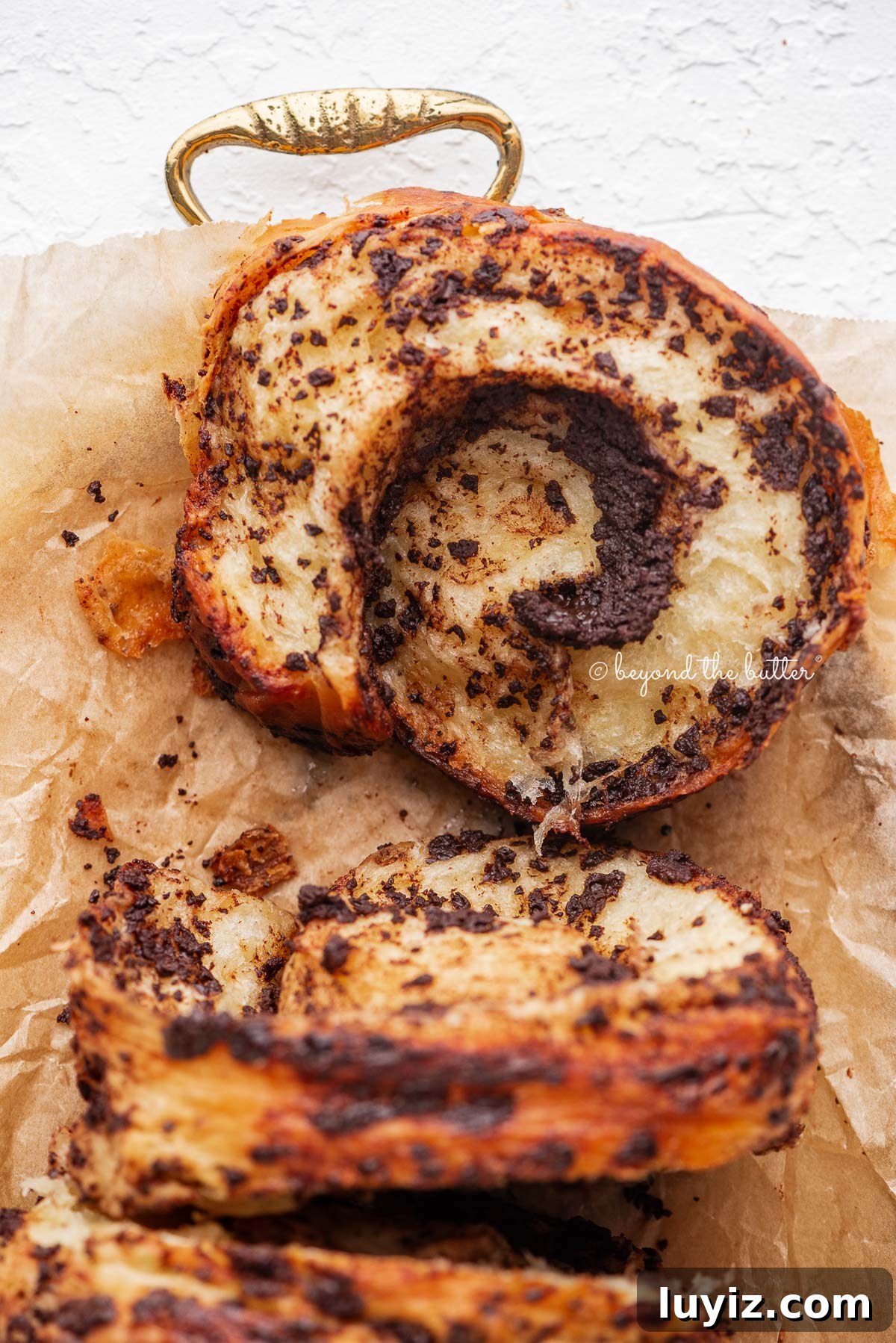
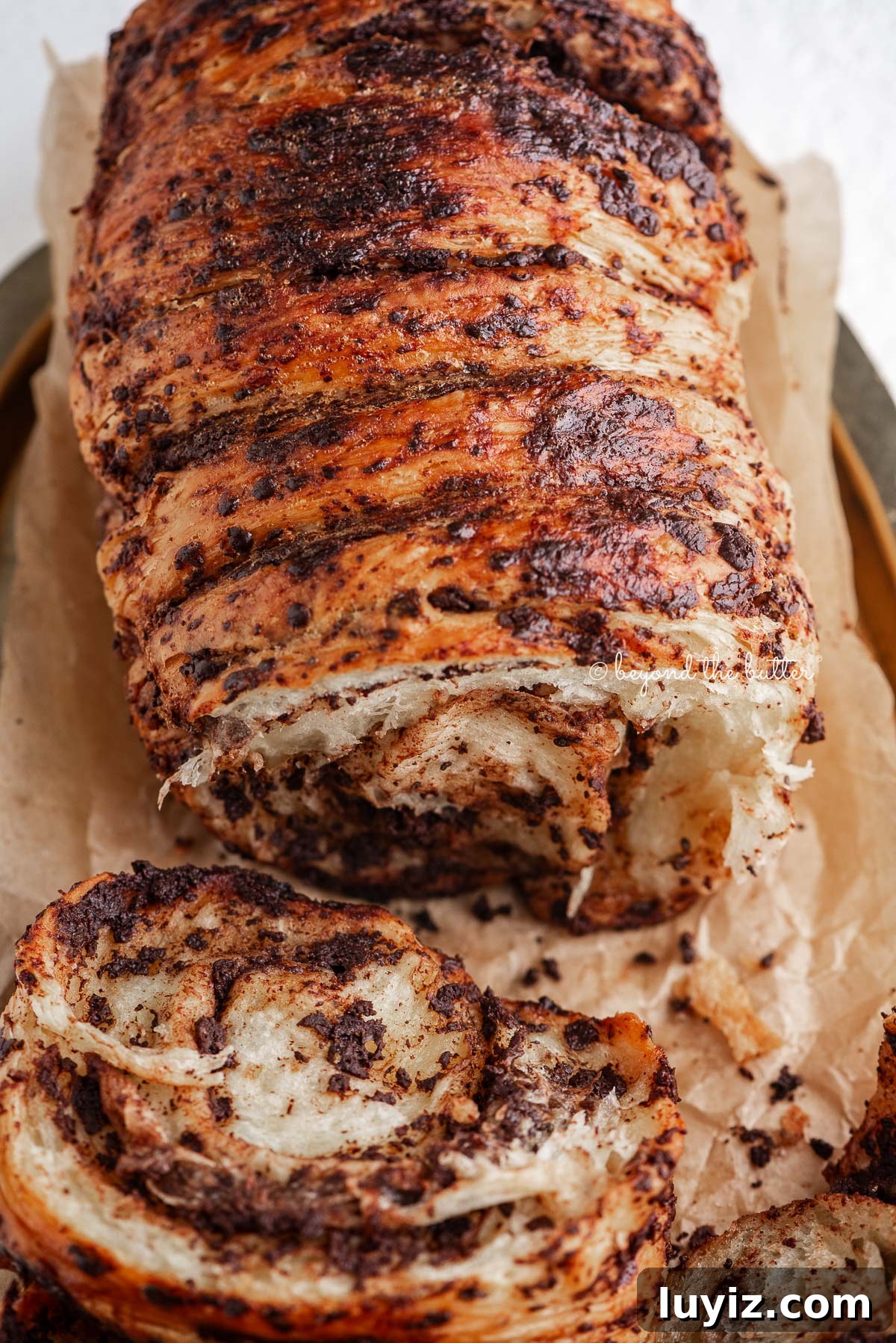
This Chocolate Croissant Loaf puts a decadent spin on the classic pastry by combining flaky, butter-rich croissant layers with rich dark chocolate in a loaf you can slice and share. The result is crisp and golden on the outside, light and airy inside, and intensely chocolatey—perfect for breakfast, brunch, or a special dessert.
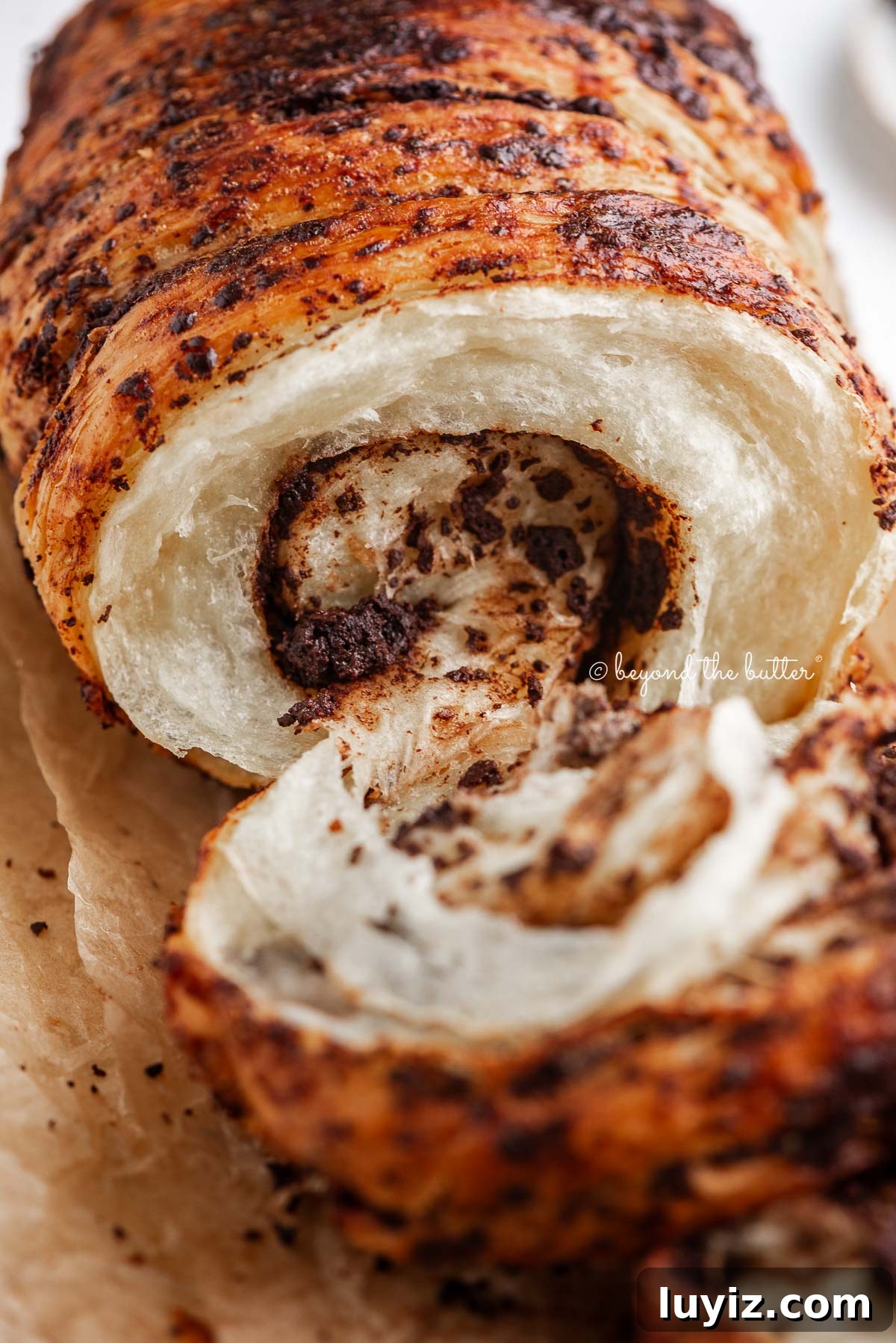
This Chocolate Croissant Bread Loaf recipe post is sponsored by Ankarsrum. All thoughts and opinions are 100% my own.
Why You’ll Love This Recipe

This chocolate croissant loaf is an approachable way to enjoy laminated dough at home. Instead of forming individual croissants, the dough is laminated, layered with chocolate, rolled into a loaf, and baked. The method yields the unmistakable buttery layers of croissants with less fuss and excellent results in a single loaf.
Highlights: ultra-buttery, delicate layered crumb, crisp golden exterior, and plenty of dark chocolate. Expect the process to take several hours (about 6–7 hours total with rising and lamination), so plan ahead. If this is your first time laminating dough, follow the step-by-step instructions and tips below for the best outcome.
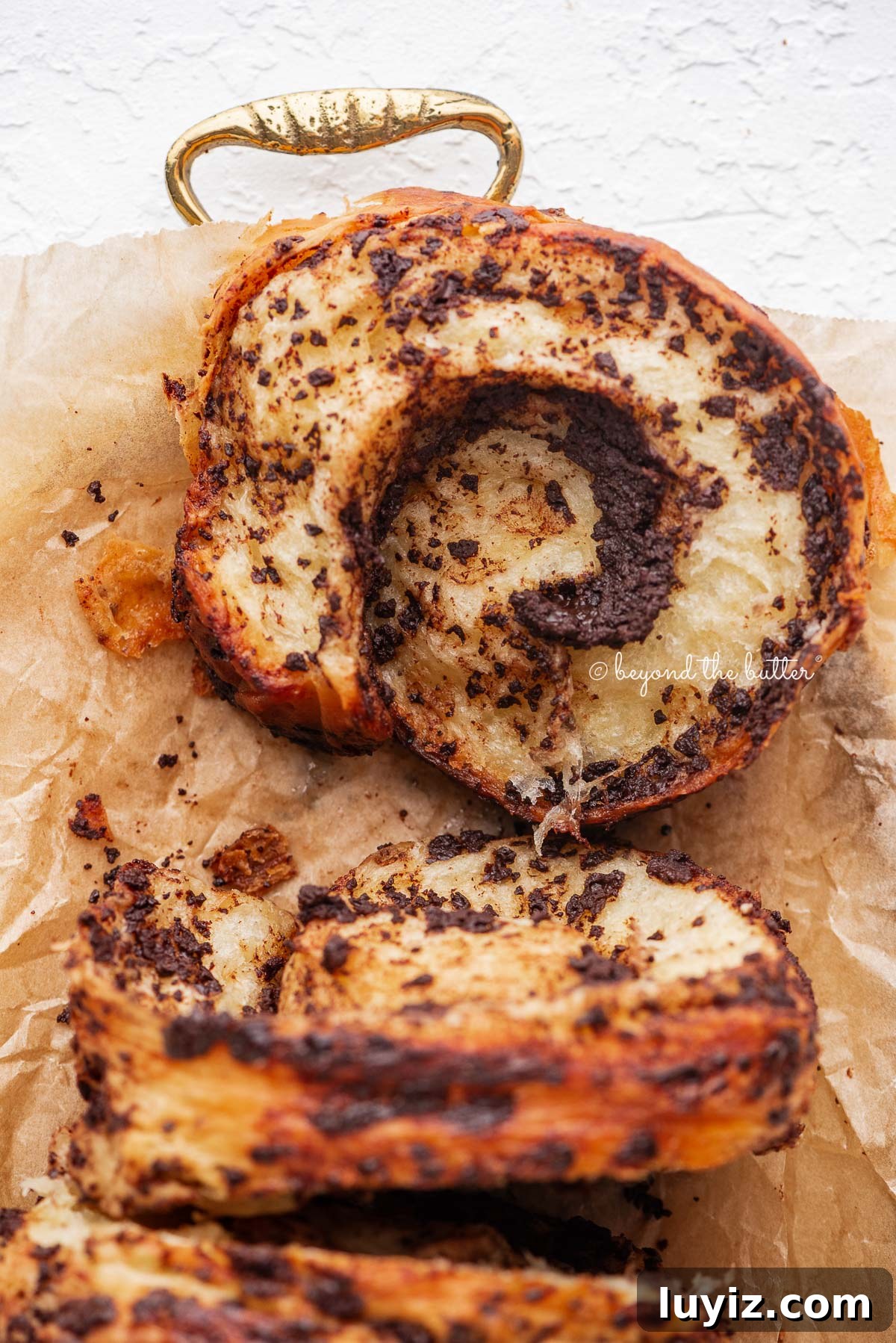
Table of Contents
- Ingredients Needed
- How to Make the Recipe
- Helpful Clay Baker Tips
- Recipe FAQs
- More Bread Recipes
- Chocolate Croissant Loaf Recipe
Ingredients Needed
Key ingredients and why they matter:
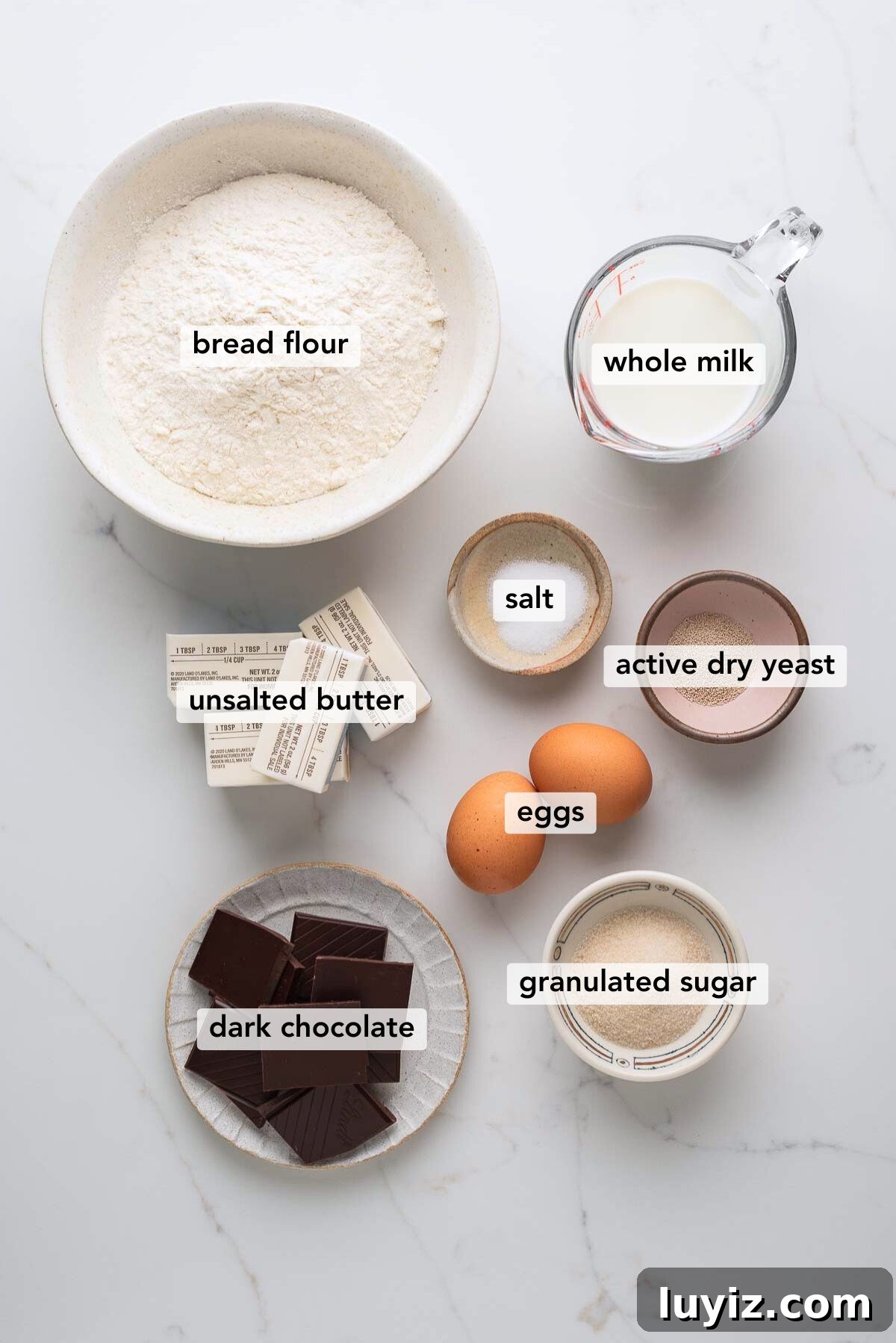
- Bread Flour — Higher protein helps build gluten for strength during lamination, which improves lift and creates distinct flaky layers. All-purpose can be used but yields a different texture.
- Whole Milk — Adds fat for a softer, tender crumb.
- Dark Chocolate — Use a chocolate bar that chops easily (e.g., 70% dark). Finely chopped chocolate distributes and melts more evenly than chips.
- Unsalted Butter — Some goes into the dough; most is used for lamination to form layers.
- Eggs — One in the dough and one for egg wash to create a shiny, golden crust near the end of baking.
Quantities and the step-by-step recipe follow in the recipe card below.
How to Make the Recipe
Overview of the process: mix and proof the dough, prepare a butter slab, laminate with three turns, shape with chopped chocolate, proof a final rise, then bake in a clay baker or loaf pan. Detailed instructions are included in the recipe card.
Croissant Dough
Recipe Tip: If using an Ankarsrum mixer, use the 7L bowl, dough knife, and dough roller. If using a clay baker, soak the lid before first use per the manufacturer’s instructions.
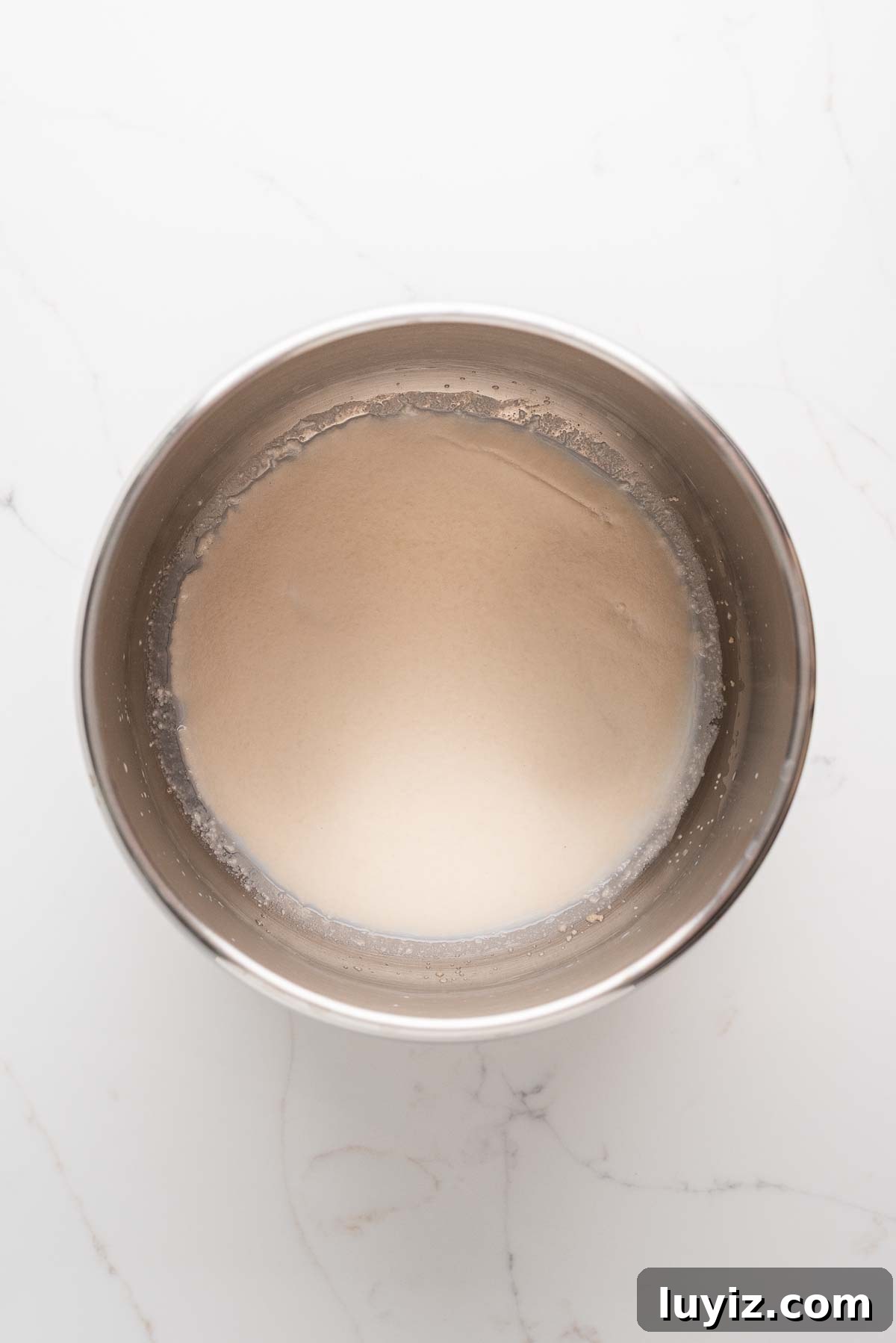
Step 1 — Proof the yeast. Warm milk to 110–115°F, stir in sugar and yeast, cover, and let sit about 10 minutes until foamy.
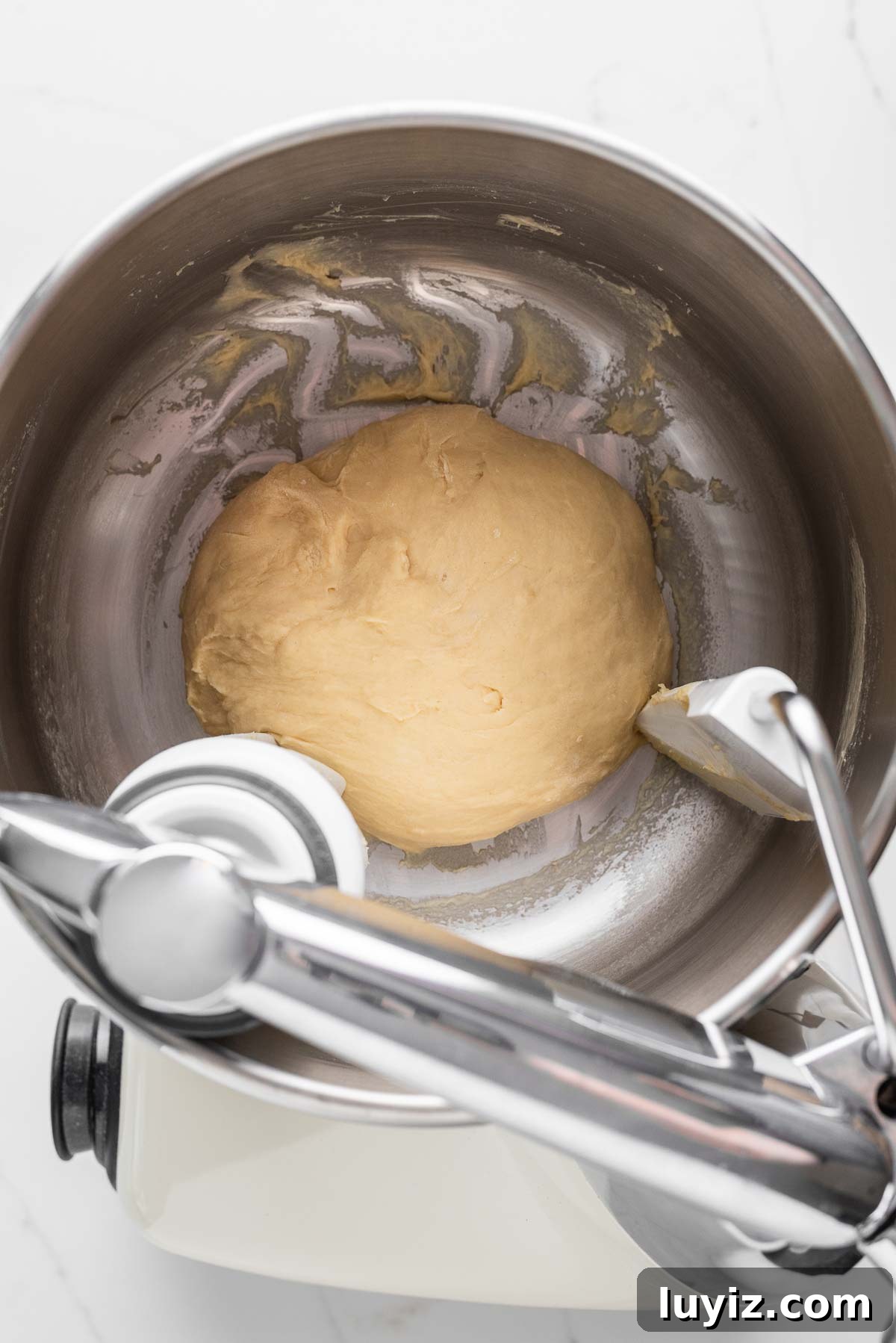
Step 2 — Mix and knead. Add melted butter, egg, bread flour, and salt. Knead until dough is soft, smooth, and shiny (about 8–10 minutes on medium speed with a mixer).
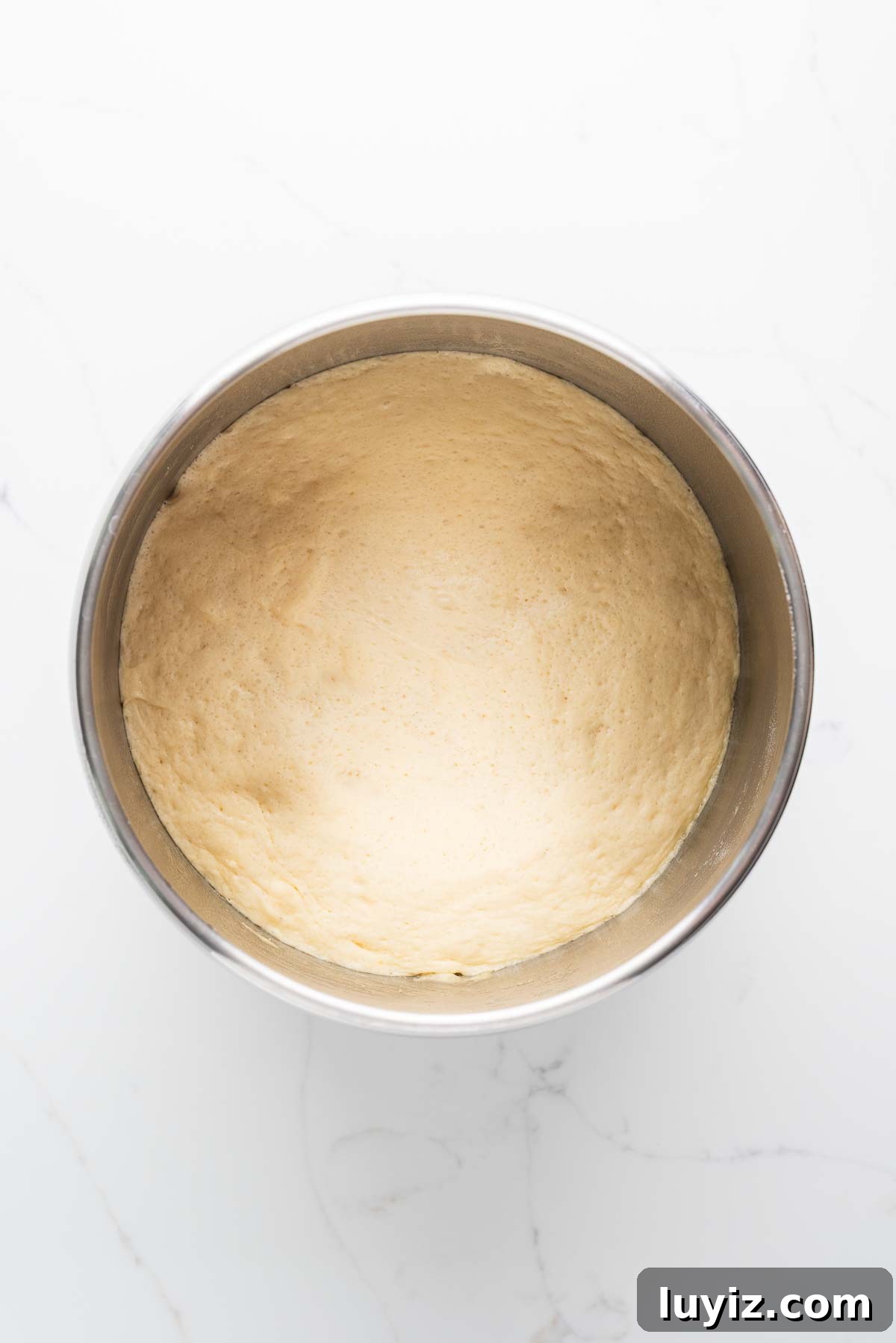
Step 3 — First rise. Lightly oil the bowl and dough, cover, and let rise 90–120 minutes in a warm spot until doubled.
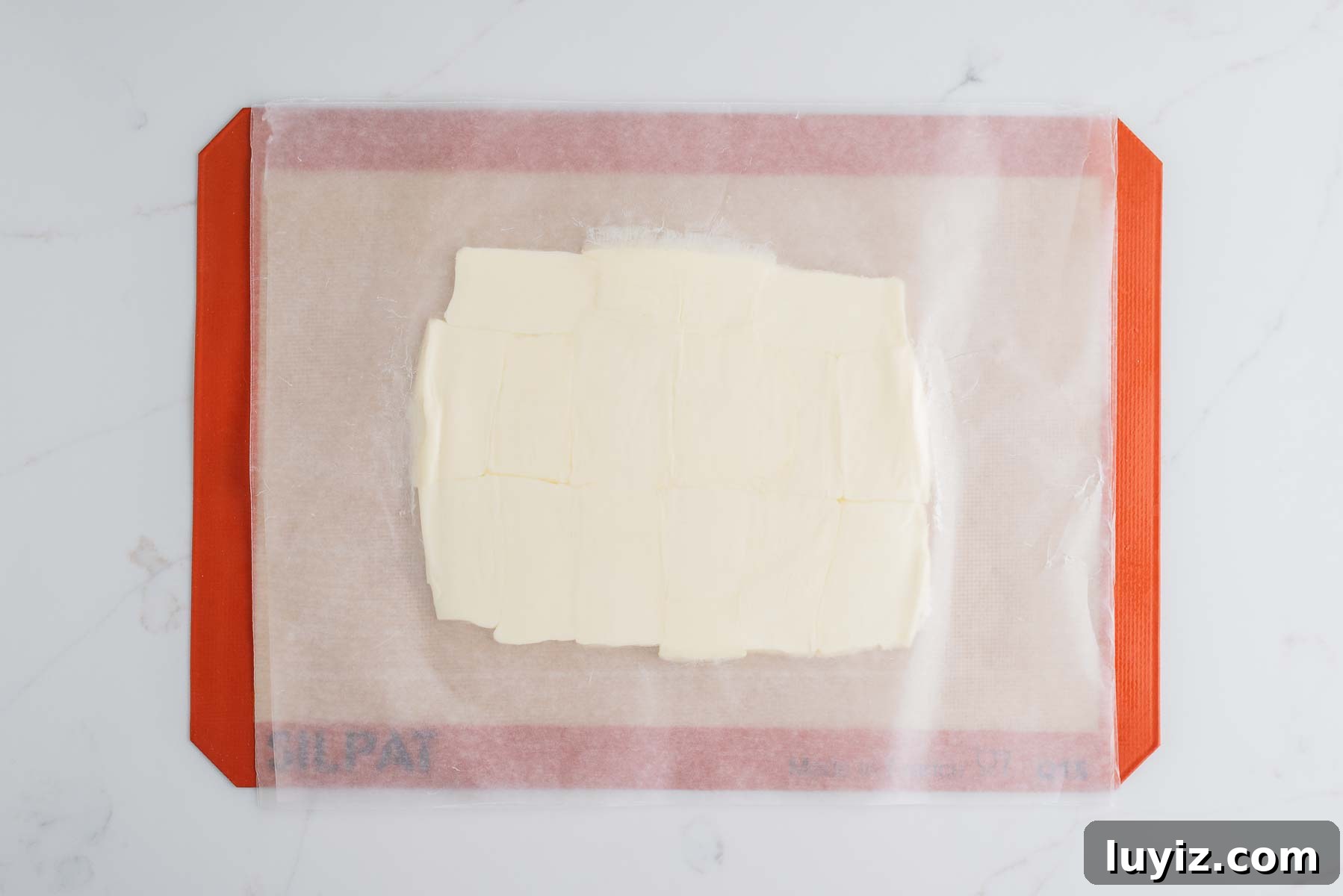
Step 4 — Prepare the butter slab. Slice butter into 1/4-inch pieces, press between parchment, and roll to about 7″ x 10″. Chill until firm but pliable (≈15 minutes).
Recipe Tip: If your kitchen lacks a warm spot, place the covered dough in the oven with a pan of boiling water to create gentle warmth for rising. The oven should be cool by the time you bake.
Lamination
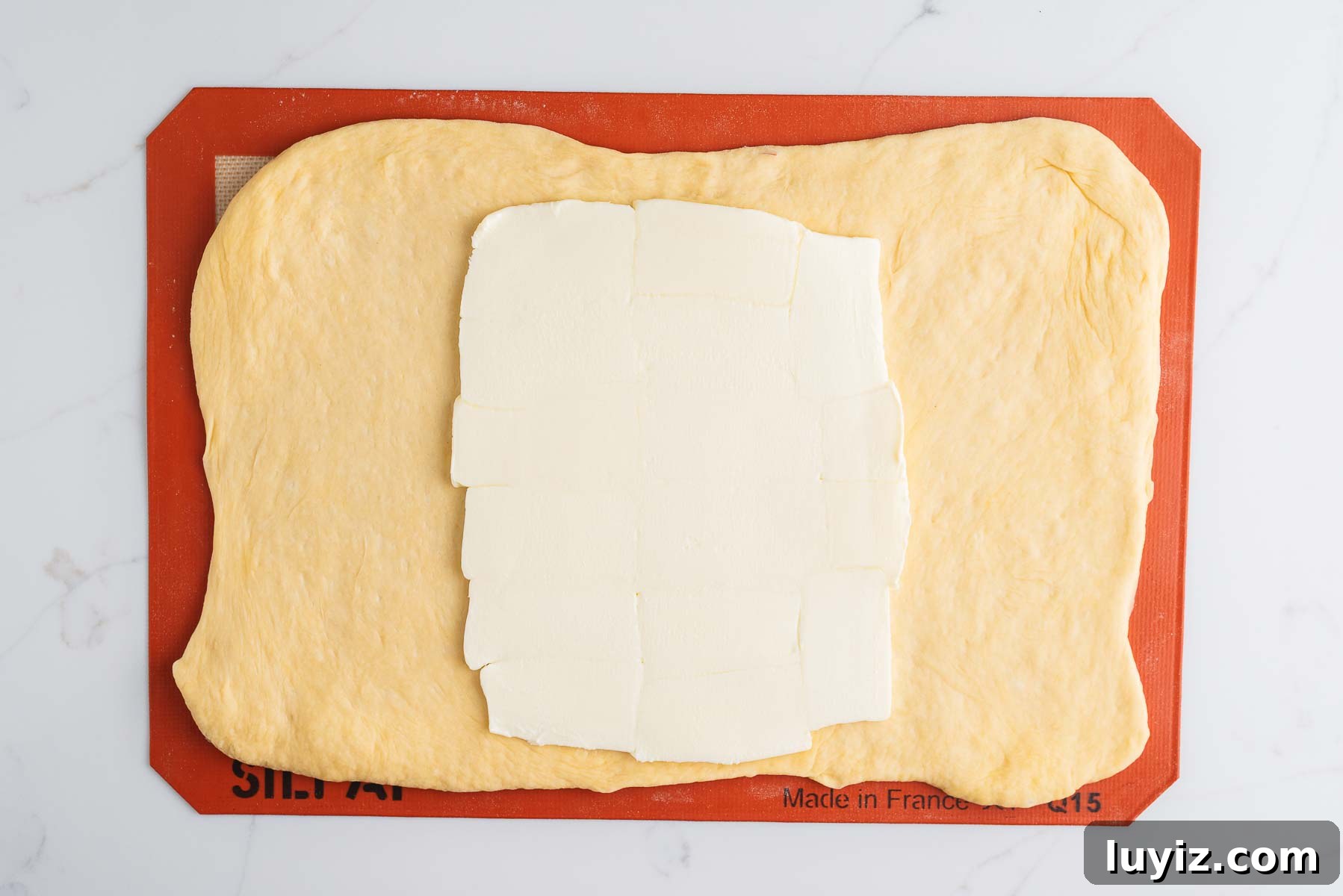
Step 5 — Enclose the butter. Roll the dough to about 10″ x 14″, chill 20 minutes, place the butter slab in the center third, fold the dough over like a letter, and seal.
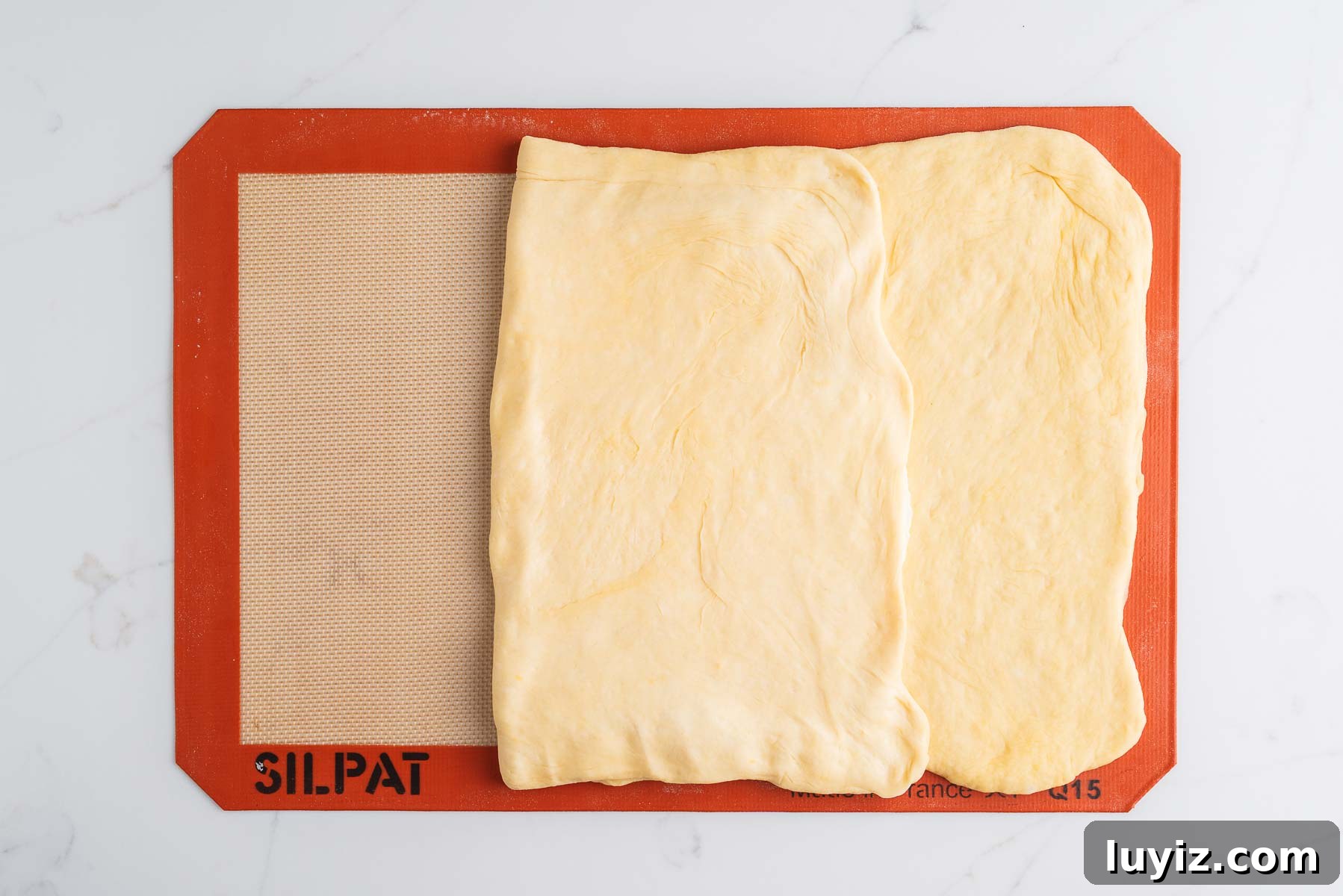
Step 6 — Turn and roll. Rotate so the long edge faces you, roll to about 9″ x 12″, fold again like a letter, wrap, and chill 30 minutes. Repeat this roll-fold-chill cycle two more times for a total of three turns, chilling 30 minutes after the final turn.
Shaping and 2nd Rise
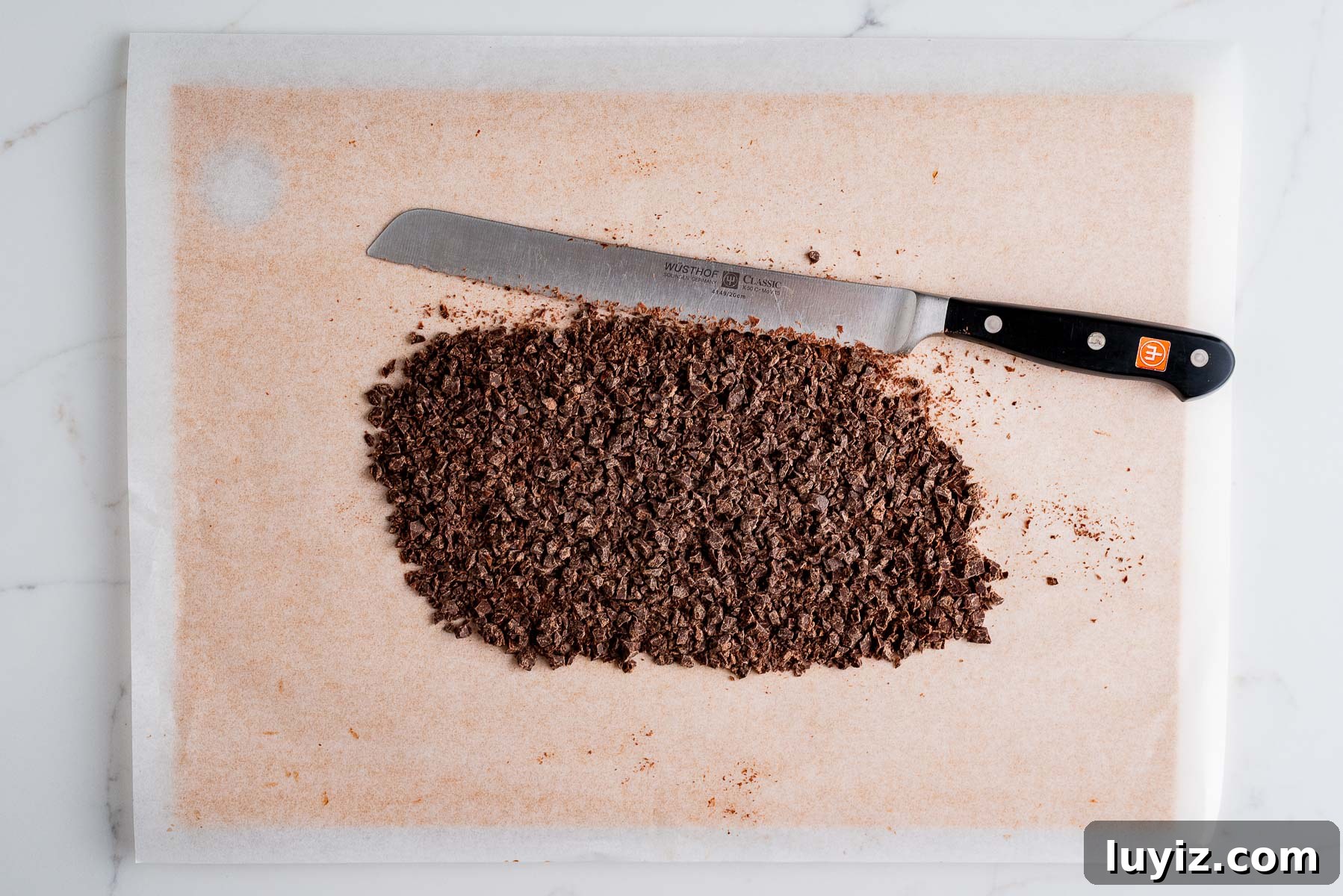
Step 9 — Chop the chocolate. Finely chop dark chocolate with a serrated knife so you end up with powdery bits and tiny chunks—this adheres and melts beautifully between layers.
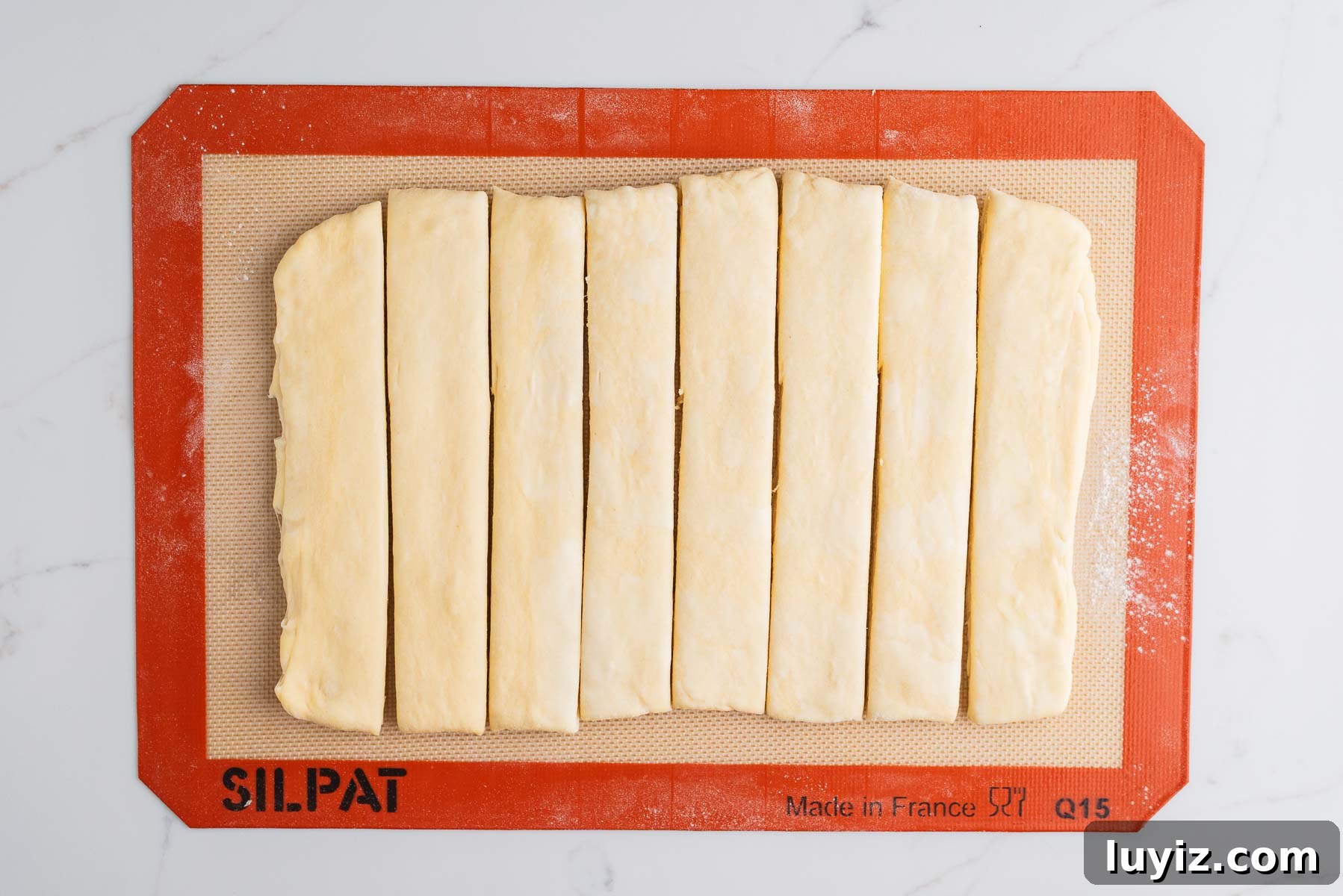
Step 10 — Cut and layer. Roll to about 9″ x 12″ and cut into eight equal strips (~1½” wide). Lightly brush strips with water, coat the front sides (except the first strip) with chopped chocolate, then press strips on their sides together lengthwise so layers face up. Dust with flour, gently roll to a 9″ wide rectangle, and top with remaining chocolate.
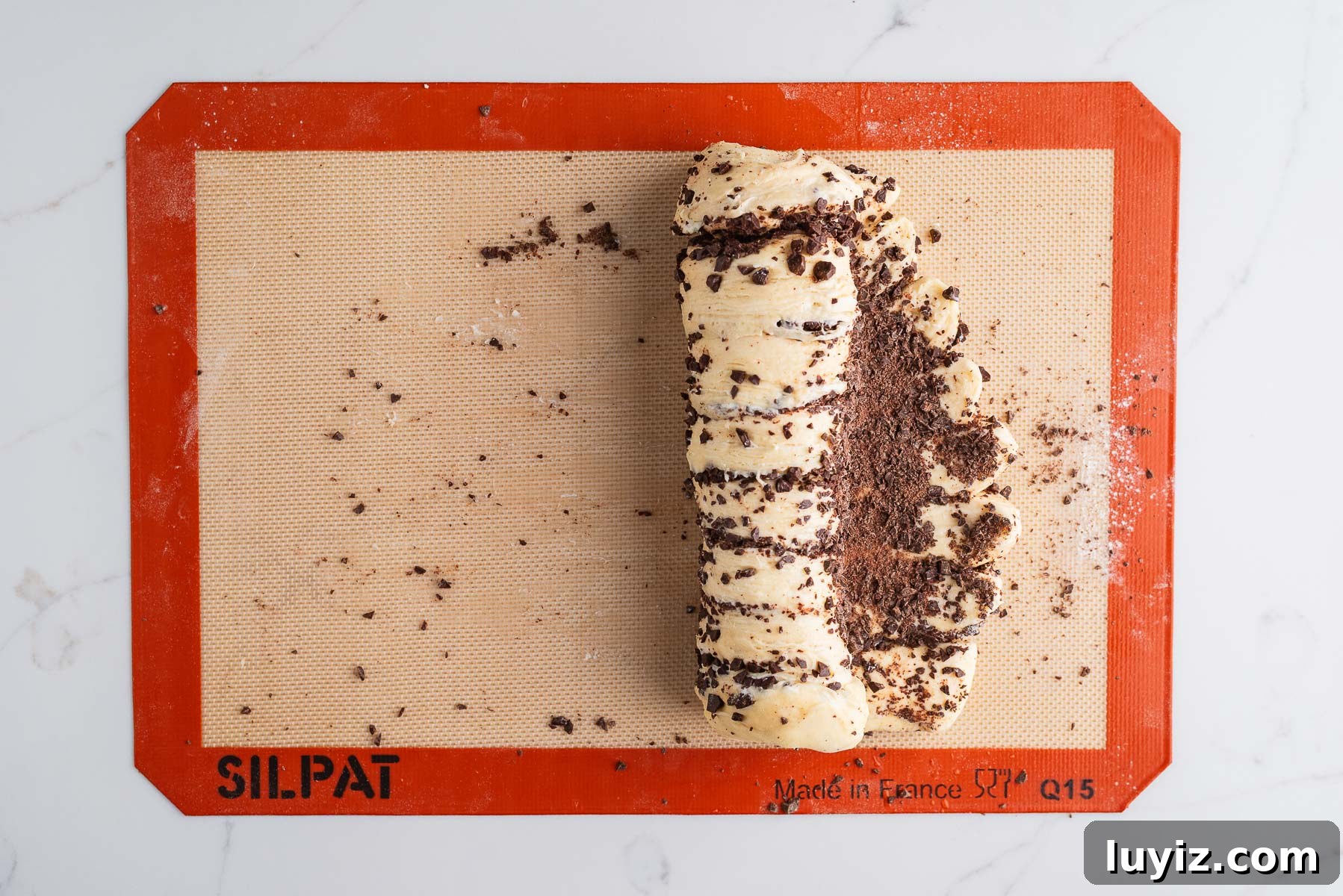
Step 13 — Roll and proof. Roll into a tight log, place in a parchment-lined clay baker or loaf pan, cover, and let rise at room temperature until nearly doubled (60–90 minutes). Chill in the refrigerator for an hour to firm the butter and improve layer definition.
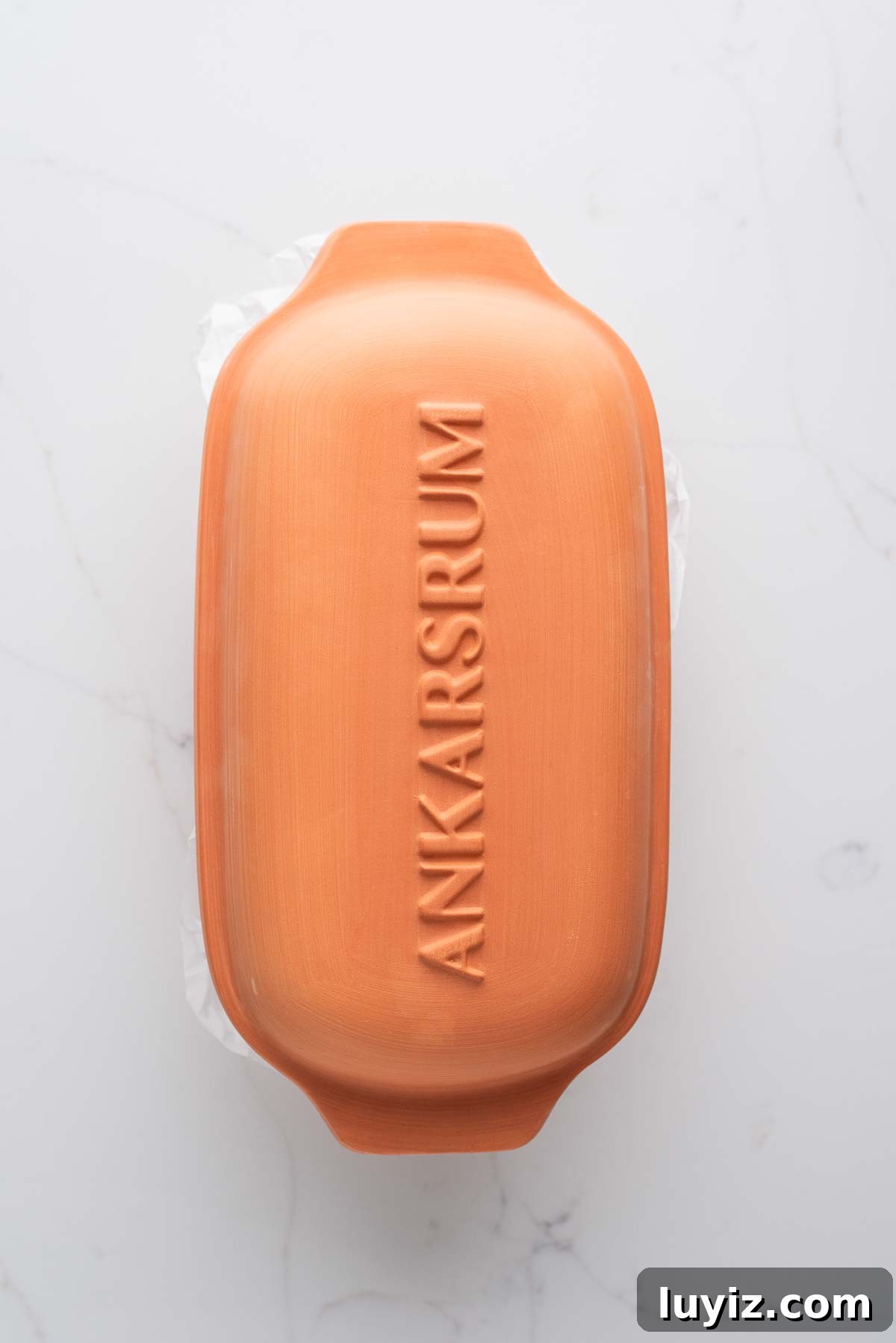
Step 14 — Prepare to bake. If using a clay baker, soak and pat-dry the lid as directed by the manufacturer before baking. Crumple parchment slightly to help it fit the baker.
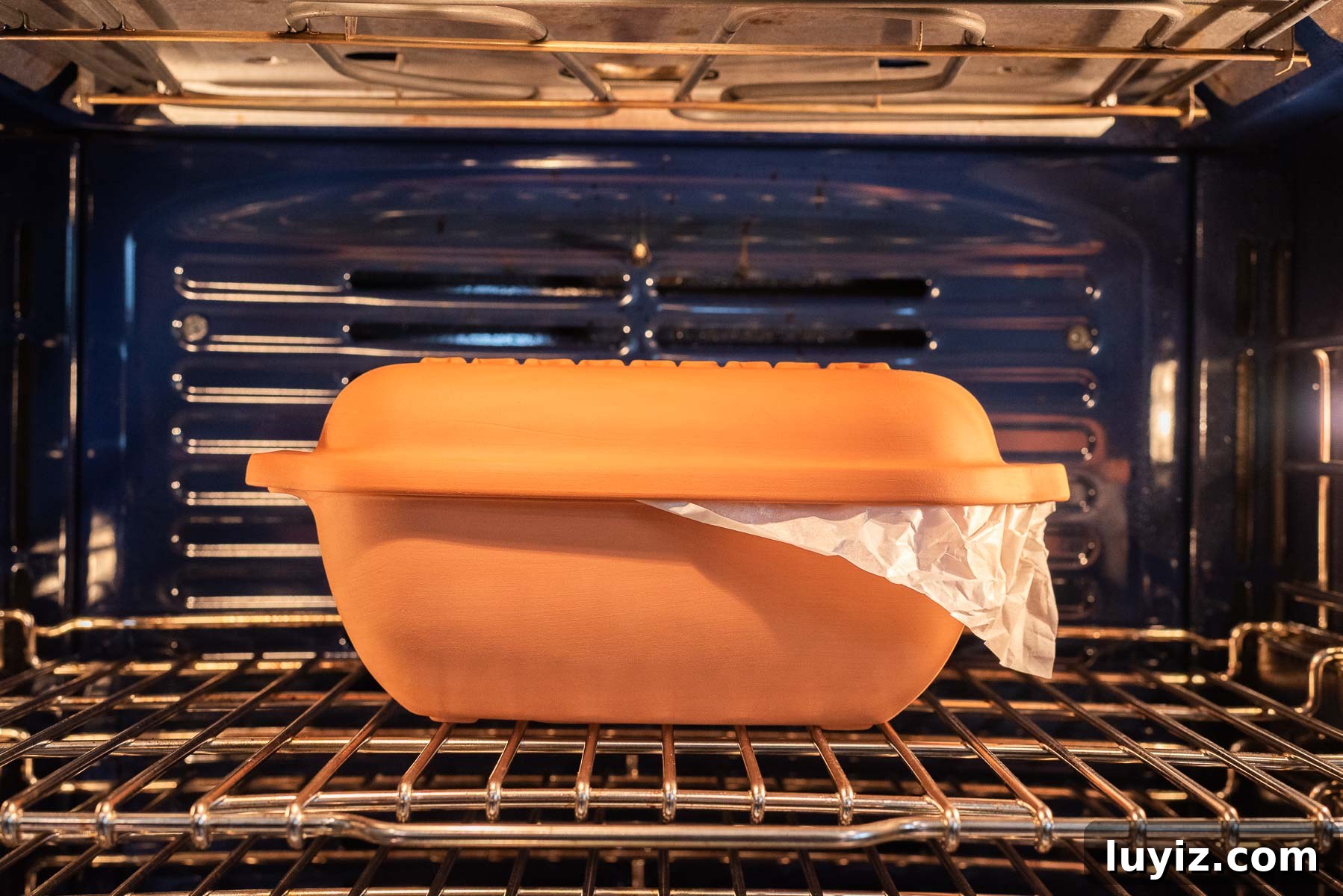
Step 15 — Bake. Place the clay baker in a cold oven on the middle rack, set the oven to 375°F, and bake 25 minutes with the lid on. Meanwhile, whisk the egg wash (egg + 1 tbsp water).
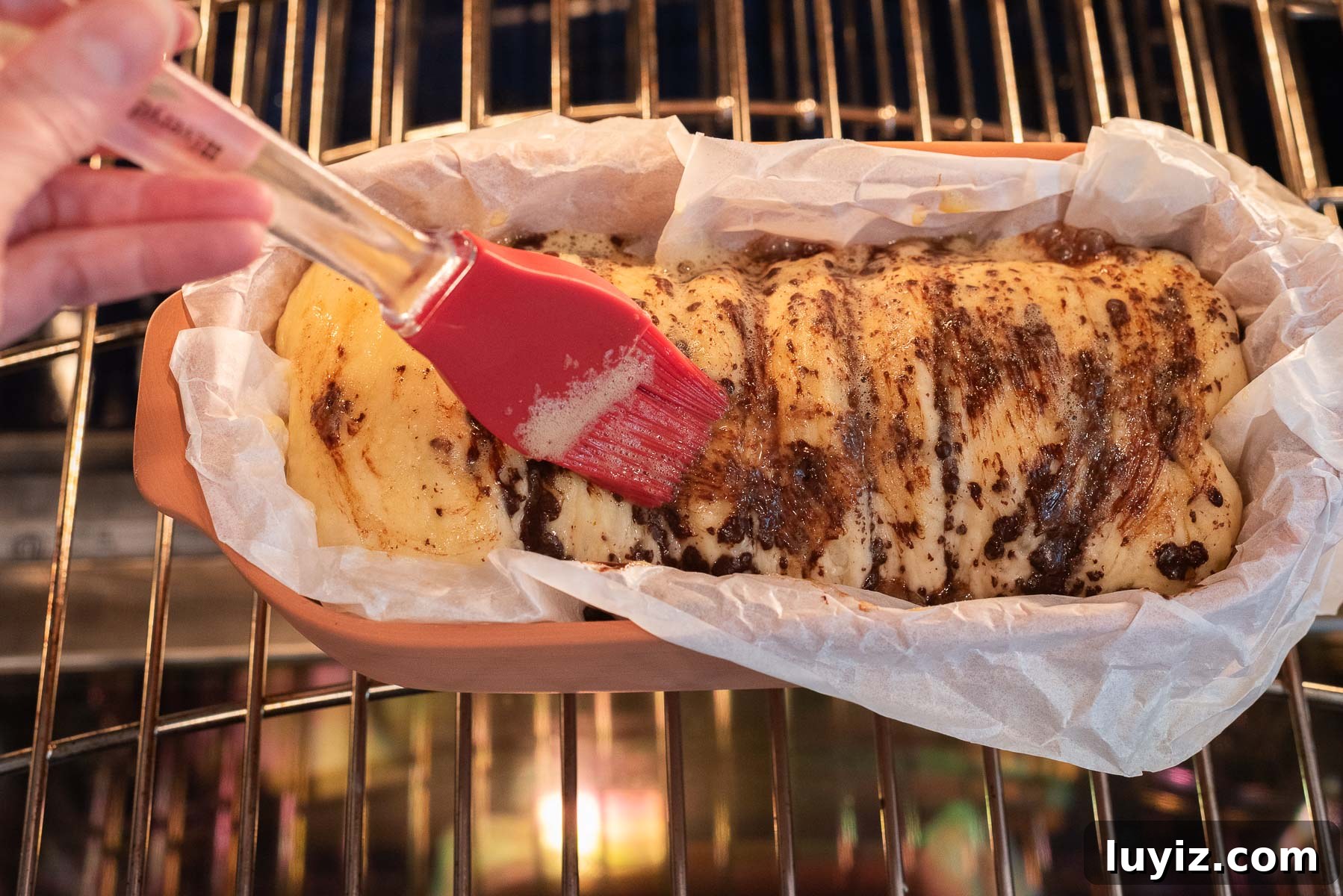
Step 16 — Finish baking. Remove the lid carefully, brush the loaf with egg wash, and continue baking 25–30 minutes more until deeply golden and crisp. Let cool 10 minutes in the baker before transferring to a rack and slicing when fully cooled.
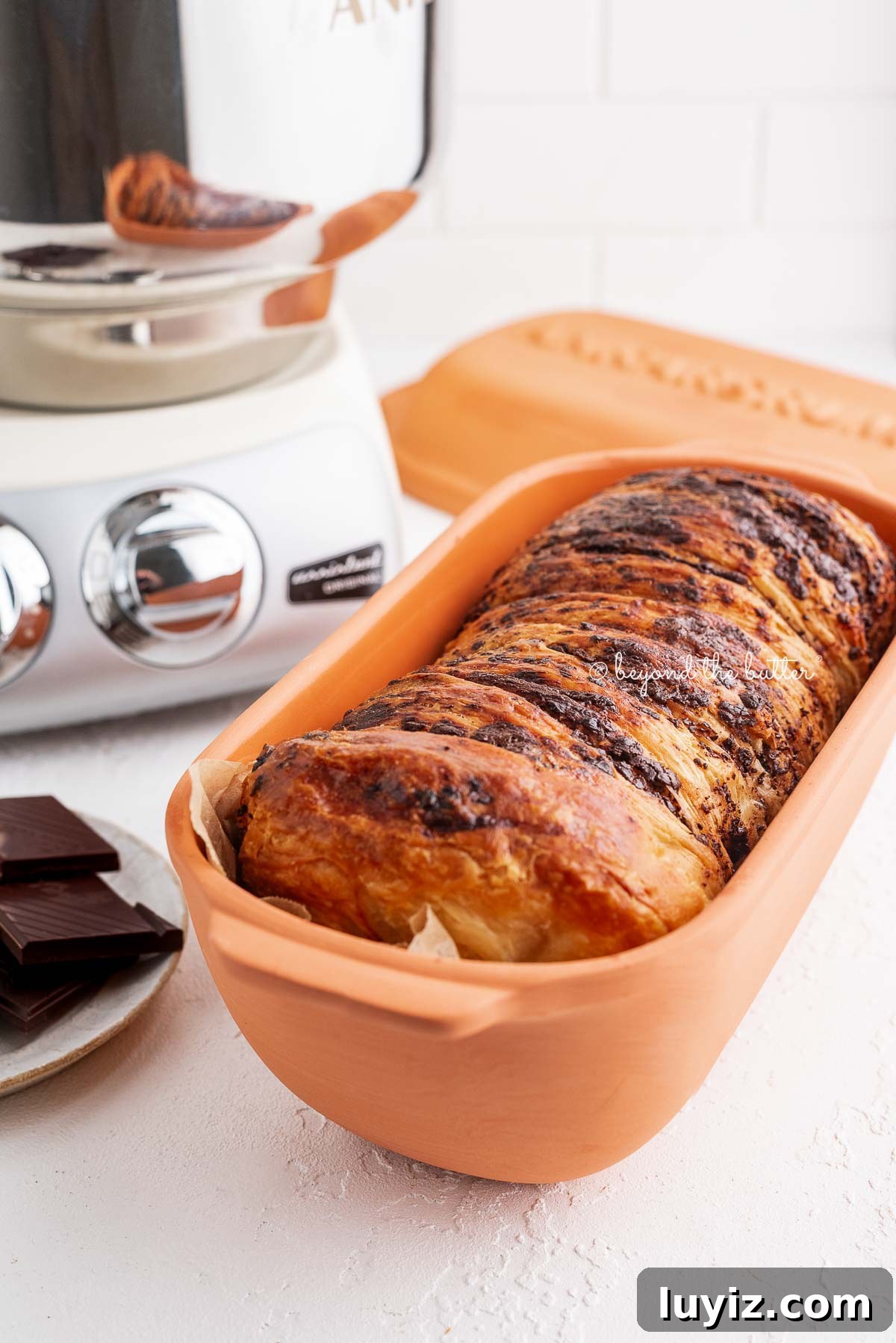
Helpful Clay Baker Tips
If you’re using a clay baker (clay roaster), these tips will help:
- First use: Soak the lid 30 minutes before its first use and brush away any residual clay dust. For later uses, a 10-minute soak is sufficient.
- How it works: The pre-soaked unglazed lid slowly releases steam during baking, creating a crisp crust and tender crumb for breads and excellent results for roasts and braises.
- Cleaning: Let the baker cool completely. Clean the glazed base with soap and water; clean the unglazed lid with plain water. Store lid and base dry with good air circulation.
- Temperature guidance: The clay baker tolerates high oven temperatures but cannot handle abrupt temperature changes. Always place it in a cold oven and then set the temperature. Do not use on stovetop or grill.
Recipe FAQs
Yes. Follow the recipe through the second rise and then bake at 375°F for 25–30 minutes. Midway through baking, tent the top with foil if it’s browning too quickly.
Yes—substitute 1:1. Instant yeast removes the initial proofing step, but lamination and refrigeration still determine the overall timing, so the total process won’t be much faster.
A clay baker is a two-piece natural-clay roaster with an unglazed lid that is soaked before use to generate steam while baking. The base is typically glazed for easier cleaning; the lid’s slow steam release helps develop a crisp crust and moist interior.
More Bread Recipes
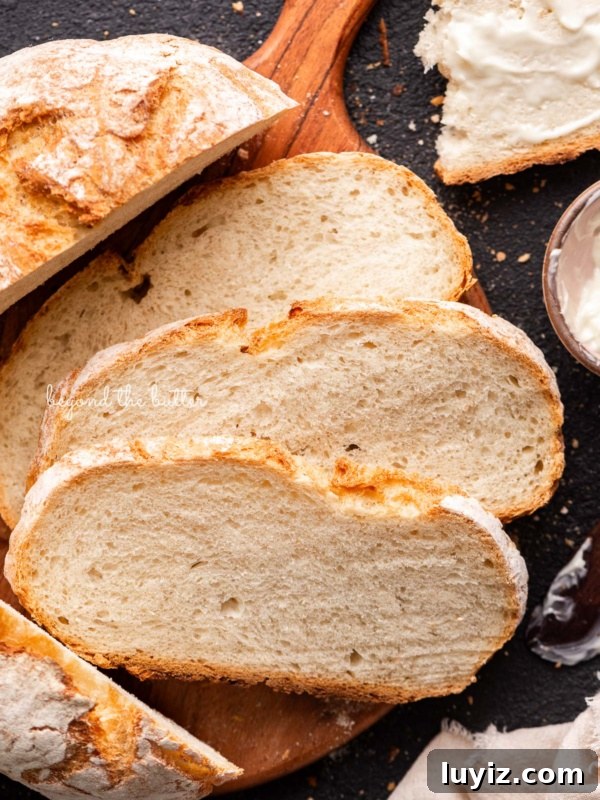
Easy French Bread
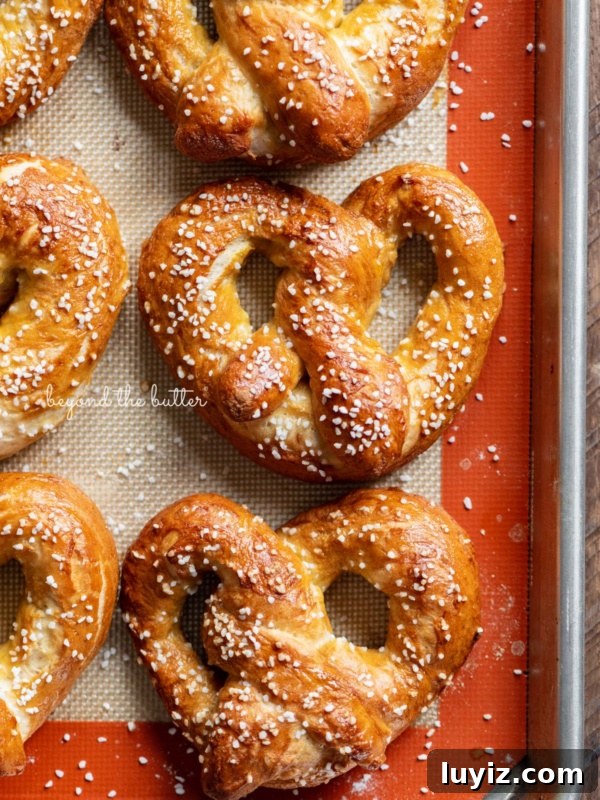
Homemade Soft Pretzels
Easy Homemade Bagels
Honey Butter Dinner Rolls
If you try this Chocolate Croissant Loaf, please leave a star rating and share your feedback in the comments. Enjoy!
Chocolate Croissant Loaf

Equipment
- Ankarsrum Assistent Original Mixer (or any stand mixer with dough attachments)
- Ankarsrum Clay Baker or a parchment-lined loaf pan
- Instant-read thermometer
- Parchment paper and a serrated knife for chopping chocolate
Ingredients
Croissant Dough
- 1/2 cup + 1 tbsp whole milk, warmed to 110–115°F
- 2 tbsp granulated sugar
- 1 1/2 tsp active dry yeast
- 2 tbsp unsalted butter, melted
- 1 large egg, room temperature
- 2 cups bread flour
- 1 tsp salt
- 3 oz dark chocolate bar, finely chopped
Lamination
- 14 tbsp unsalted butter (for lamination)
Egg Wash
- 1 large egg
- 1 tbsp water
Instructions
Croissant Dough
- Add warm milk, sugar, and yeast to a bowl, whisk, cover, and let bloom 10 minutes until foamy.
- Add melted butter, egg, bread flour, and salt. Knead until the dough forms a soft, smooth ball (8–10 minutes with a mixer).
- Slice butter for lamination and shape into a 7″ x 10″ slab; chill until firm but pliable (≈15 minutes).
- Lightly oil the bowl, place dough inside, cover, and let rise 90–120 minutes in a warm spot until doubled.
- Punch down the dough, roll it out on a floured surface, and chill 20 minutes before starting lamination.
Lamination
- Place butter slab in the center third of the dough and fold the dough over to enclose the butter. Seal seams.
- Rotate, roll to roughly 9″ x 12″, fold like a letter, wrap, and chill 30 minutes. Repeat this roll-fold-chill sequence two more times for a total of three turns, chilling 30 minutes after the final turn.
Shaping and Second Rise
- Finely chop dark chocolate. Roll dough to 9″ x 12″, cut into eight 1½” strips, lightly brush with water, and coat the front side of each strip (except the first) with chopped chocolate.
- Stand strips on their sides and press together lengthwise so the layers face up, lightly dust with flour, and roll to a 9″ wide rectangle. Top with remaining chocolate and press gently.
- Roll into a tight log, place in a parchment-lined clay baker or loaf pan, cover, and proof at room temperature until nearly doubled (60–90 minutes). Chill in the refrigerator for 1 hour to firm the butter.
Baking
- Soak the clay baker lid if using, pat dry, place lid on, set in a cold oven on the middle rack, and set oven to 375°F. Bake 25 minutes with the lid on.
- Whisk the egg and water for egg wash. Carefully remove the lid, brush the loaf with egg wash (chocolate may spread), and bake another 25–30 minutes until golden and crisp.
- Cool in the baker for 10 minutes, then transfer to a rack and cool completely before slicing. Store leftovers well sealed for up to 1 day.
Notes
If using an Ankarsrum mixer, the 7L bowl, dough roller, and dough knife are recommended. If you don’t have one, any stand mixer with a dough hook or hand kneading will work.
I recommend a 70% dark chocolate bar (e.g., Lindt) for easy chopping and smooth melting. A cinnamon-sugar variation is a delicious alternative.
Recipe adapted from Ankarsrum.
Nutrition (estimate)
Nutritional information is an estimate and will vary with specific ingredients used.