
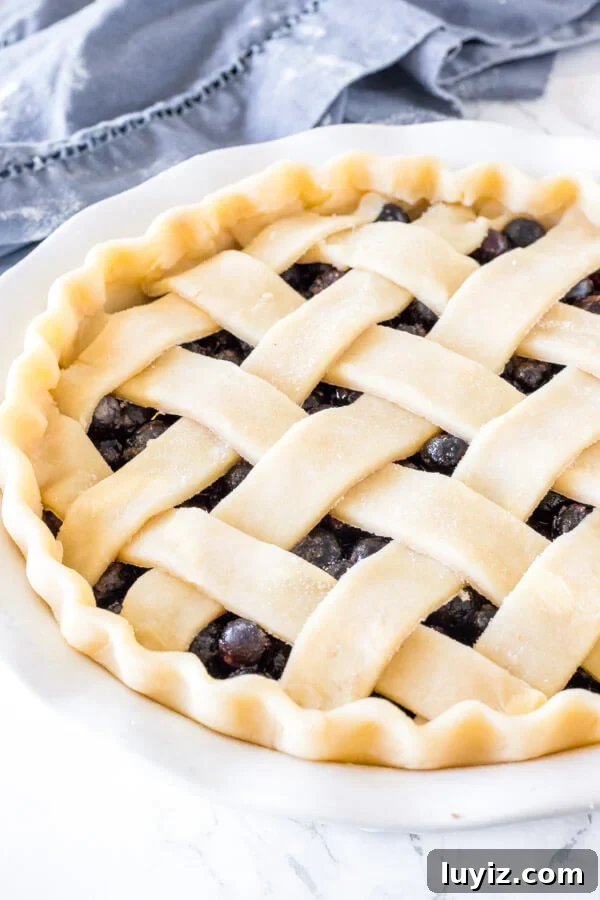
A step-by-step tutorial showing exactly how to make homemade pie crust. This recipe uses both butter and shortening for a crust that’s flaky, buttery, and ideal for sweet or savory pies. 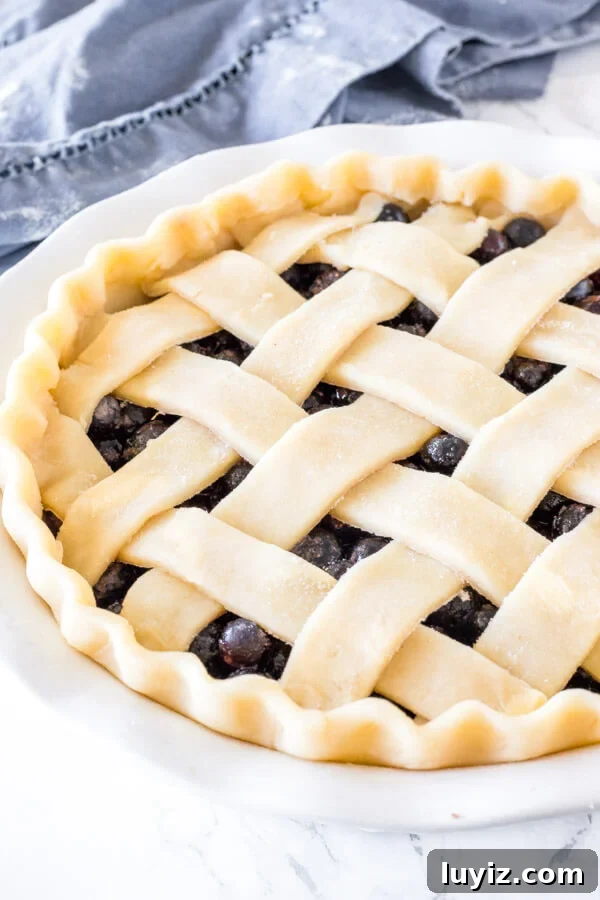
Making pie crust by hand can feel intimidating, and I was nervous about pies for years. Once you learn a few simple techniques, it’s much easier than it seems. This guide will walk you through a reliable method for a tender, flaky pie crust that works for both sweet and savory fillings.
Pie Crust Ingredients
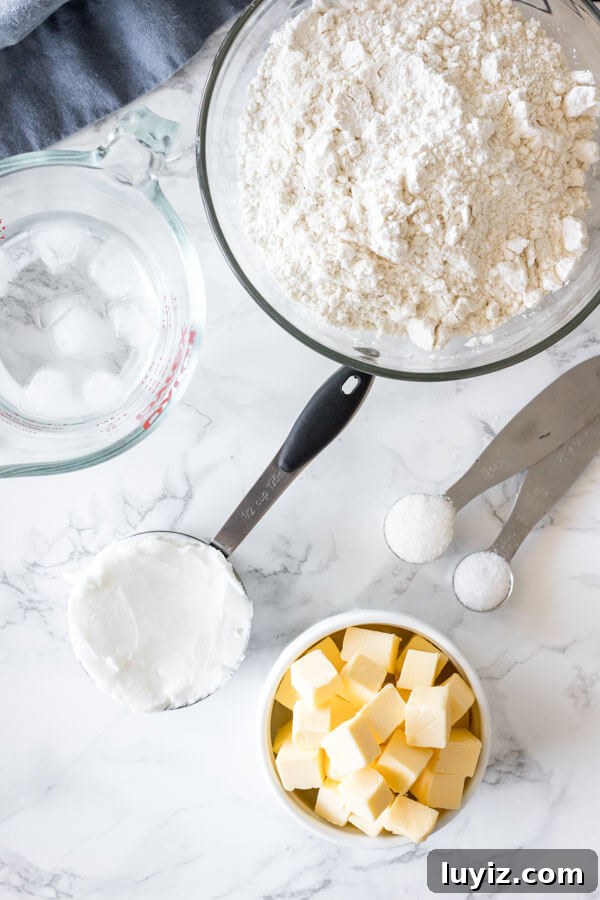
There are only a few essential ingredients: fat (butter, shortening, or a combination), flour, salt, a little sugar, and ice water.
Butter. Classic pie crusts use butter for its rich flavor and contribution to flakiness.
Shortening. Shortening has less flavor than butter but makes the dough more forgiving. It helps produce a tender, flaky crust that’s easier to handle.
Flour. Flour provides the structure. All-purpose (plain) flour is recommended since it’s what most people have on hand. Measure carefully—too much flour makes the crust dry and tough. On a kitchen scale, the amount equals about 312.5 g.
Salt. Salt is essential for balance. Use unsalted butter and add salt separately so you can control the seasoning precisely.
Sugar. A small amount adds flavor. Omit it for a savory pie.
Ice Cold Water. Cold water brings the dough together. Add just enough so the dough holds when squeezed; too much water makes it sticky and hard to roll.
The Importance of Cold Ingredients
Keep the fats cold. When the pie bakes, cold butter melts and creates steam pockets that form flaky layers. If fats warm up and dissolve before baking, you lose that flaky texture. Keep butter and shortening chilled until used and avoid overworking the dough.
How to Make Pie Crust
Start by whisking together the dry ingredients: flour, salt, and sugar. Cut the cold butter and shortening into the flour using a pastry cutter or two knives, working until the mixture resembles a coarse meal with pieces of fat no larger than a pea. The pieces can vary in size—this contributes to flakiness. The images below show the dough partway through and when it’s ready. 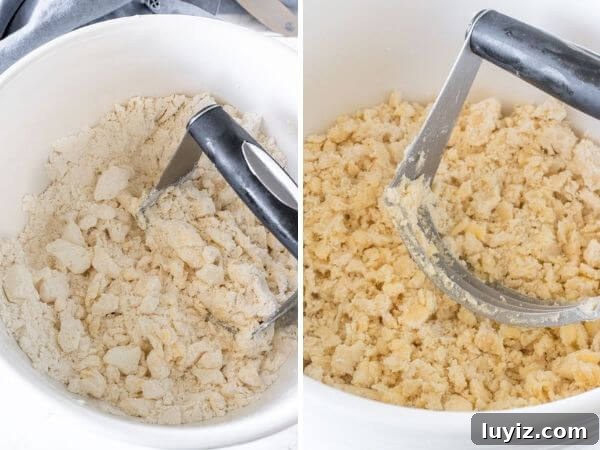
Sprinkle in ice water, one tablespoon at a time, gently folding with a wooden spatula. Use about 6–8 tablespoons (1/2 cup = 8 tbsp) total. Stop when the dough begins to form large clumps and holds together when squeezed (avoid squeezing too often to prevent warming the dough). The next photos show the dough after the water is incorporated. 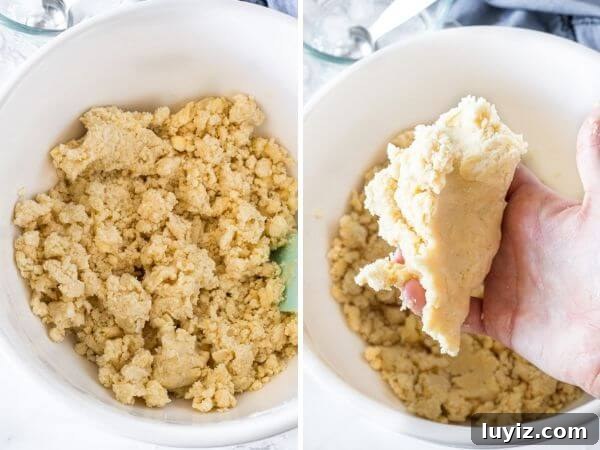
Turn the mixture out onto a floured surface and form it into a ball. Cut the dough in half and you should see flaky layers when you slice through. Shape each half into a round disc about 1/2–3/4 inch thick, wrap tightly in plastic, and chill. The dough should show little specks of butter and swirls of shortening. 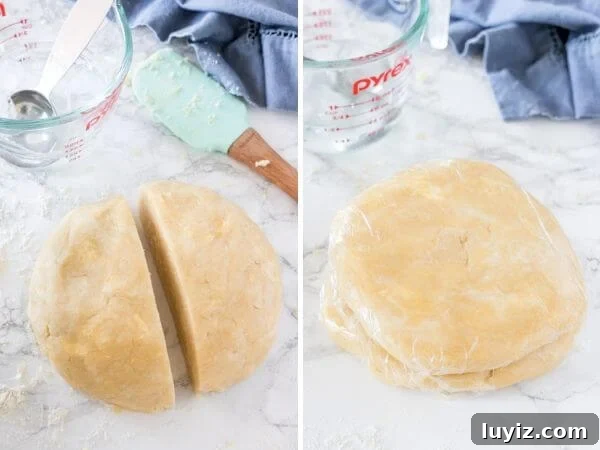
Chill the dough for at least 2–3 hours. If you try to roll it out while still warm, it will be sticky and difficult to handle.
Rolling Out Pie Dough
After chilling, it’s time to roll the dough.
- Generously flour your work surface and rolling pin. Lightly dust both sides of the pie disc with flour.
- Start rolling from the center toward 12 o’clock, return to the center and roll toward 6 o’clock.
- Turn the dough a quarter turn and repeat. Rotating while rolling keeps the dough circular and prevents sticking. Add more flour underneath as needed.
A few small cracks around the edge are fine. Deep cracks mean the dough needed a bit more water or is too cold—let it warm slightly or mist with a little water before continuing.
Transferring the Dough to a Pie Plate
Transfer the dough carefully:
- Lightly roll the dough over your rolling pin—not tightly.
- Unroll it over the pie plate and gently ease it into place.
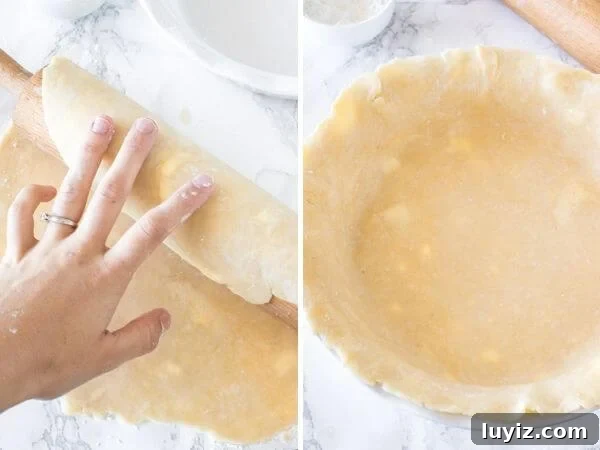
Do not stretch the dough when fitting it into the plate. Stretched dough will shrink back as it bakes and can cause the pie to shrink.
Yield: This recipe makes enough for one double-crust 9-inch pie (top and bottom), or two single-crust pies (bottom only). If you only need one single crust, freeze the extra half. I don’t recommend doubling the recipe in a single batch because it can lead to overworked, tough dough.
This method produces a tender, flaky, buttery crust. With these tips, you’ll gain confidence and consistently great results.
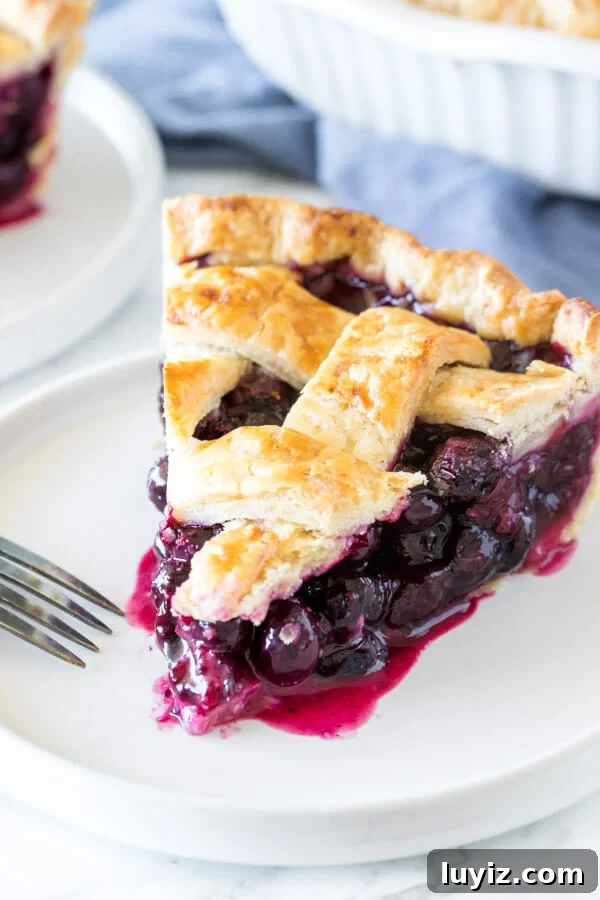
Why not use this crust for:
- Strawberry pie
- Brownie pie
- Blackberry pie
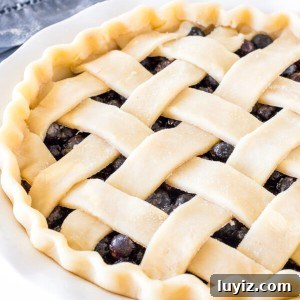
Pie Crust Recipe
Ingredients
- 1/2 cup unsalted butter
- 1/2 cup shortening
- 2 2/3 cups all-purpose flour
- 1 teaspoon sugar
- 1 teaspoon salt
- 1/2 cup ice water (about 6–8 tablespoons, as needed)
Instructions
- Cut the butter into small cubes and chill while you measure the dry ingredients.
- In a large bowl, whisk together the flour, sugar, and salt.
- Add the cold butter and shortening to the bowl.
- Cut the fats into the flour using a pastry blender until the mixture resembles a coarse meal with pea-sized pieces of butter.
- Stir in ice water, one tablespoon at a time, until the dough forms large clumps and holds when squeezed—typically 6–8 tablespoons.
- Turn the dough out onto a floured surface and gently form into a ball.
- Cut the dough in half.
- Shape each half into a round disc about 1/2–3/4 inch thick and wrap individually in plastic.
- Chill in the refrigerator for at least 3 hours before rolling out.
Notes
Pie dough can be made up to 4 days ahead and kept refrigerated. Let it sit 5–10 minutes at room temperature before rolling to ease handling.
Freezing Pie Dough
After forming discs and wrapping tightly, freeze for up to 3 months. Thaw overnight in the refrigerator before rolling.