
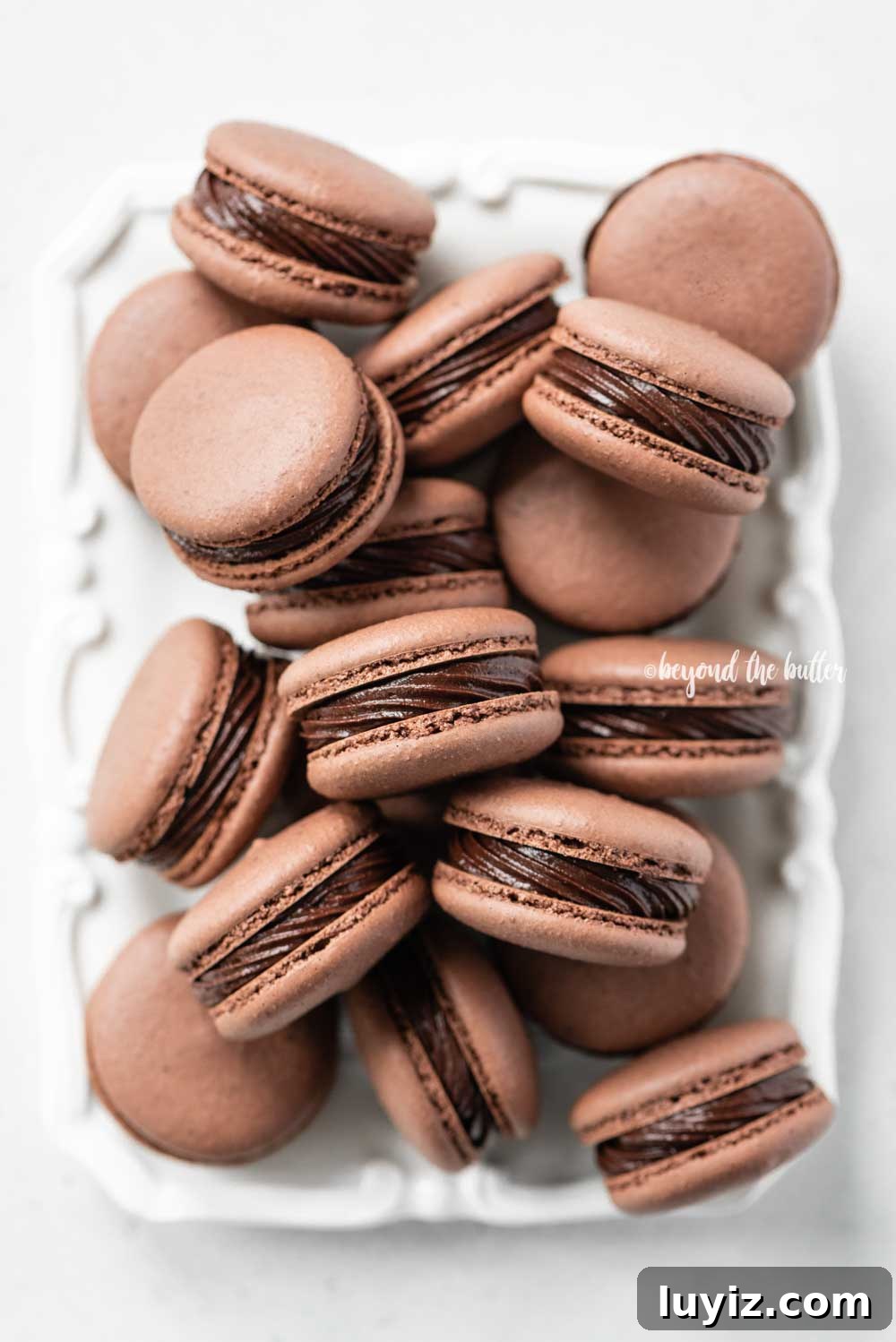
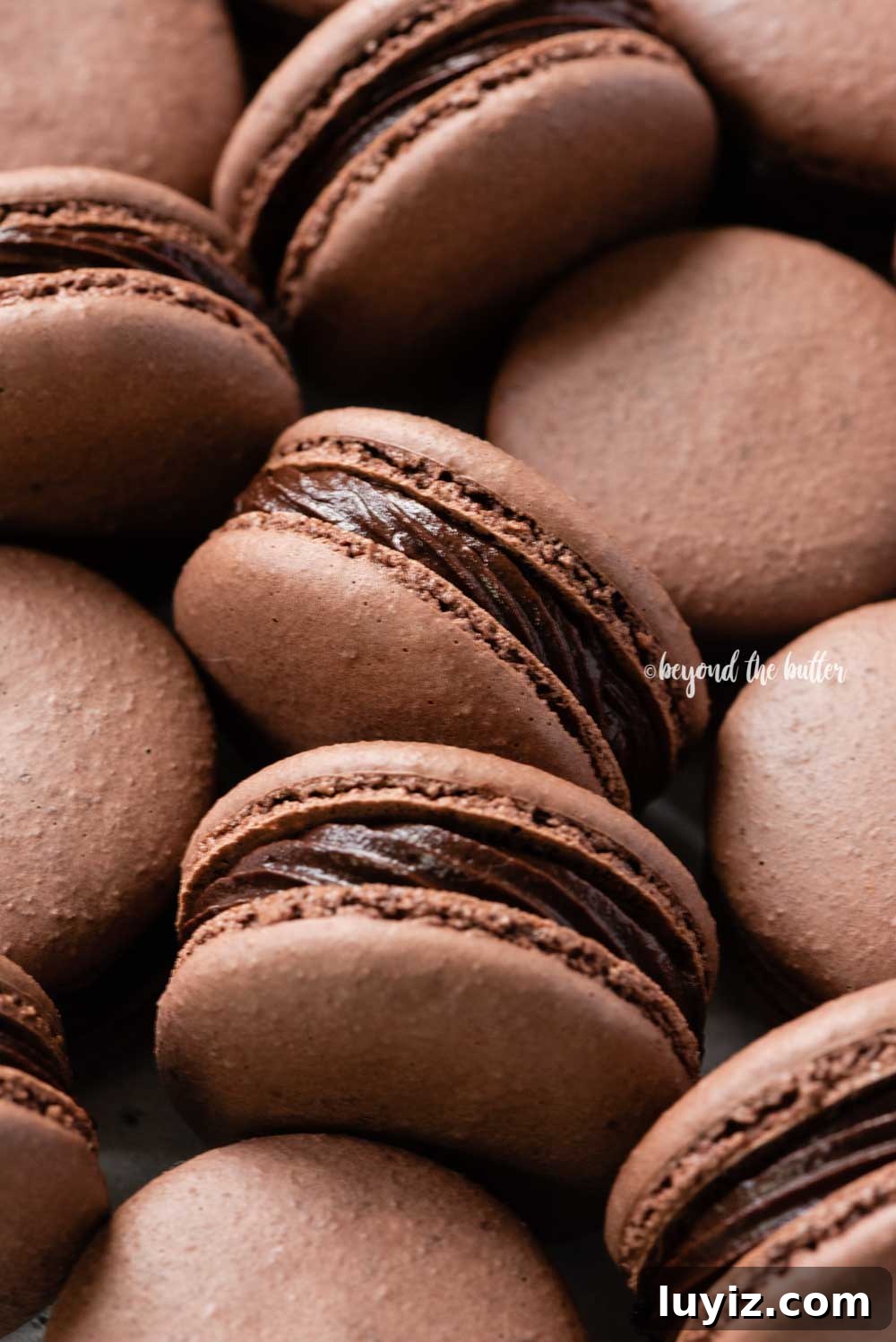
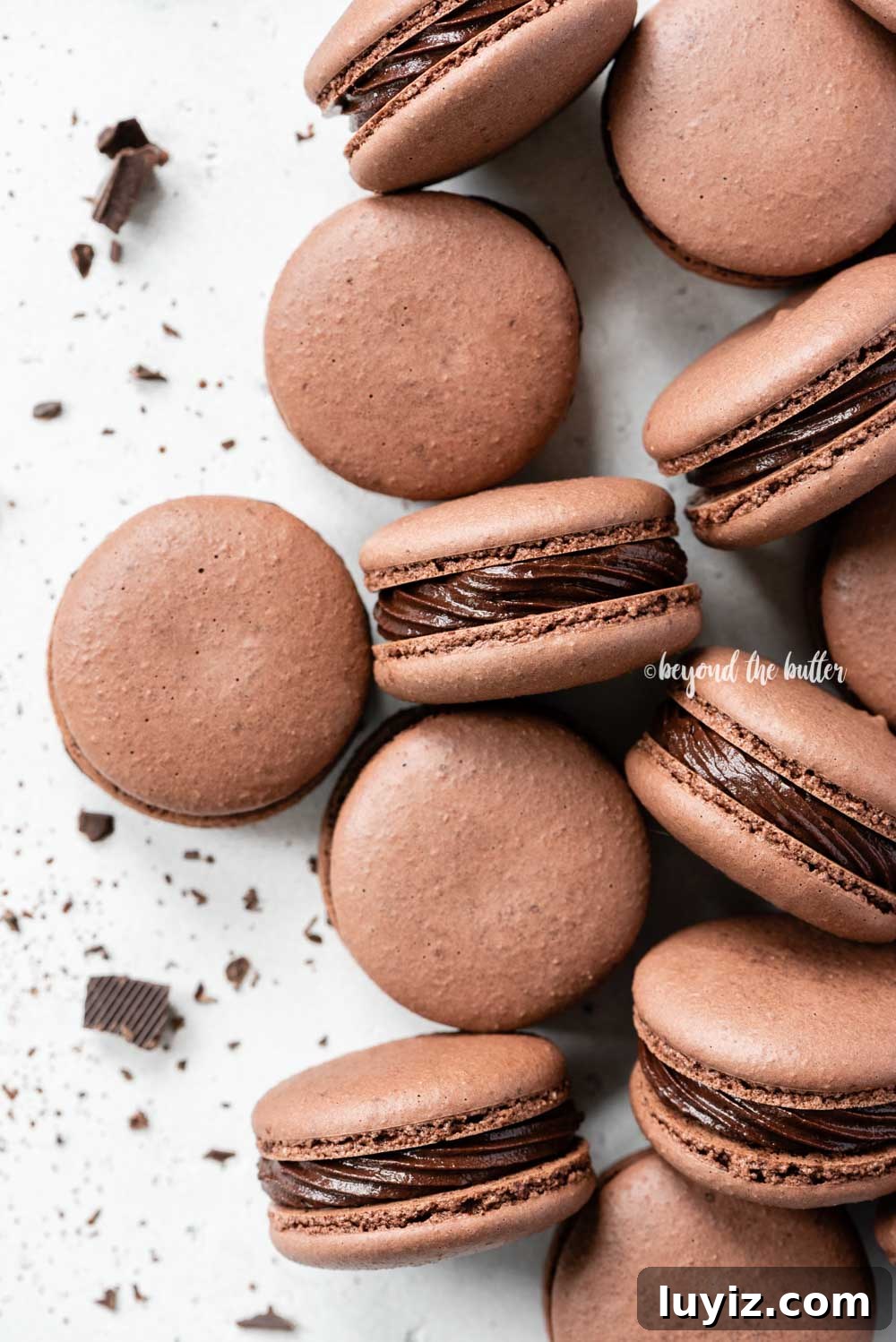
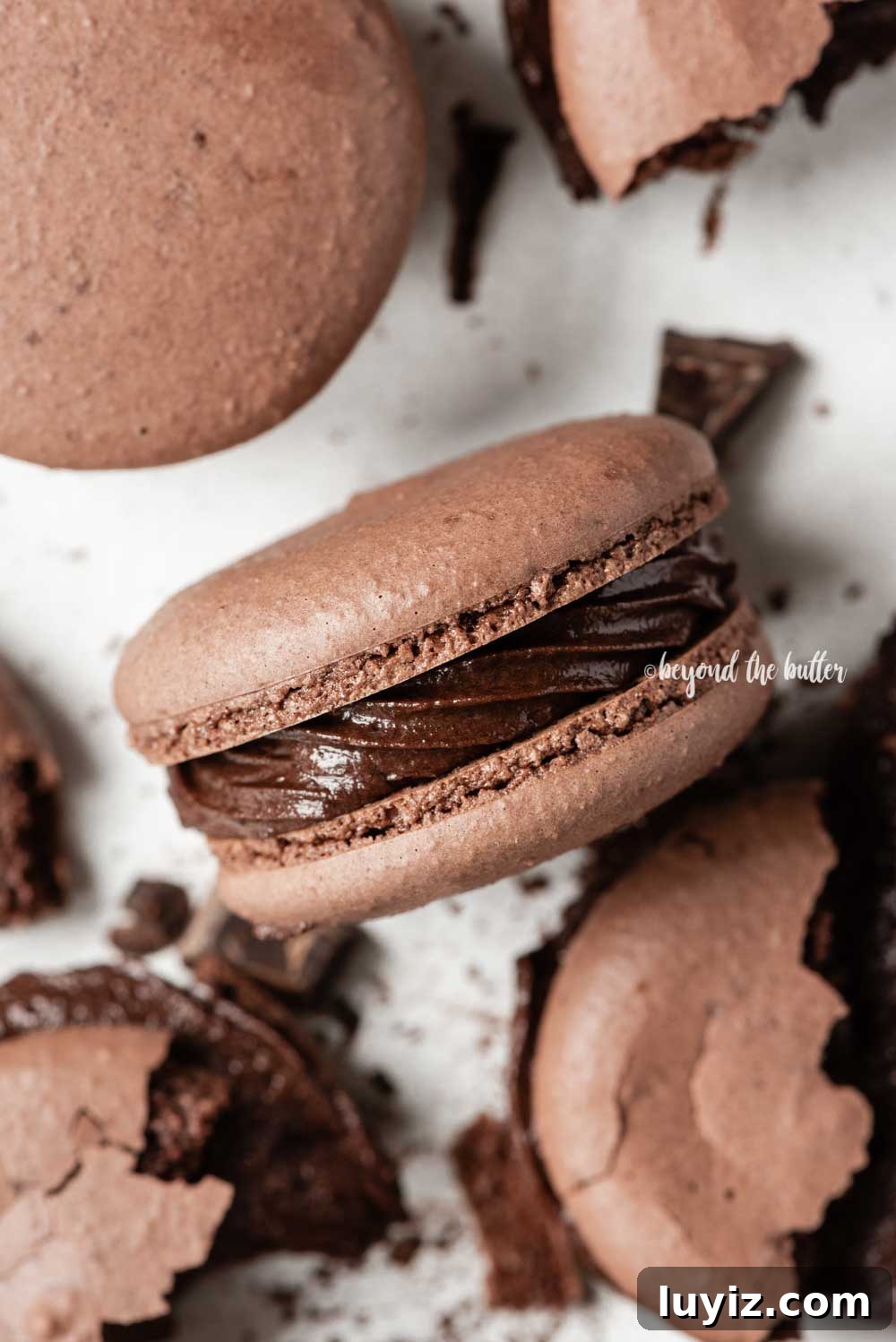
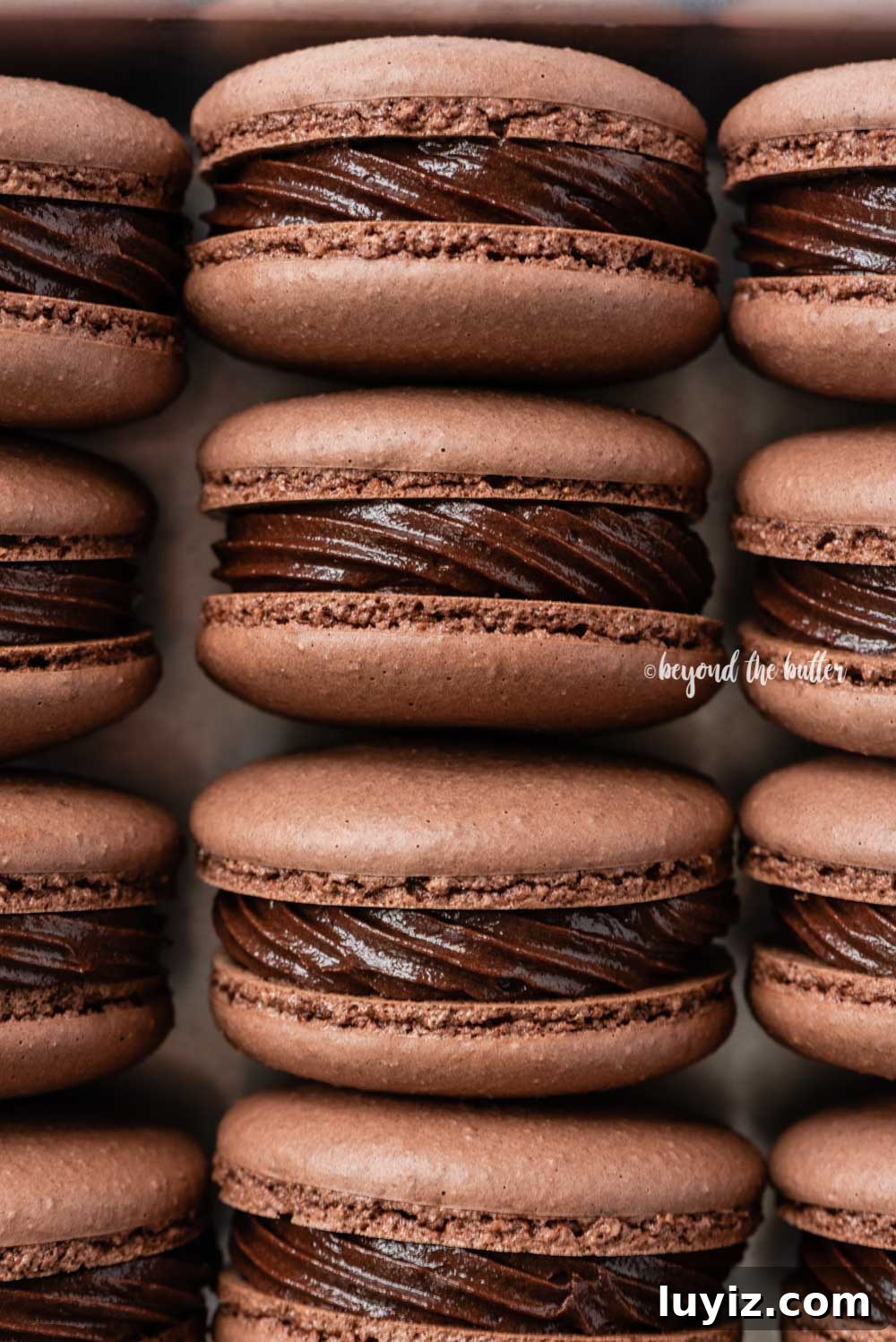
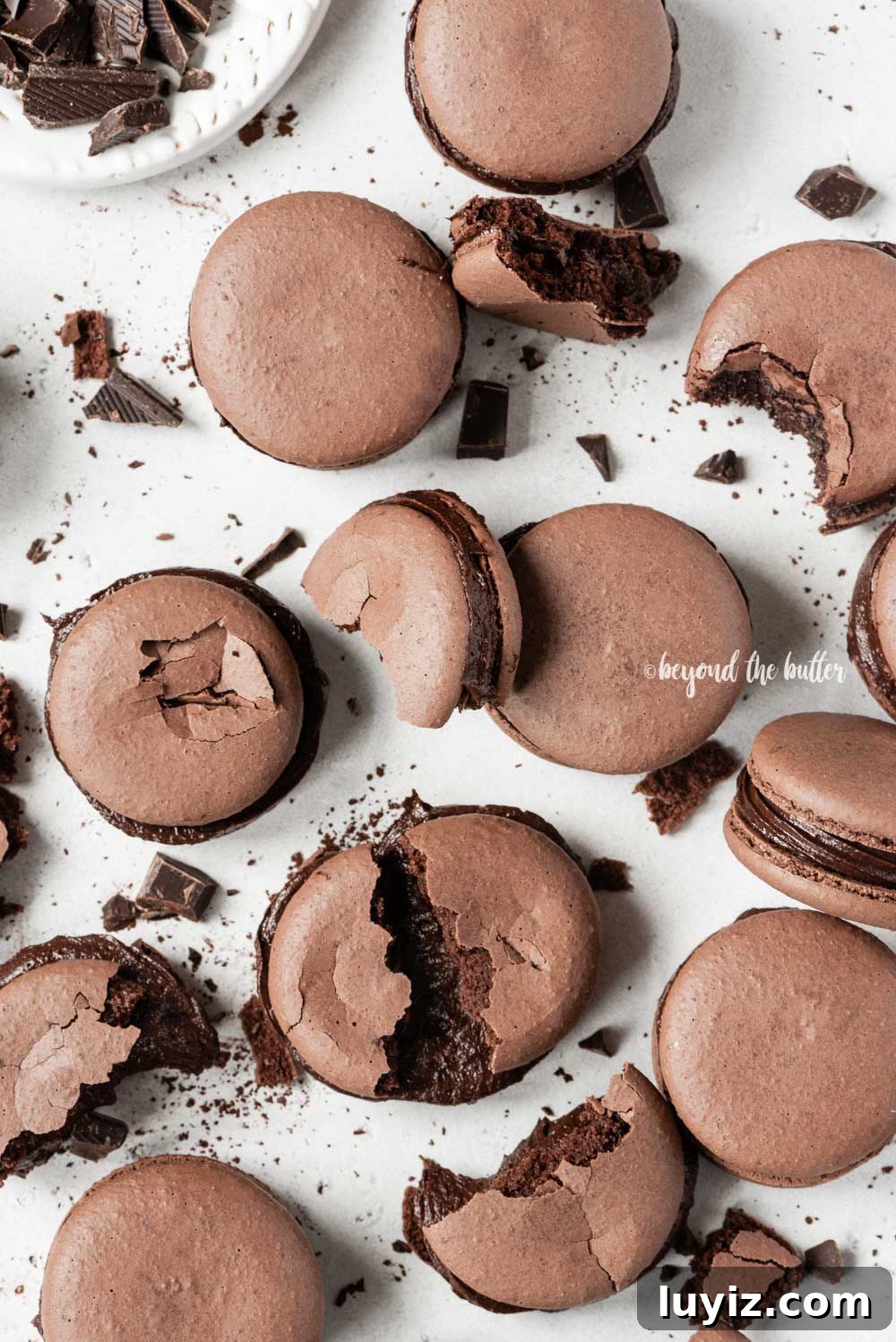
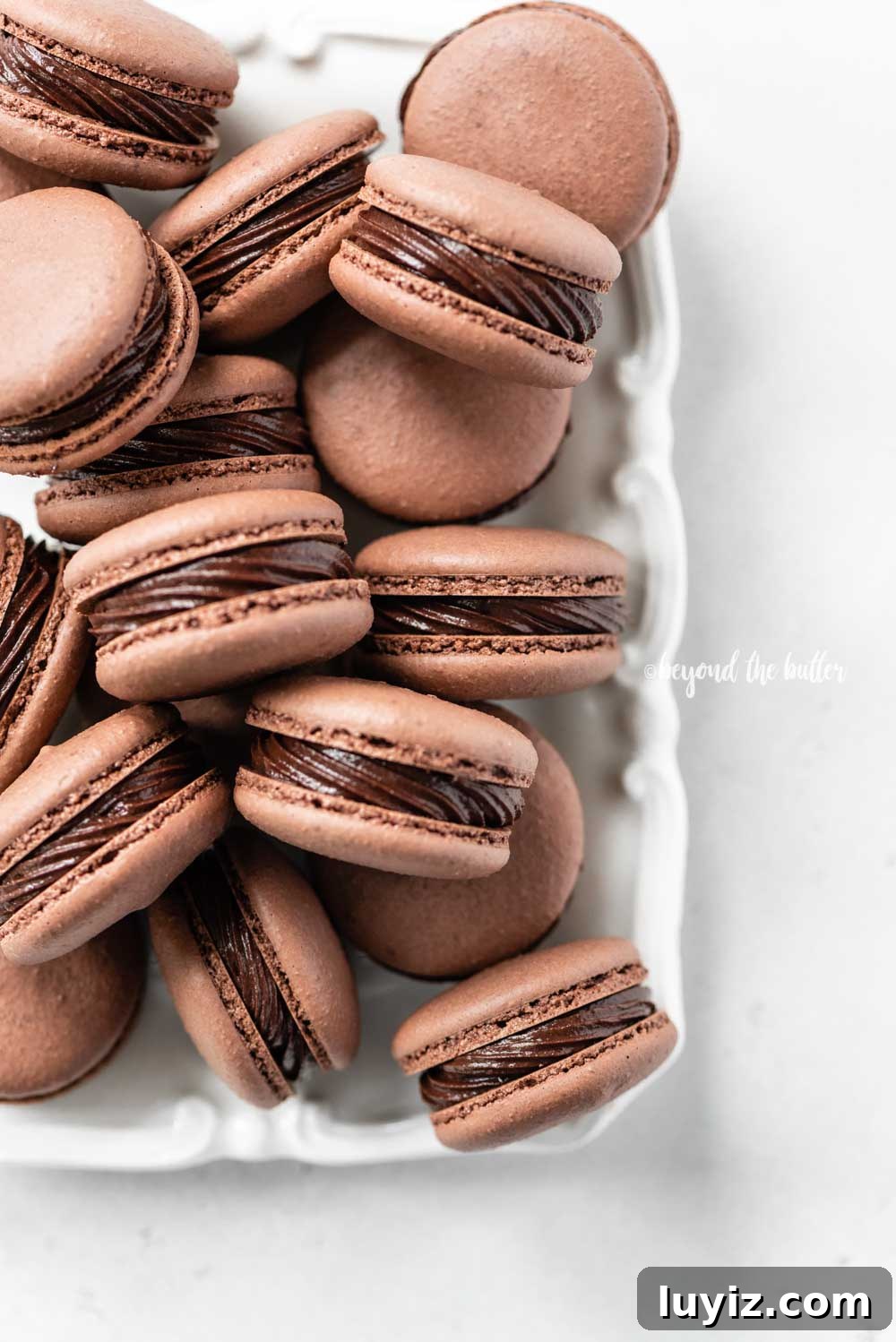
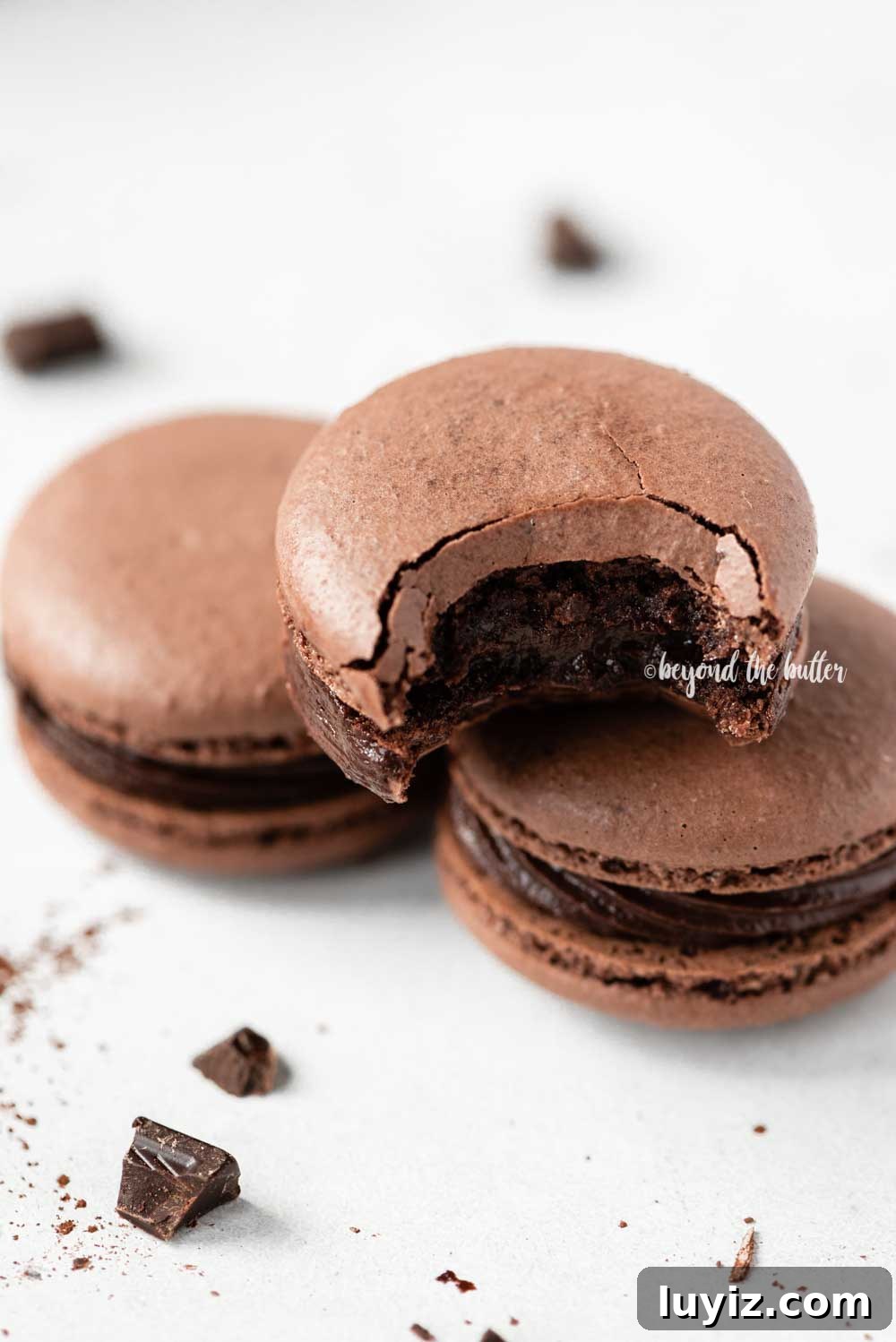
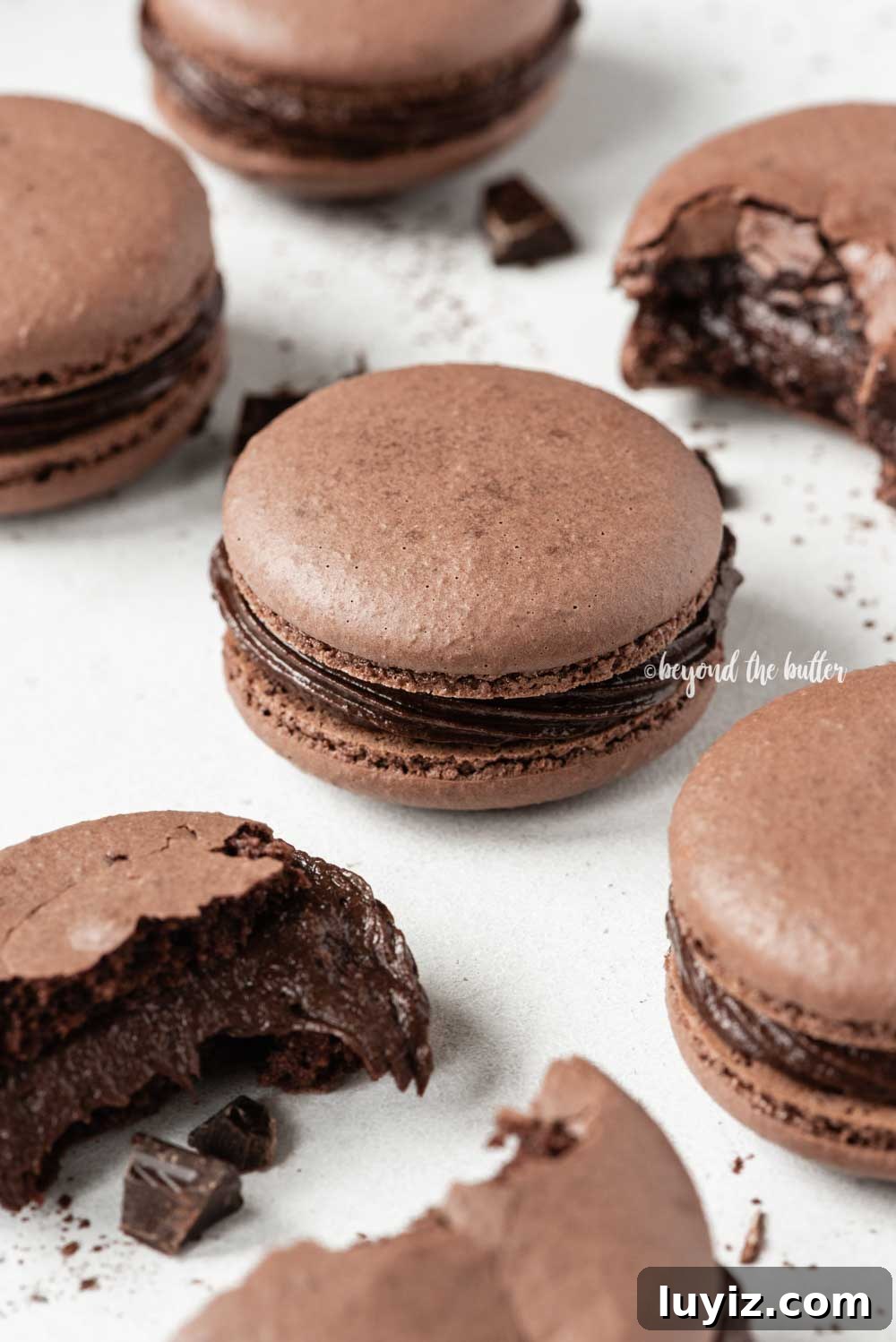
These Dark Chocolate Macarons feature crisp, dark chocolate shells with chewy centers, sandwiched around a rich dark chocolate fudge frosting. Bite-sized and intensely chocolatey, they’re more approachable to make than many expect.
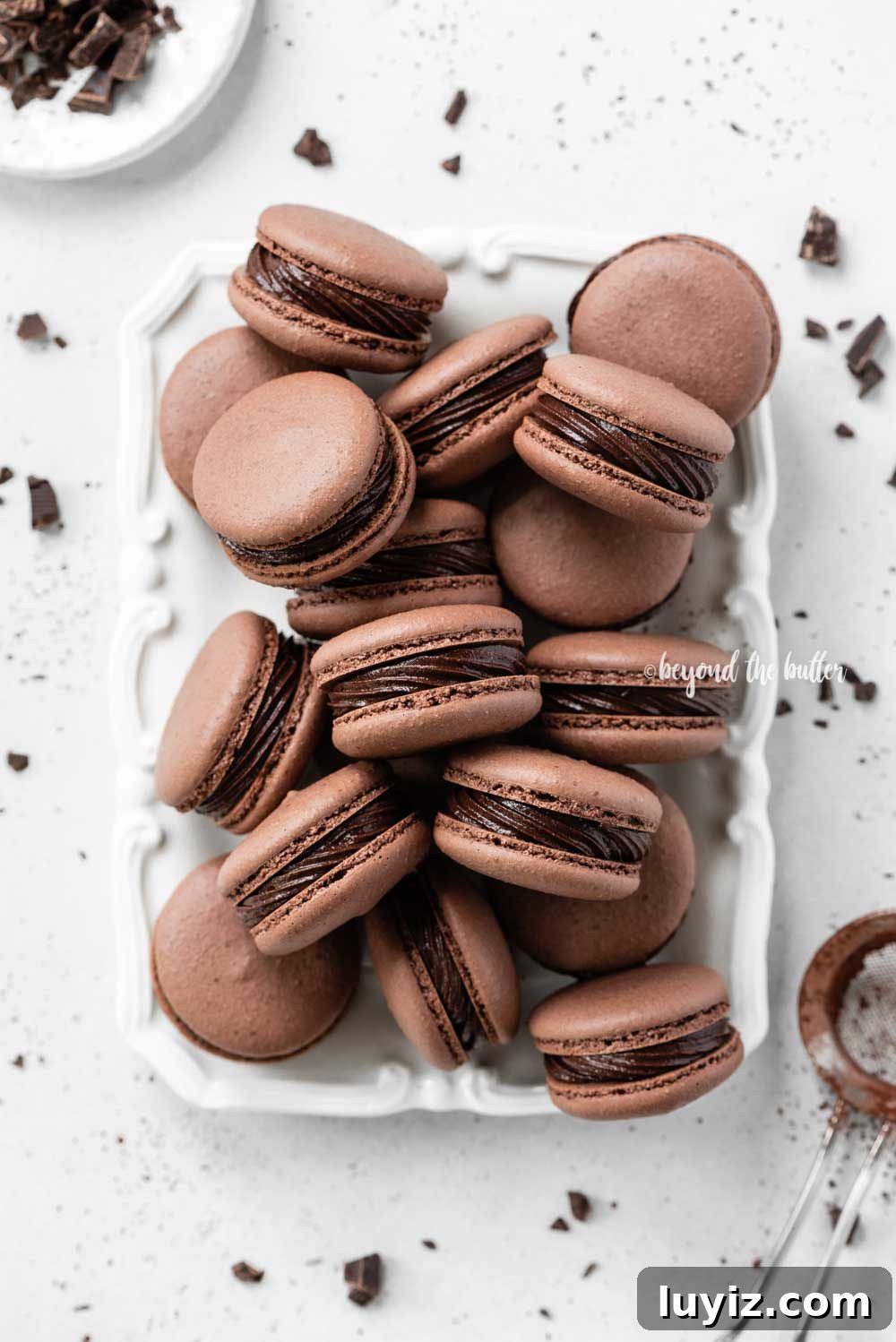
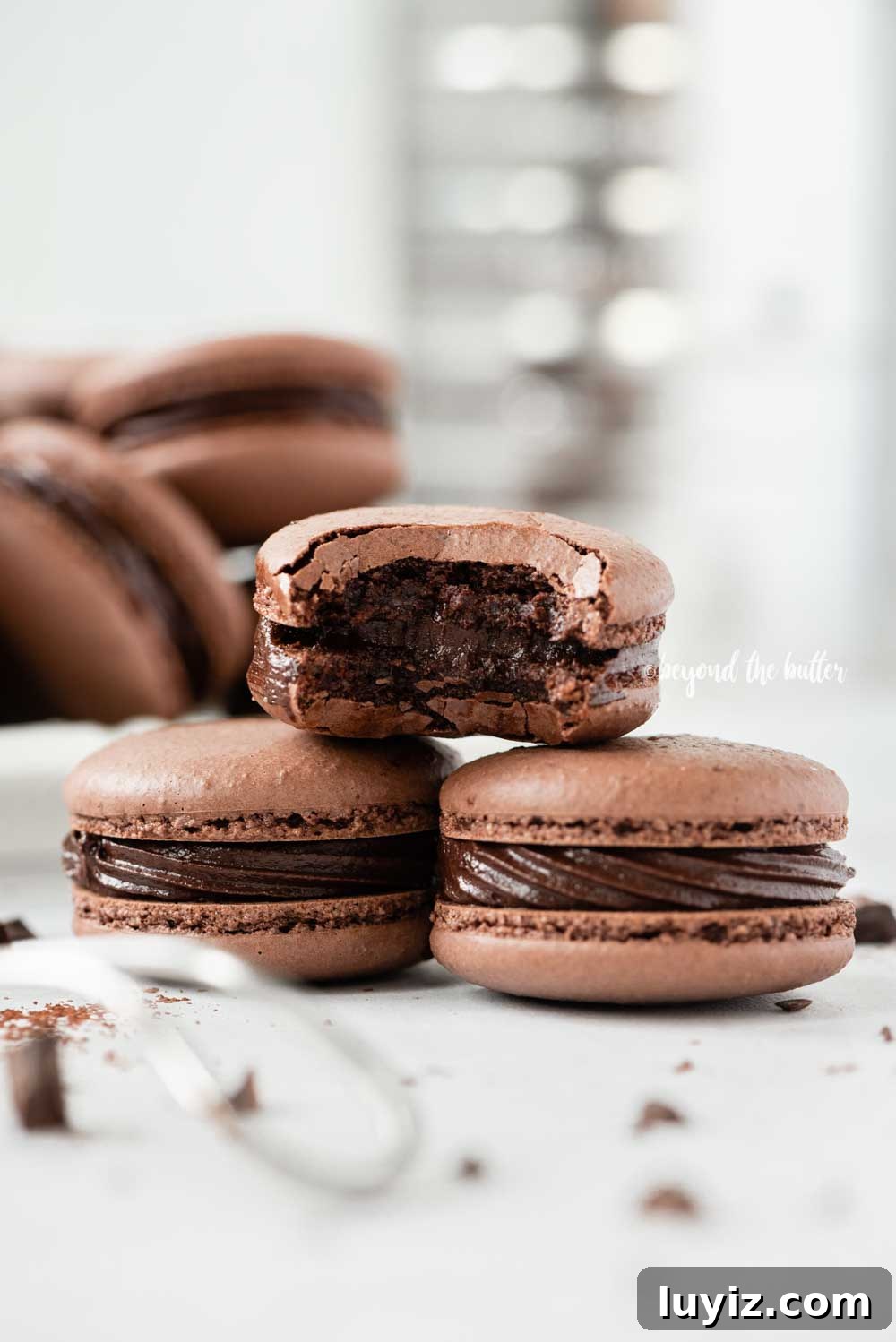
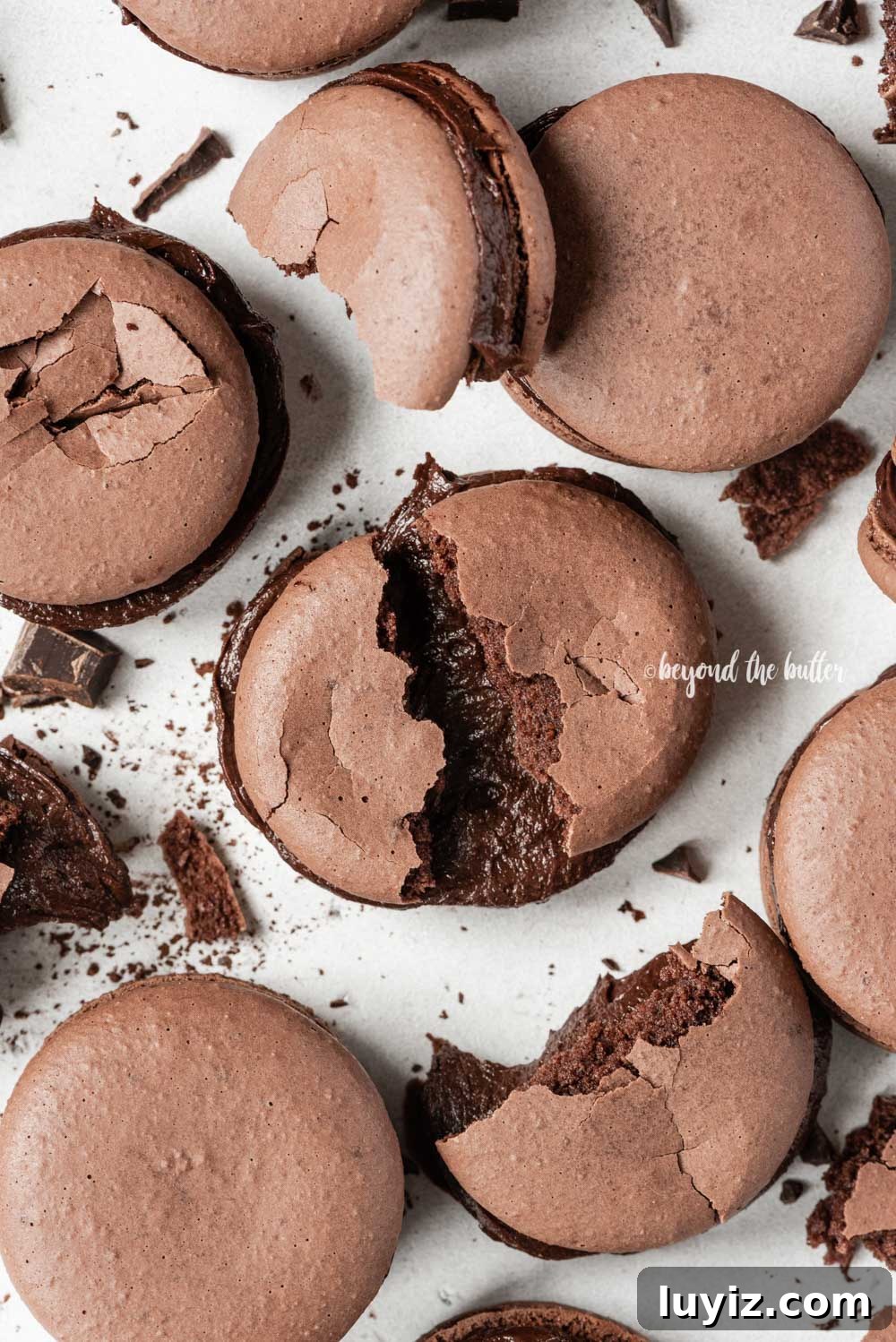
Table of Contents
- Why You Should Make This Recipe
- Behind the Recipe
- What is the Swiss Method for Making Macarons?
- What is a Bain-Marie?
- Ingredients Needed
- Macaron Baking Tools
- Let’s Make the Recipe
- Dark Chocolate Fudge Frosting
- Helpful Tips for Making Macarons
- Craving More Chocolate?
- Dark Chocolate Macarons Recipe
Why You Should Make This Recipe
- Both the shells and the filling are rich in dark chocolate for a double chocolate experience.
- After resting chilled for a day or two, these macarons develop a fudgy, brownie-like texture and flavor.
- The Swiss method used here is forgiving and a good introduction for bakers new to macarons.
- They’re elegant, bite-sized treats perfect for gifts or special occasions.
- Making them at home is significantly less expensive than buying equivalent macarons from a bakery.
- Ideal for anyone who loves intense chocolate flavor.
Behind the Recipe
I waited two years before trying macarons. Making them felt intimidating because of steps like macaronage (folding meringue and dry ingredients) and the baking stage, where improper mixing or oven issues can cause cracked or hollow shells. After more than ten tests using all three major methods—Swiss, French, and Italian—I settled on the Swiss method for this recipe. I switched from regular cocoa to dark cocoa powder to deepen the color and intensify the chocolate flavor. The result is a reliably dark, fudgy macaron when the technique and timing are observed.
What is the Swiss Method for Making Macarons?
The Swiss method begins by gently heating egg whites and granulated sugar together over simmering water until the sugar dissolves and the mixture appears frothy. The warm mixture is whipped to stiff peaks to form a stable meringue. Sifted dry ingredients (almond flour, powdered sugar, cocoa powder, and salt) are folded into the meringue until the batter reaches a thick, lava-like consistency. The Swiss method creates a stable meringue and can be more manageable for many bakers.
What is a Bain-Marie?
A bain-marie (double boiler) uses gentle, indirect heat to warm or melt ingredients without burning them. To make a bain-marie, simmer 1–1.5 inches of water in a saucepan and set a heatproof bowl over the pan so the bottom of the bowl does not touch the water. Place the egg whites and sugar in the bowl and whisk constantly until the sugar dissolves and the mixture becomes frothy.
Ingredients Needed
This recipe uses the following main ingredients:
- Almond Flour (also called almond meal) for structure and chew.
- Powdered Sugar (sifted) to sweeten and blend with the almond flour.
- Dark Cocoa Powder for deep color and rich chocolate flavor.
- Aged Egg Whites or egg whites brought to room temperature for stability and structure.
- Granulated Sugar to stabilize the meringue.
- Salt – a pinch to enhance chocolate flavor.
- Vanilla Extract to round out flavors.
Macaron Baking Tools
Recommended tools that make the process smoother:
- Large, flat baking sheets for even airflow and baking.
- Silicone baking mats (or parchment) to pipe onto and release the shells cleanly after cooling.
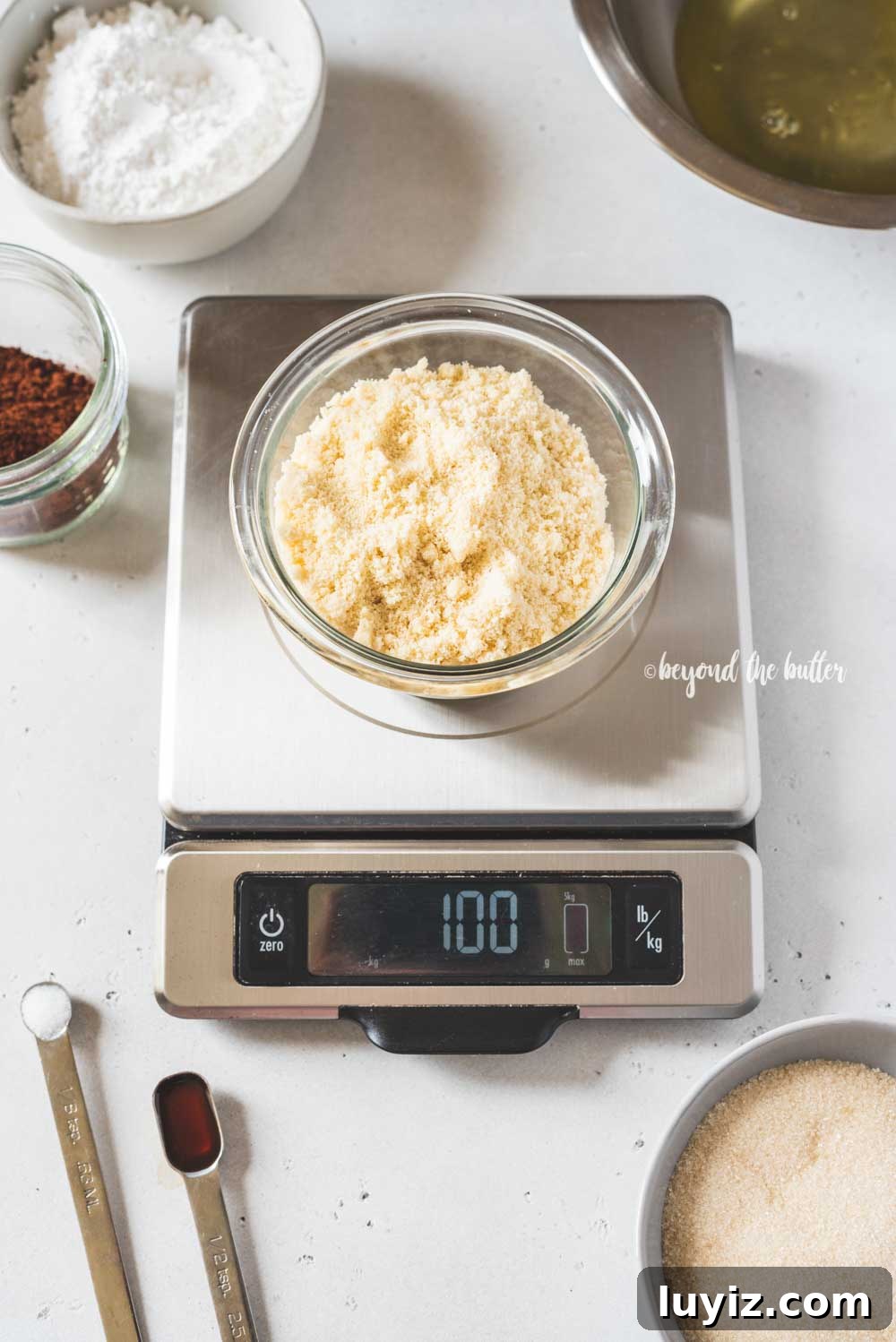
- Food scale — essential for precise measurements.
- Hand crank sifter or fine sifter to remove lumps from almond flour, powdered sugar, and cocoa.
- Oven thermometer to confirm accurate oven temperature.
- Piping bags and decorating tips — a large bag for piping batter and a small bag or tip for filling.
Weighing and preparing all ingredients before you start saves time and avoids mistakes.
Let’s Make the Recipe
Below is a clear walk-through of the macaron process. For exact measurements and the full recipe card, see the recipe section below.
1. Prep your work area. Clean mixing bowls and tools thoroughly. Line baking sheets with silicone mats or parchment and prepare piping bags.
2. Weigh ingredients. Use a food scale — volume measurements are unreliable for macarons.
3. Sift dry ingredients twice and whisk. Sift almond flour, powdered sugar, dark cocoa, and salt twice. Discard any coarse bits left behind.
4. Warm sugar and egg whites. In a bain-marie, heat aged egg whites and granulated sugar over simmering water, whisking constantly until sugar dissolves and the mixture is frothy (about 5–6 minutes); test by rubbing a bit between your fingers — there should be no grittiness.
5. Whip the meringue. Transfer the warm mixture to a mixer and whip on high until glossy, stiff peaks form (about 10 minutes). Add vanilla at soft-peak stage.
6. Fold in dry ingredients (macaronage). Gently fold the sifted dry mix into the meringue, pressing the batter against the bowl to deflate air. Continue until the batter flows like lava and can form ribbons or a figure-8 without breaking.
7. Pipe circles. Fill a piping bag and pipe 1.5-inch circles perpendicular to the mat. Tap sheets 3–4 times to release air and pop any bubbles with a toothpick.
8. Rest the shells. Let piped shells dry on trays in a cool, dry spot for about 40 minutes, until tops are dry to the touch. Resting time varies with humidity.
9. Bake. Bake one tray at a time at 300ºF (about 150ºC) for 16 minutes, rotating halfway through.
10. Cool. Cool on the tray for 20–30 minutes before removing. If shells still stick, freeze for 15–20 minutes to help release them.
11. Pipe filling and assemble. Pipe chocolate fudge frosting onto one shell and gently sandwich with a matching shell. Handle gently to avoid cracking.
12. Refrigerate. Store assembled macarons in an airtight container in the refrigerator. They taste best after 2–3 days when flavors meld and texture becomes fudgier.
Dark Chocolate Fudge Frosting
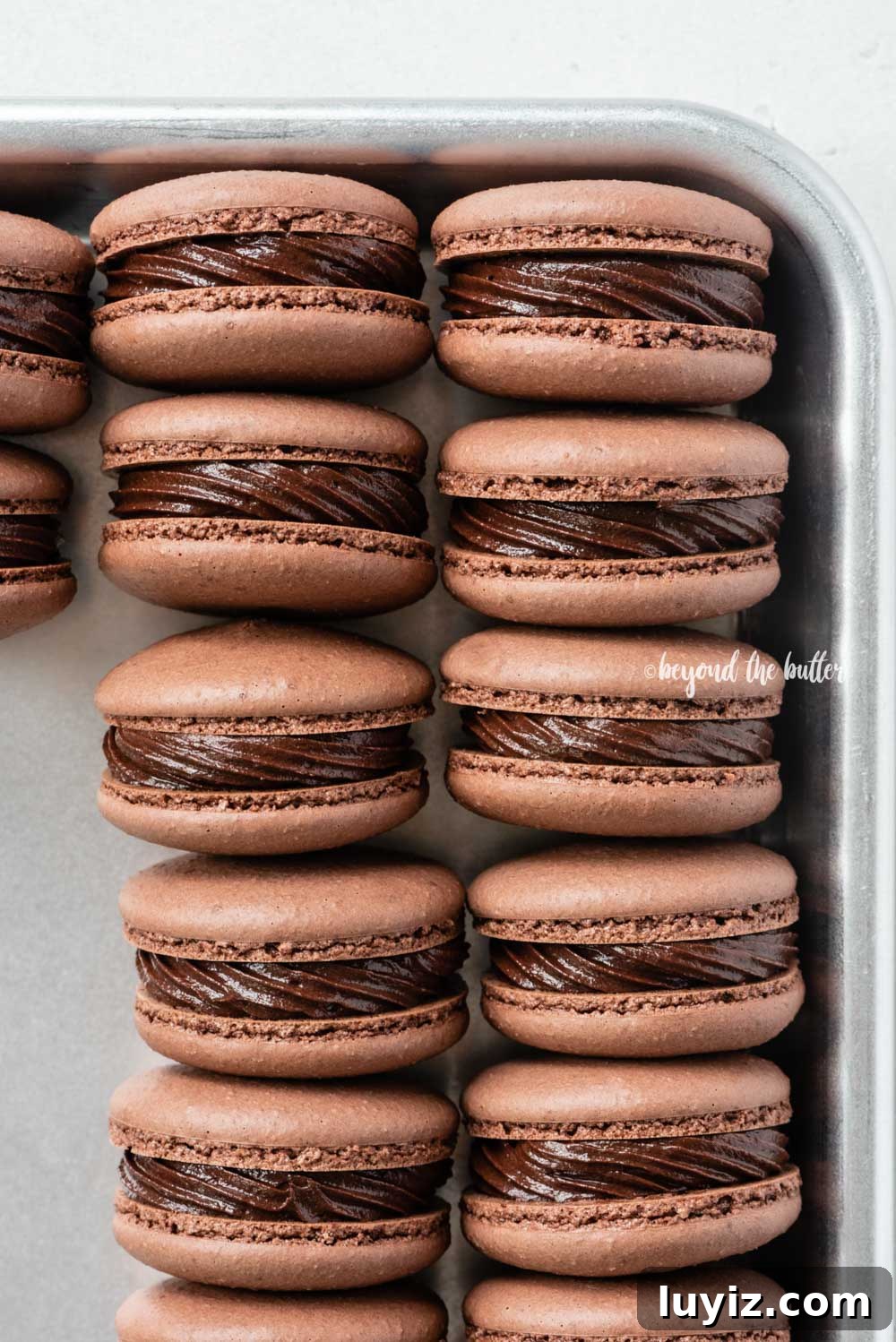
This rich filling combines butter, sifted powdered sugar, dark cocoa, a touch of corn syrup for shine, melted dark chocolate, and a pinch of salt. Mix on low speed until smooth and glossy. Chill briefly if needed to reach piping consistency.
Ingredients
Typical ingredients for the filling include:
- Room-temperature unsalted butter
- Sifted powdered sugar
- Dark cocoa powder
- Pinch of salt
- Light corn syrup
- Vanilla extract
- Melted dark chocolate (70% recommended), cooled
Method
Combine all frosting ingredients in a mixer on low speed until smooth. Scrape the bowl as needed. Keep the mixer speed low to avoid incorporating air and to achieve a dense, fudgy texture.
Piping
Fit a piping bag with a small tip (about Wilton 32 size) and pipe a modest amount of filling onto the shell center, then sandwich. Store any extra frosting refrigerated for up to a week.
Helpful Tips for Making Macarons
General
- Avoid very humid days; cool, dry conditions are best.
- Clean tools with a little white vinegar on a paper towel to remove grease, which can prevent meringue from forming.
- Take notes during testing so you can adjust based on results.
- If shells aren’t perfect, the filling can disguise imperfections—keep practicing.
- You can make shells a day or two ahead and store them at room temperature until filling.
Dry Ingredients
- Optionally pulse sifted dry ingredients briefly in a food processor for an even finer mix, but never skip sifting.
Meringue
- Ensure no yolk contaminates the whites when separating eggs.
- Alternatively, bring eggs to room temperature then separate—this can replace traditional aging.
- Test for dissolved sugar by rubbing a small amount between fingers; it should feel smooth.
Macaronage
- Look for a lava-like batter that can form a figure 8 without breaking to know it’s ready to pipe.
- Test a teaspoon on parchment—if it spreads slightly, you’re close; if it stays stiff, fold more.
Piping
- Use a pint glass to steady the piping bag while filling it.
- Pipe circles perpendicular to the mat for even shells and consistent feet.
- Finish each piped circle with a quick upward swoop to avoid a hump on top.
- Tap trays and pop surface bubbles with a toothpick before resting.
Macaron Resting/Drying
- Rest about 40 minutes in a cool, dry spot; longer in humid conditions. A circulating fan can help.
Baking
- Bake at 300ºF (150ºC) for 16 minutes, one tray at a time, rotating halfway through for even color and feet.
- Position the oven rack just above center for best results.
Cooling
- Allow shells to cool 20–30 minutes before attempting removal. If they stick, place trays in the freezer for 15–20 minutes to release them cleanly.
- Leftover frosting stores up to a week refrigerated.
Frosting
- This recipe yields roughly 9.5 ounces (270 g) of frosting—enough for the stated batch.
- Any leftover frosting can be refrigerated in an airtight container for up to one week.
Craving More Chocolate?
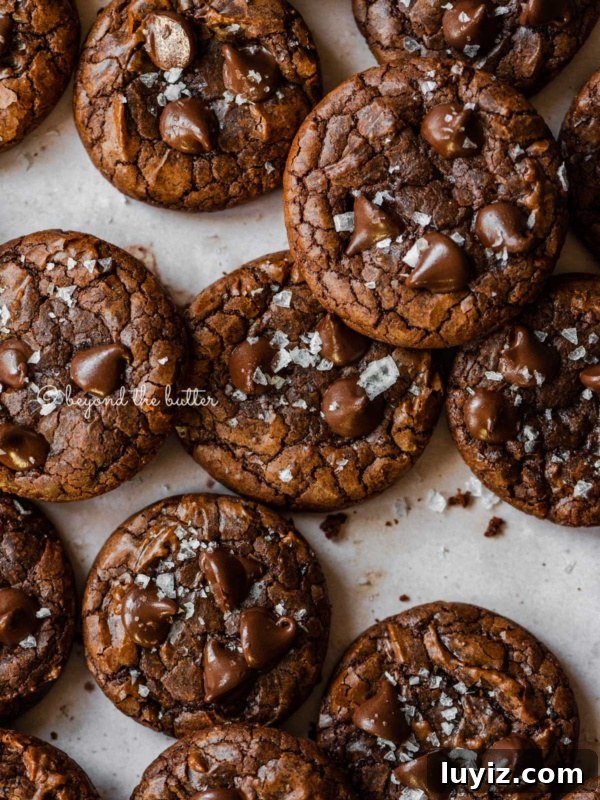
Salted Brownie Cookies
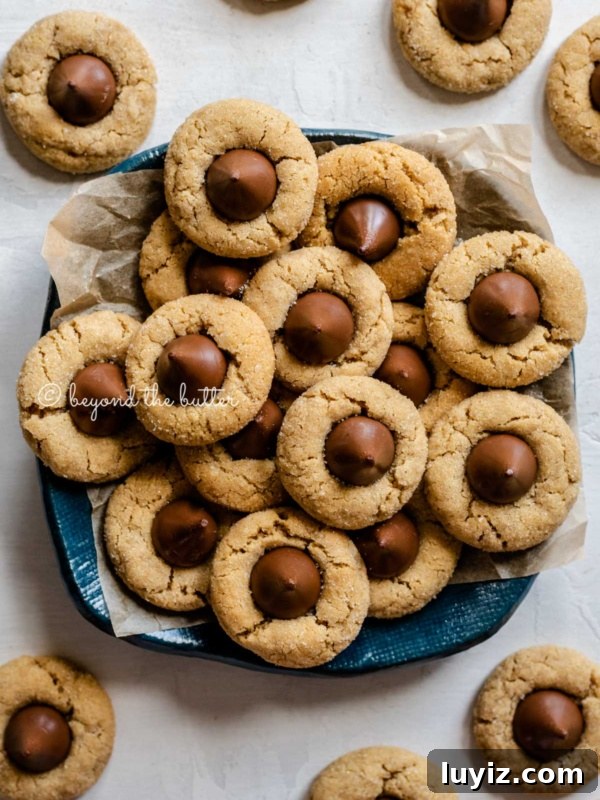
Classic Peanut Butter Blossoms
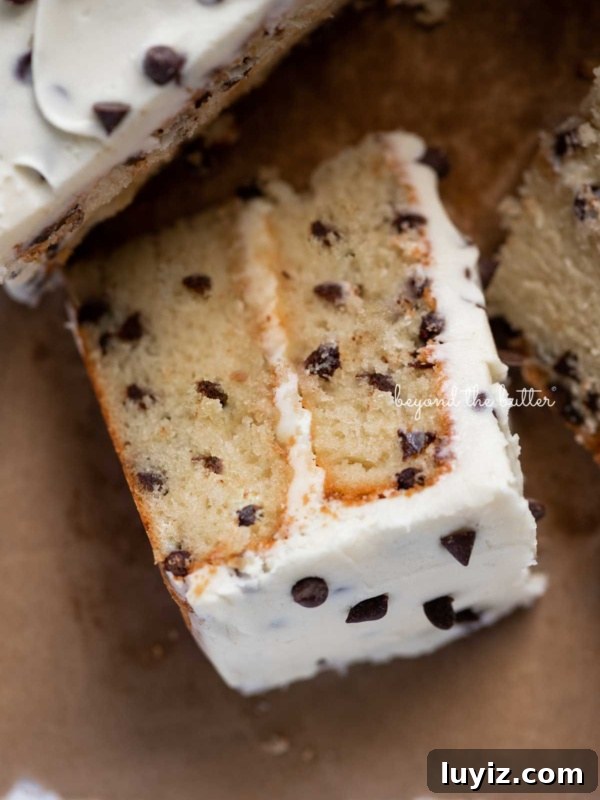
Chocolate Chip Cake
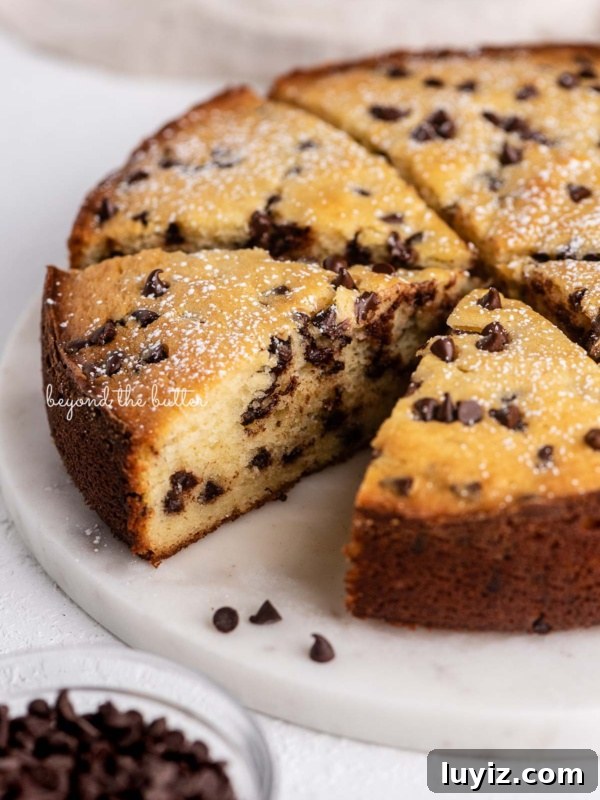
Chocolate Chip Ricotta Cake
Looking for more chocolate dessert ideas? Check the recipe box for additional recipes and inspiration.
Dark Chocolate Macarons
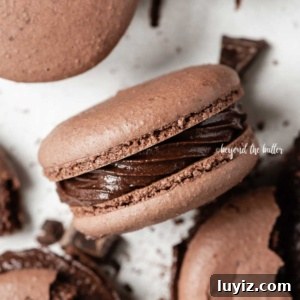
Ingredients
dark chocolate macaron shells
- 1 cup Almond Flour, sifted
- 3/4 cup Powdered Sugar, sifted
- 3 tbsp Dark Cocoa Powder, sifted
- 3 Aged Egg Whites
- 1/2 cup Granulated Sugar
- 1/8 tsp Salt
- 1/2 tsp Vanilla Extract
dark chocolate fudge frosting
- 1/3 cup Unsalted Butter, room temperature
- 2/3 cup Powdered Sugar, sifted
- 1/4 cup Dark Cocoa Powder, sifted
- 1/8 tsp Salt
- 1/4 cup Light Corn Syrup
- 1/2 tsp Vanilla Extract
- 2 oz Dark Chocolate 70%, melted and cooled
Instructions
dark chocolate macaron shells
-
Clean mixing bowls and tools, line baking sheets, and prep piping bags.
-
Sift almond flour, powdered sugar, dark cocoa, and salt twice; whisk to blend.
-
Heat aged egg whites and granulated sugar in a bain-marie over simmering water, whisking until sugar dissolves and mixture is frothy (about 5–6 minutes). Test between fingers for grittiness.
-
Whip the warm mixture on high until stiff, glossy peaks form (about 10 minutes). Add vanilla at soft-peak stage.
-
Gently fold dry ingredients into the meringue until the batter flows like lava and can form ribbons or a figure-8 without breaking.
-
Pipe 1.5-inch circles perpendicular to the mat, tap trays to release air, and remove bubbles with a toothpick. Rest shells 40 minutes until tops are dry.
-
Preheat oven to 300ºF and bake one tray at a time for 16 minutes, rotating halfway through. Cool 20–30 minutes before removing; freeze briefly if shells stick.
dark chocolate fudge frosting (makes 9.5 ounces / 270 grams)
-
Mix butter, sifted powdered sugar, dark cocoa, salt, light corn syrup, vanilla, and melted chocolate on low speed until smooth. Scrape bowl as needed.
assembling the dark chocolate macarons
-
Fit a piping bag with a small tip, fill with frosting, pipe onto shells, and sandwich. Store assembled macarons in an airtight container in the refrigerator; they are best after 2–3 days.
Notes
- Clean tools with a little white vinegar to remove grease before starting.
- Macaron shells can be made ahead and stored at room temperature for a day or two before filling.
- Check that sugar is fully dissolved in the egg whites by rubbing a small amount between fingers.
- Resting time varies with humidity; aim for about 40 minutes in typical conditions.
Nutrition
Nutritional information is an estimate and will vary based on exact ingredients used.