
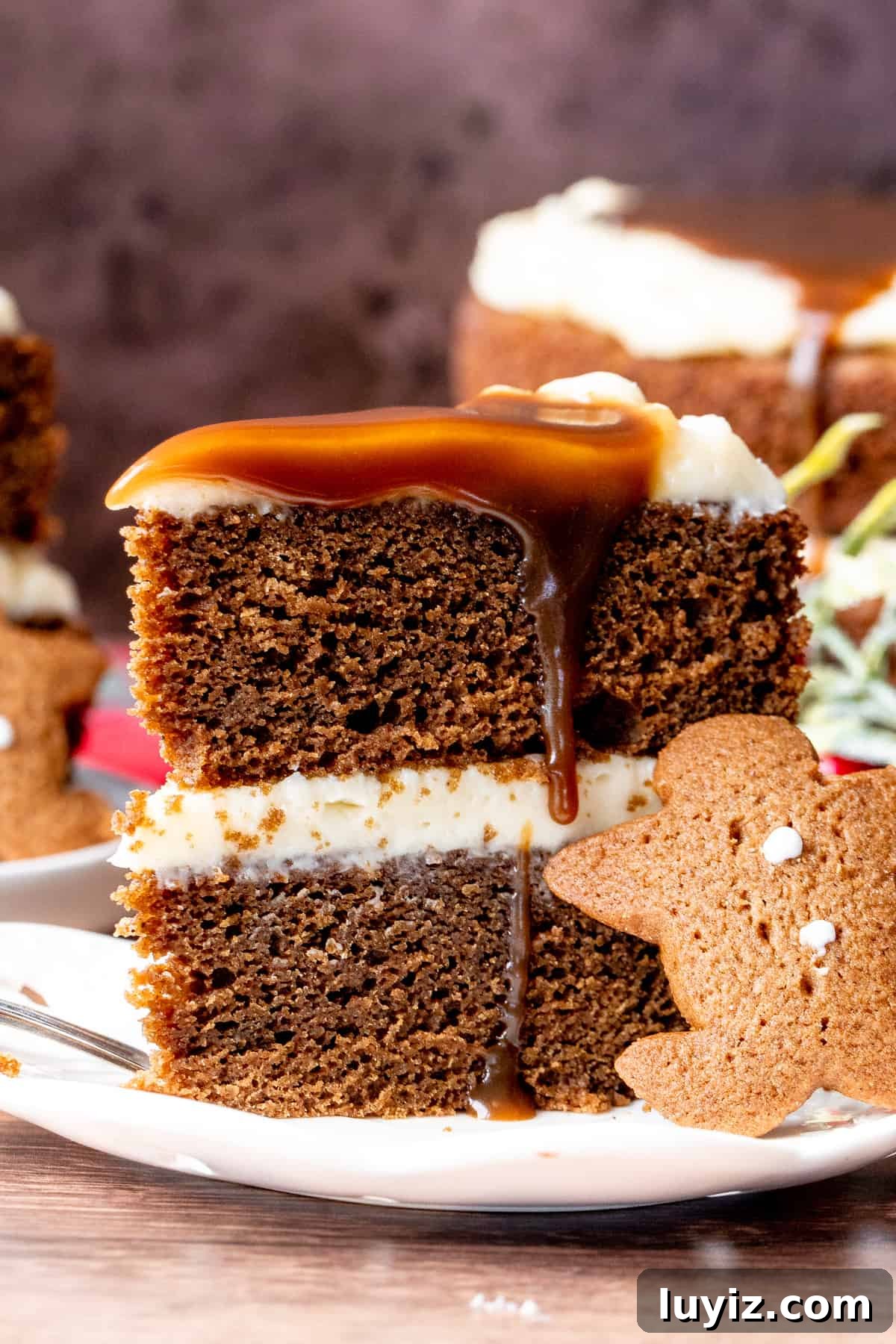
This gingerbread cake features layers of moist, warmly spiced gingerbread with notes of brown sugar and molasses. It’s finished with tangy cream cheese frosting and a drizzle of butterscotch sauce for a festive holiday dessert that looks impressive without fancy decorating skills. 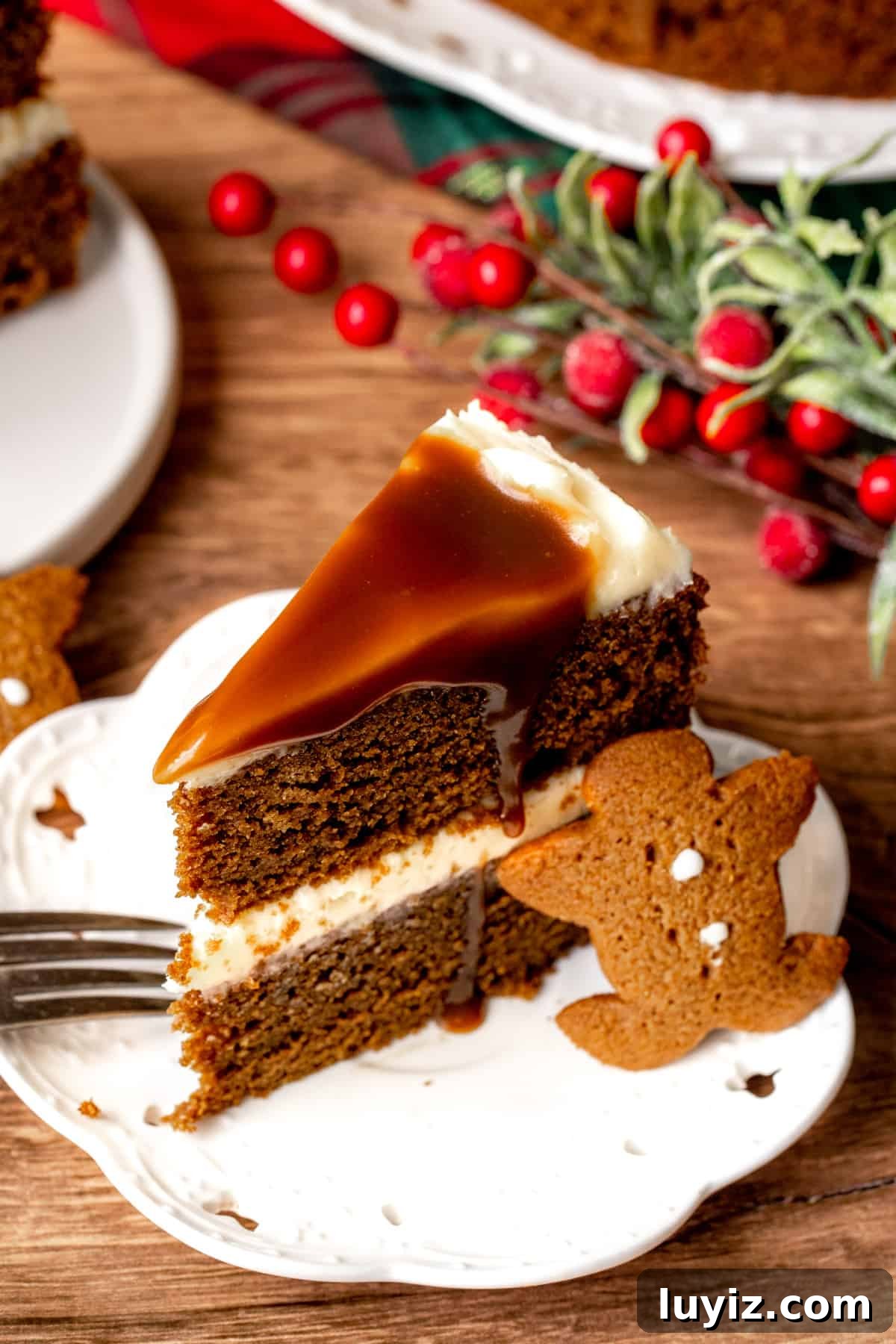
Traditional old-fashioned gingerbread is rich and almost gooey, best served warm with a little butterscotch. For a showstopping centerpiece, these gingerbread layers are adjusted to be a bit lighter and less dense so they assemble into a layered cake easily. The cream cheese frosting adds a bright, slightly tangy contrast to the warm spices, while the butterscotch topping brings extra depth and sweetness—perfect for the holiday table.
The combination of molasses, dark brown sugar and warming spices pairs beautifully with the cream cheese frosting and butterscotch. The result is elegant, cozy and deeply seasonal.
Making the Gingerbread Cake
Below are clear steps and tips to help you bake the layers successfully.
- Preheat the oven to 350°F (180°C) or 325°F (170°C) for convection. Line two cake pans with parchment rounds, then lightly grease and flour the sides.
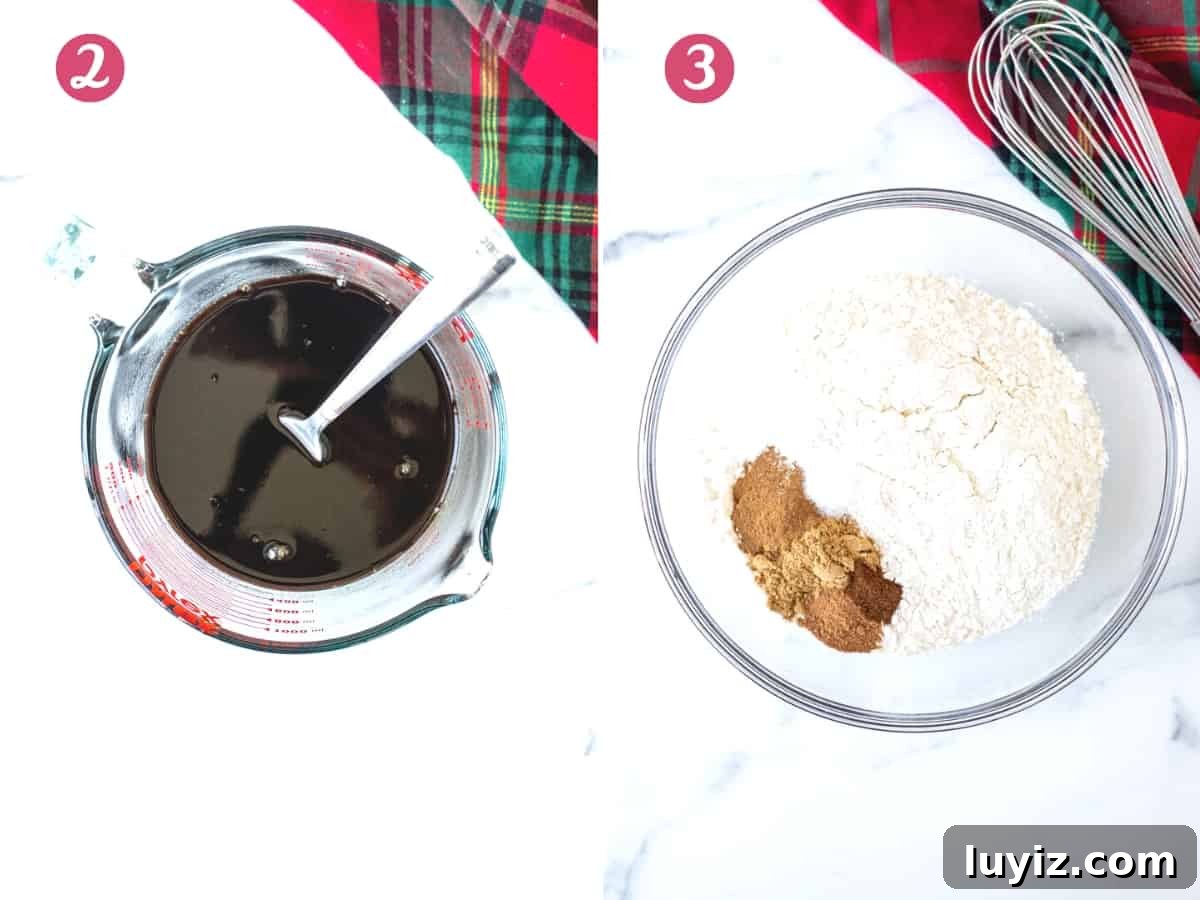
- Whisk hot water and molasses together in a liquid measuring cup so the molasses dissolves evenly into the batter.
- In a large bowl, whisk the dry ingredients: all-purpose flour, ginger, cinnamon, nutmeg, ground cloves, baking powder, baking soda and salt. Sifting or thorough whisking removes lumps and distributes the spices and leavening evenly. Adjust the ginger amount to taste—use a full tablespoon for a bolder ginger flavor or reduce to 2–2½ teaspoons if you prefer it milder.

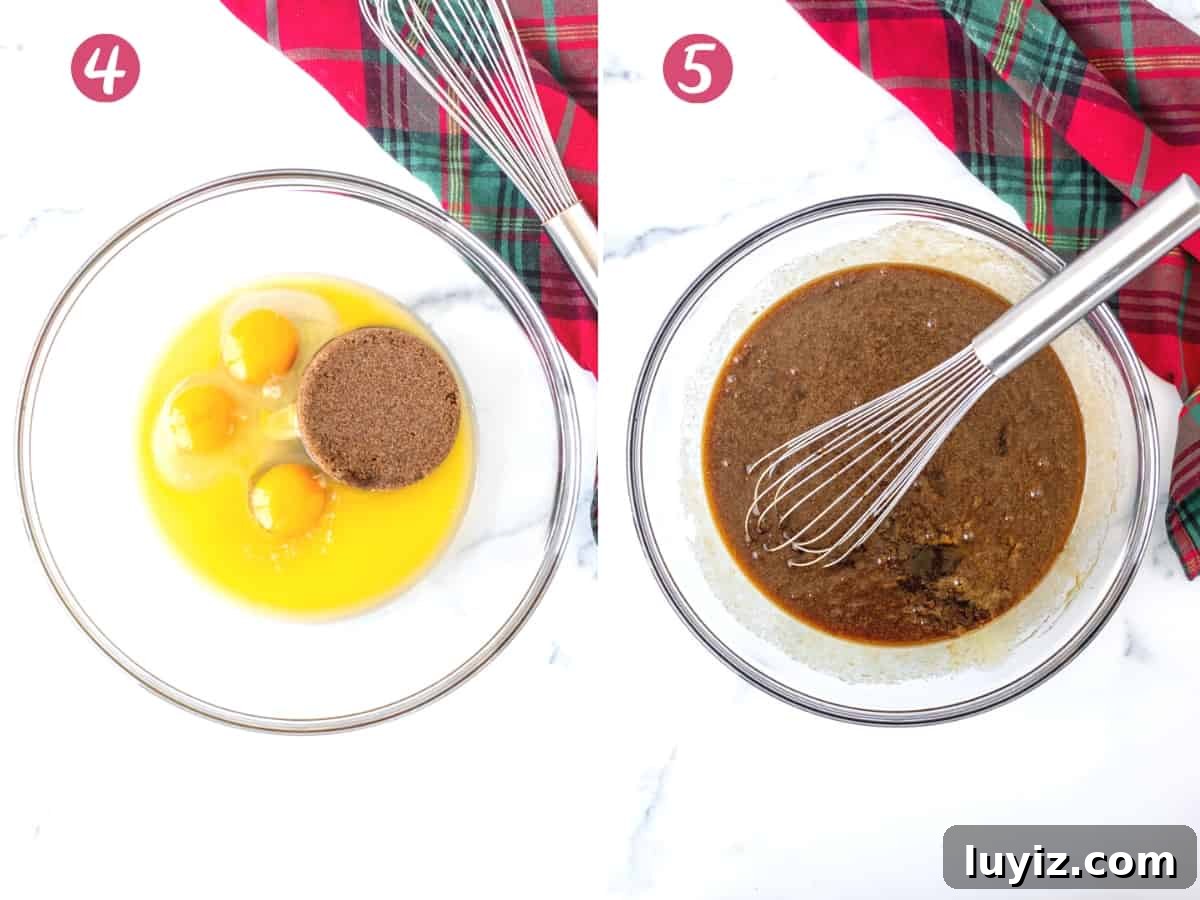
- In a separate large bowl, whisk together melted butter, brown sugar, eggs and vanilla. You can use an electric mixer on low, but stop as soon as ingredients are combined to avoid overmixing.
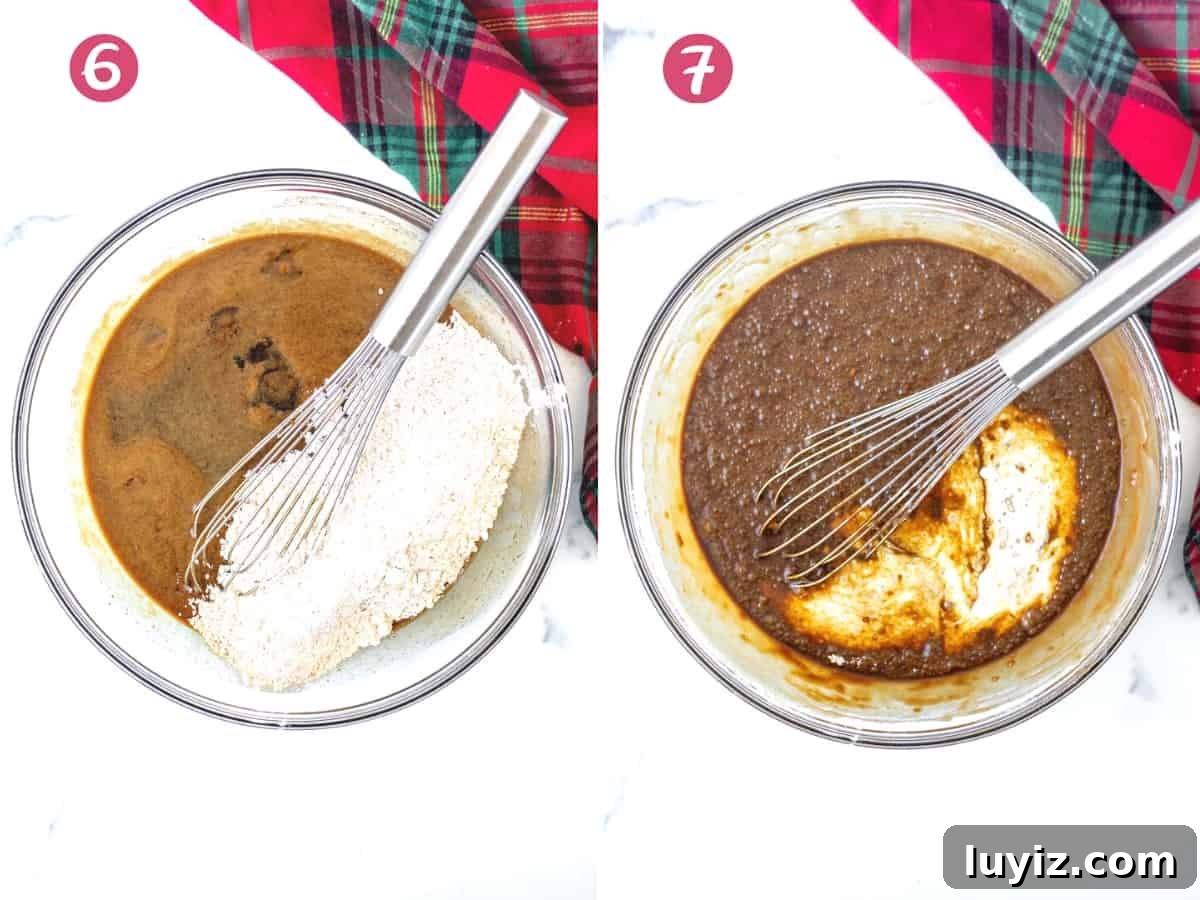
- Stir the molasses mixture into the butter-sugar-egg mixture. The batter will be thin. If using a mixer, keep the speed very low to prevent splashing.
- Mix about half of the dry ingredients into the wet ingredients; a bubbly batter is normal.
- Whisk in buttermilk until smooth.
- Fold in the remaining dry ingredients until just combined. The batter will be fairly thin because of the liquid—this is expected.
- Divide batter evenly between prepared pans. If you have cake strips, soak and wrap them around the pans to encourage flat tops; otherwise you can level any domed tops after baking.
- Bake for about 25–30 minutes, or until a toothpick inserted into the center comes out clean.
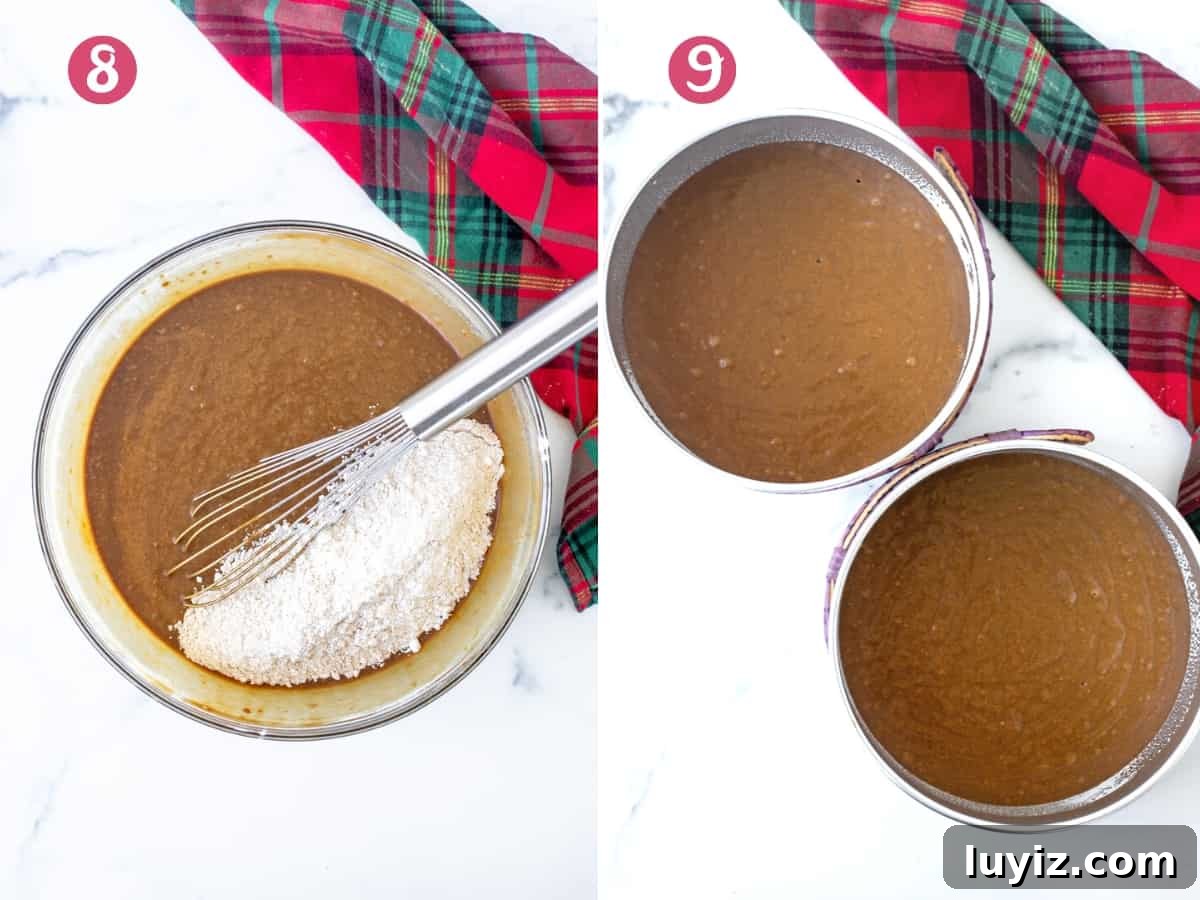
Allow the cake layers to cool completely before assembling and frosting.
For the Cream Cheese Frosting
The frosting is a simple cream cheese buttercream made from full-fat, brick-style cream cheese, butter, powdered sugar, vanilla and a pinch of salt. Use full-fat block cream cheese—not the tub variety or low-fat versions—to avoid a thin or runny frosting. Keep the butter and cream cheese slightly softened but not warm or oily; overheating will make the frosting too loose.
For the Butterscotch Sauce
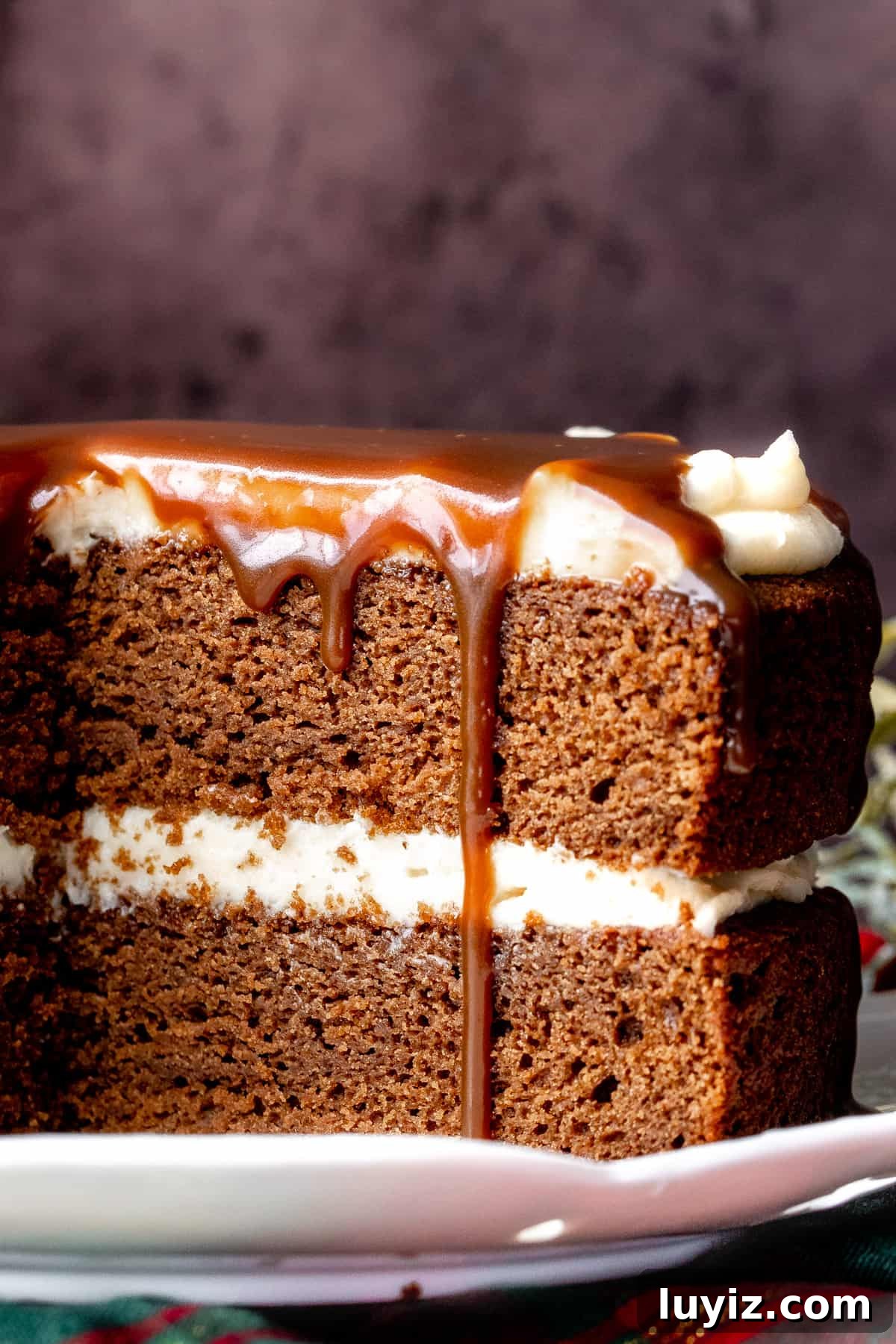
Butterscotch highlights the brown-sugar notes in the cake. To make it, melt butter and brown sugar together over low heat and bring to a very gentle boil for about a minute, then stir in heavy whipping cream and simmer gently for a few minutes. Keep the heat low to avoid burning or crystallizing the sugar. Remove from heat and stir in vanilla and salt. The sauce thickens as it cools. If you prefer, caramel works too, or you can use a store-bought sauce.
Assembling the Cake
Make sure both the cake layers and the butterscotch are completely cool before assembly. If the cake tops are domed, level them with a serrated knife or cake leveler so the layers sit flat. Place one layer bottom-side up on your serving plate, spread half the cream cheese frosting over it, then position the second layer (also bottom-side up) and frost the top with the remaining frosting. Create a slight lip around the edge of the top frosting to hold the butterscotch.
If the butterscotch has been refrigerated, let it sit 10–15 minutes at room temperature so it pours easily. If the frosting softens while assembling, chill the cake briefly to firm it before adding the sauce. 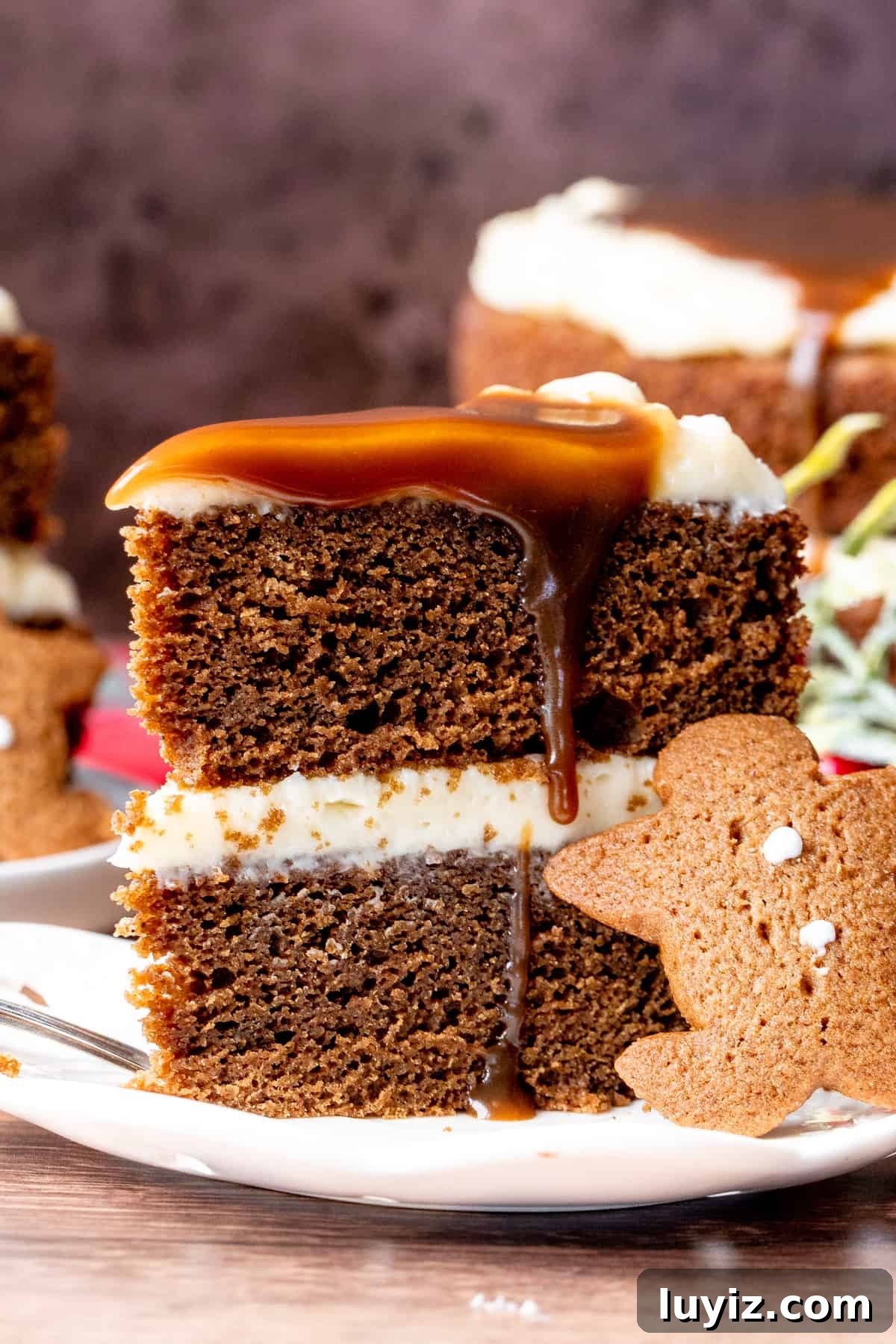
Make Ahead Tips
I often bake the cake layers the day before serving. Once fully cooled, wrap them in plastic and store at room temperature overnight. Make the butterscotch ahead as well—cool it to room temperature and refrigerate. On the day you serve the cake, prepare the frosting and assemble.
To freeze layers, cool completely, wrap tightly in plastic at least three times, then wrap in foil or place in a freezer bag. Freeze up to two months and always thaw in the refrigerator to avoid a gummy texture.
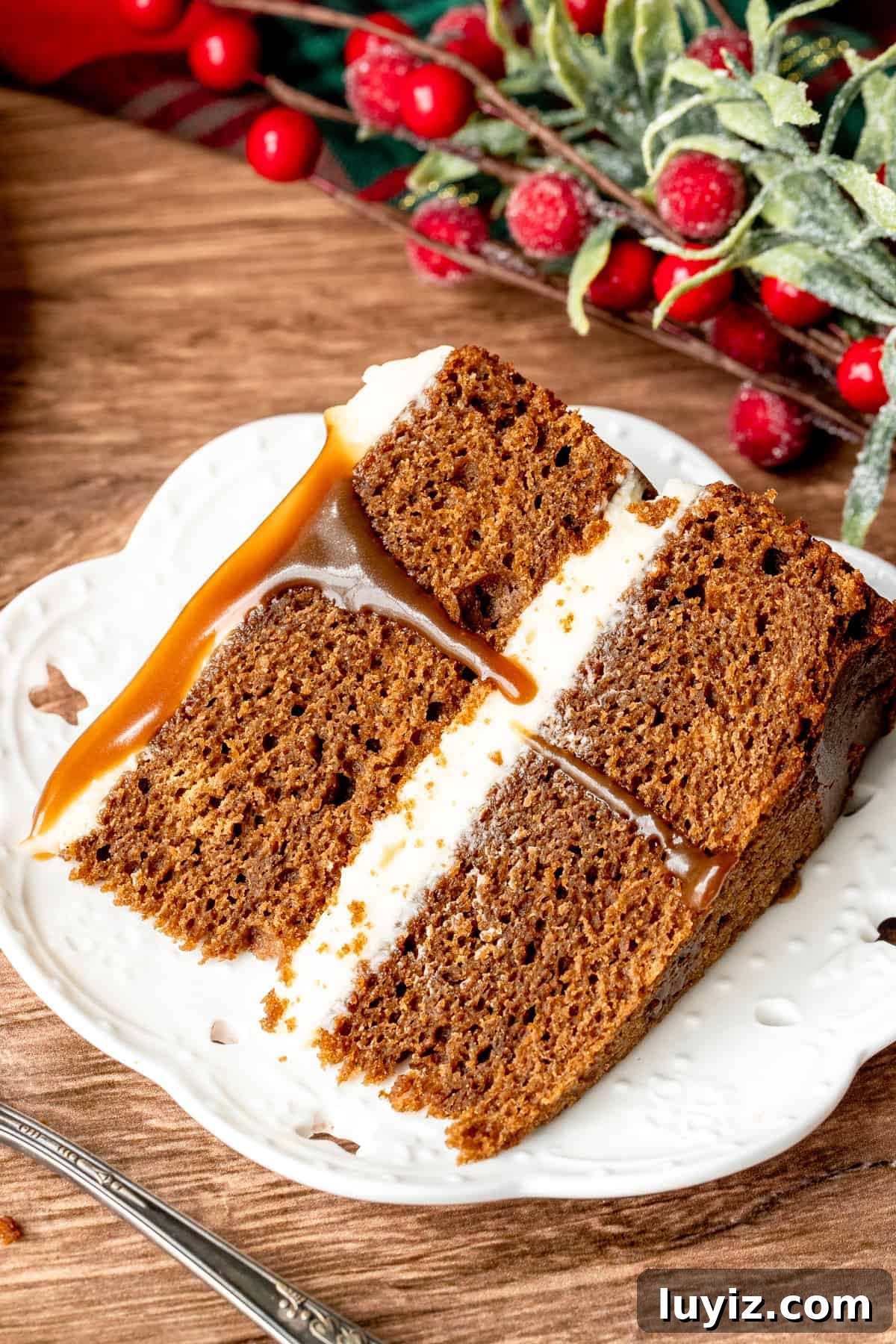
Below are the recipe details, ingredients and instructions for butterscotch, gingerbread layers and cream cheese frosting.
Gingerbread Cake
Layers of moist gingerbread spiced with molasses and brown sugar, finished with cream cheese frosting and butterscotch sauce.
Equipment
- 2 8-inch round cake pans with sides at least 2.5 inches tall (or two 9-inch pans)
Ingredients
Butterscotch Sauce
- 1/4 cup unsalted butter, cubed
- 1/2 cup dark brown sugar, packed
- 1/2 cup whipping cream (about 35% MF)
- 1 teaspoon vanilla extract
- 1/4 teaspoon salt
Gingerbread Layer Cake
- 3/4 cup molasses (do not use blackstrap)
- 1/2 cup boiling water
- 2 3/4 cups all-purpose flour (344 g)
- 1 tablespoon ground ginger (or 2–2½ teaspoons for milder flavor)
- 2 teaspoons cinnamon
- 1/2 teaspoon nutmeg
- 1/4 teaspoon ground cloves
- 1 teaspoon baking powder
- 3/4 teaspoon baking soda
- 1/2 teaspoon salt
- 3/4 cup unsalted butter, melted
- 1 cup dark brown sugar, packed
- 3 large eggs
- 2 teaspoons vanilla extract
- 3/4 cup buttermilk (or homemade substitute—see notes)
Cream Cheese Frosting
- 1/2 cup unsalted butter, softened
- 8 ounces brick-style full-fat cream cheese, softened
- 2–3 cups powdered sugar (220–330 g), to taste
- 1 teaspoon vanilla extract
- 1/4 teaspoon salt
- 1 tablespoon whipping cream, if needed to adjust texture
Instructions
Butterscotch Sauce (can be made ahead)
- Melt butter and brown sugar in a medium saucepan over low heat, stirring gently.
- Bring to a very gentle boil for about 1 minute.
- Carefully add cream and bring to a gentle boil while stirring; simmer 3–4 minutes.
- Remove from heat, whisk in vanilla and salt. Cool completely—sauce will thicken as it cools. Store in the fridge if making ahead.
Gingerbread Layer Cakes
- Preheat oven to 350°F (180°C) or 325°F (170°C) for convection. Line two 8-inch pans with parchment and grease/flour the sides.
- Whisk molasses and hot water together; set aside.
- Whisk flour, ginger, cinnamon, nutmeg, cloves, baking powder, baking soda and salt in a large bowl.
- In another bowl, whisk melted butter, brown sugar, eggs and vanilla until combined.
- Stir in the molasses mixture until smooth.
- Add half the flour mixture, mix on low; batter may be bubbly.
- Whisk in the buttermilk until smooth, then fold in the remaining dry ingredients until just combined.
- Divide batter between pans and tap to remove air bubbles. Bake 25–30 minutes or until a toothpick comes out clean.
- Cool in pans 20 minutes, then invert onto a rack and cool completely before frosting.
Cream Cheese Frosting
- Beat butter until smooth. Add cubed cream cheese and beat until incorporated.
- Mix in 2 cups powdered sugar, vanilla and salt on low speed until combined.
- Add remaining powdered sugar if needed for sweetness and 1 tablespoon cream if the frosting needs loosening.
Assembling the Cake
- Ensure cake layers and butterscotch are completely cool. If sauce was refrigerated, let sit 10–15 minutes to soften slightly.
- Level domed tops if necessary.
- Place one layer bottom-side up on the serving plate and spread half the frosting on top.
- Place the second layer (bottom-side up) on top and frost with the remaining frosting, forming a slight lip to hold the sauce.
- Spoon or pour the cooled butterscotch over the top of the cake.
Notes
- Pan sizes: If you don’t have high-sided 8-inch pans, use two 9-inch pans (bake time about 25 minutes). You can also bake this in a 9×13-inch pan (bake ~45 minutes).
- Butterscotch: Make ahead and refrigerate; you may not need all of it.
- Brown sugar: Dark brown sugar is recommended for both cake and sauce.
- Buttermilk substitute: Add 2 teaspoons vinegar or lemon juice to a measuring cup, fill to 3/4 cup with milk, stir and let sit 5 minutes.
- Cream cheese: Use brick-style full-fat cream cheese only—no tubs or low-fat varieties.
- Make ahead: Cake layers can be baked a day ahead and stored wrapped at room temperature. Butterscotch keeps up to two weeks refrigerated.
- Storage: Store leftovers covered at room temperature up to 12 hours or in the fridge up to 3 days.
Nutrition (estimate per slice)
Calories: 688 kcal; Carbohydrates: 87 g; Protein: 7 g; Fat: 36 g; Saturated Fat: 22 g; Sugar: 64 g. (Values are approximate and based on dividing the cake into 12 slices with frosting and butterscotch.)