
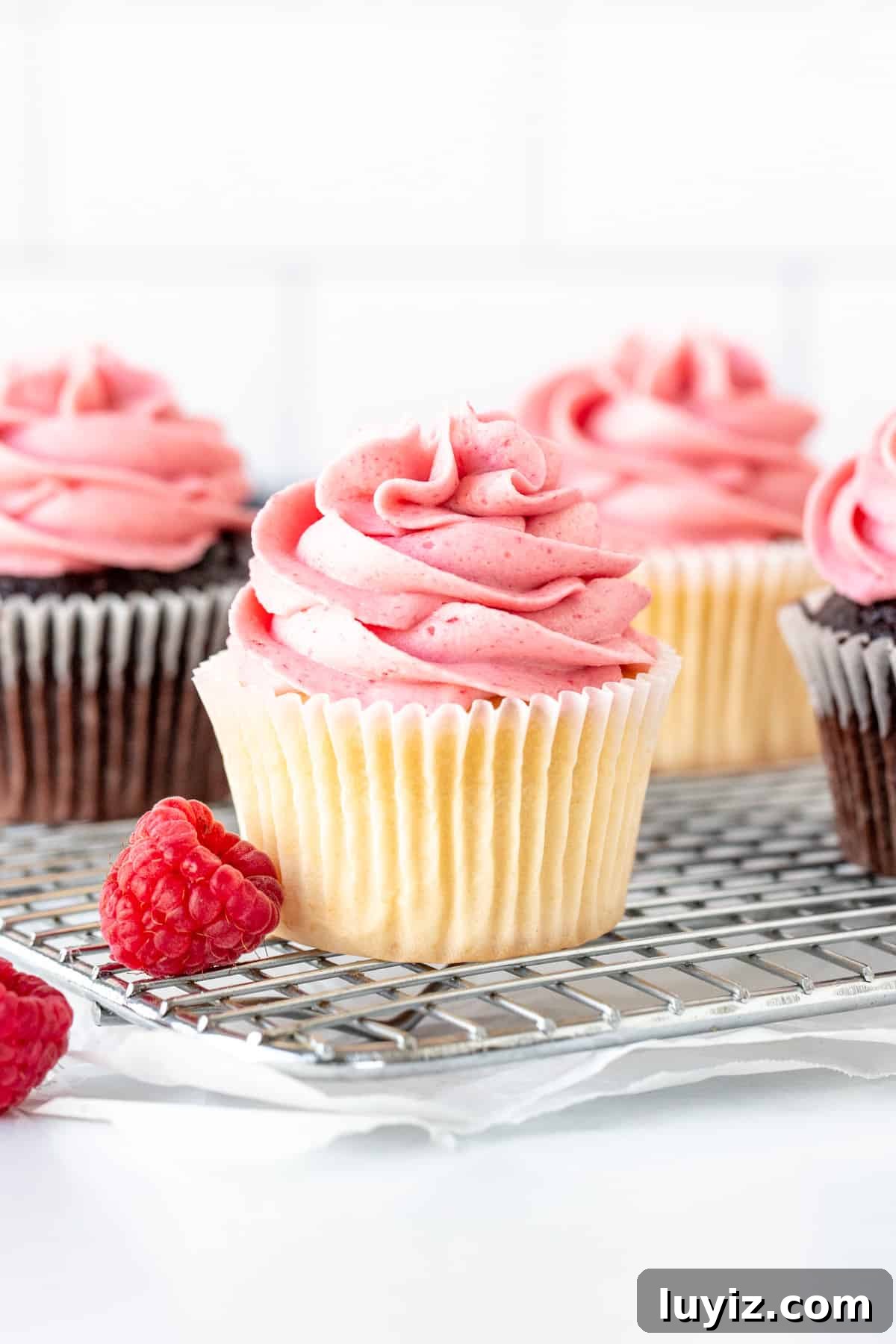
This raspberry buttercream frosting is creamy and fluffy with a fresh raspberry flavor. It can be made with fresh or frozen berries. The soft pink hue is lovely, but it’s the real berry flavor that stands out. It’s perfect for chocolate or vanilla cakes and cupcakes.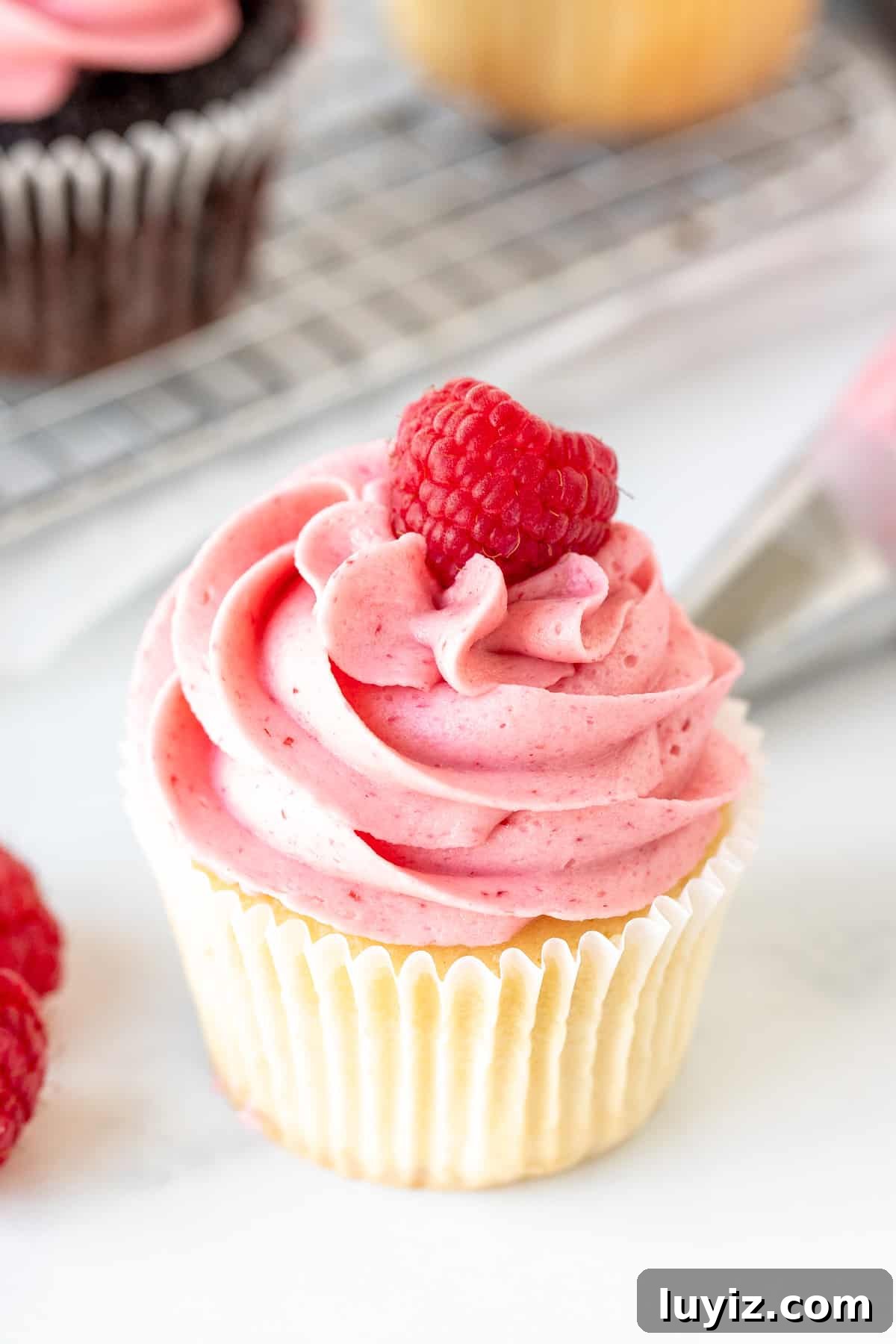
This post was originally published July 26, 2015 and updated April 12, 2022 with new photos and recipe tips
This raspberry buttercream elevates any dessert. The bright pink color is beautiful, and the frosting tastes wonderful on vanilla or chocolate cake, or spread over a pan of brownies. It has a thick, creamy texture that pipes nicely, and—most importantly—tastes like real raspberries. No artificial flavors or hard-to-find ingredients are needed; the color and aroma come from fresh or frozen berries.
Sweet and creamy, this frosting captures the fresh raspberry taste in a way that’s almost like a raspberry milkshake or ice cream sundae.
How to Make Raspberry Buttercream Frosting
Using real berries requires a couple of extra steps, but the flavor payoff is worth it.
Start by processing the raspberries in a blender or food processor. You’ll end up with roughly 2/3 to 1 cup of puree, depending on whether you use fresh or frozen berries. Push the puree through a metal sieve to remove the seeds. This step takes a little effort—use a rubber spatula or the back of a metal spoon and work in halves so you can easily clear the sieve. 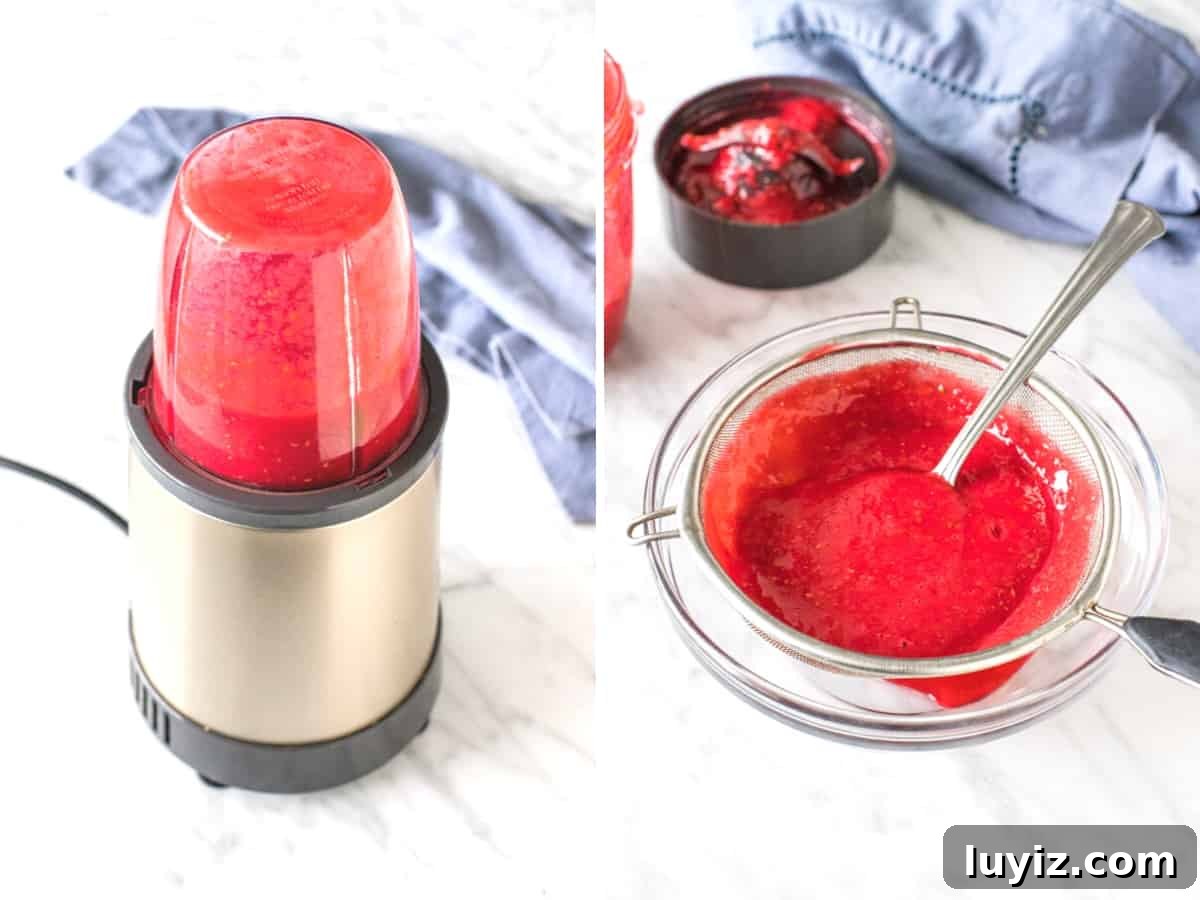
Next, gently simmer the raspberry puree for 20–30 minutes to reduce excess water. You should end up with about 3–4 tablespoons of thick raspberry sauce with a jam-like consistency. Reducing longer creates a thicker, more pipeable frosting. If you use frozen berries, reduction can take longer. Below are photos of the puree before and after boiling down.
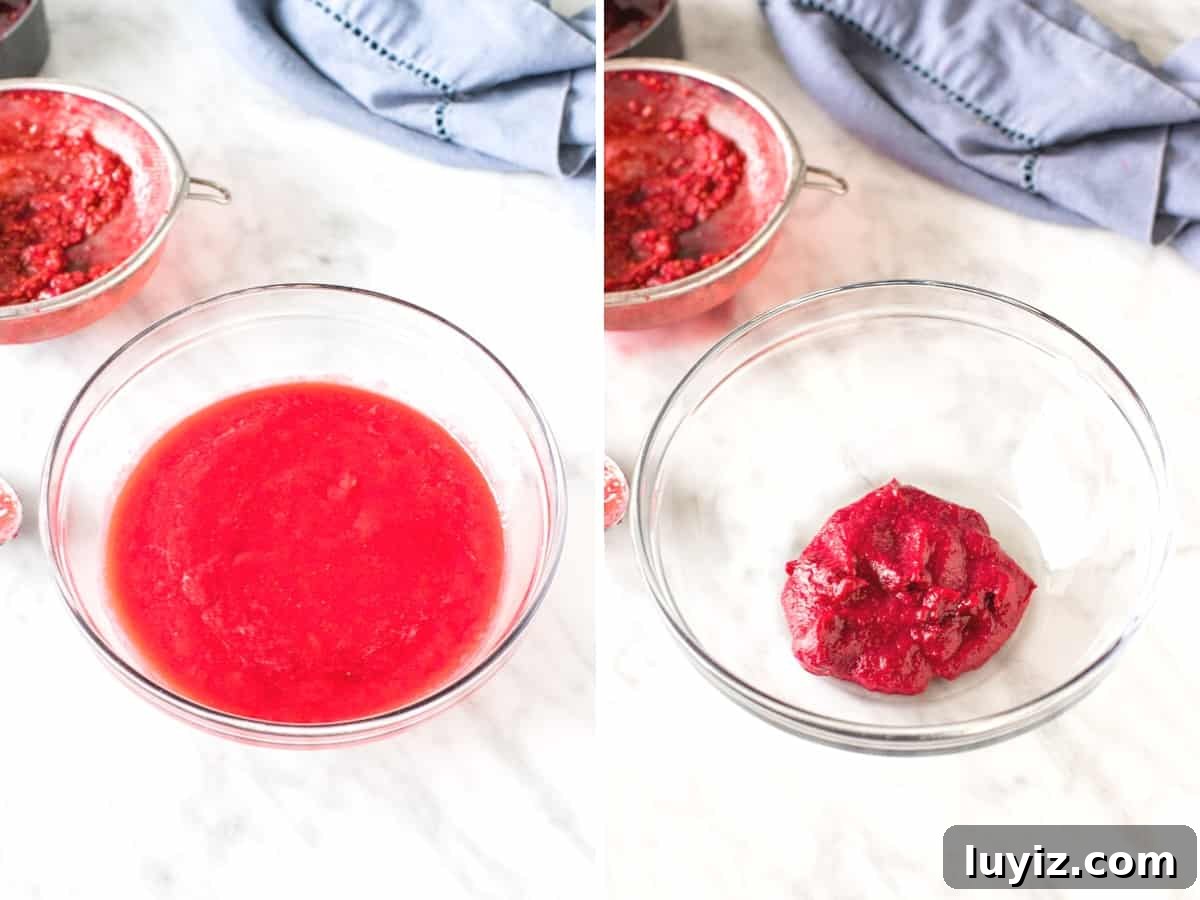
Cool the reduced puree completely before adding it to the butter. The puree must be fully cold—if it’s even slightly warm it can melt the butter and cause the frosting to separate. You can speed cooling in the fridge or freezer, but watch for condensation and wipe any water that forms on the container.
Once the puree is prepared and cooled, make the buttercream like a standard frosting:
- Beat the butter until light and fluffy.
- Mix in sifted powdered sugar.
- Fold in the chilled raspberry puree.
- Beat in the remaining powdered sugar and add a little whipping cream if needed for consistency.

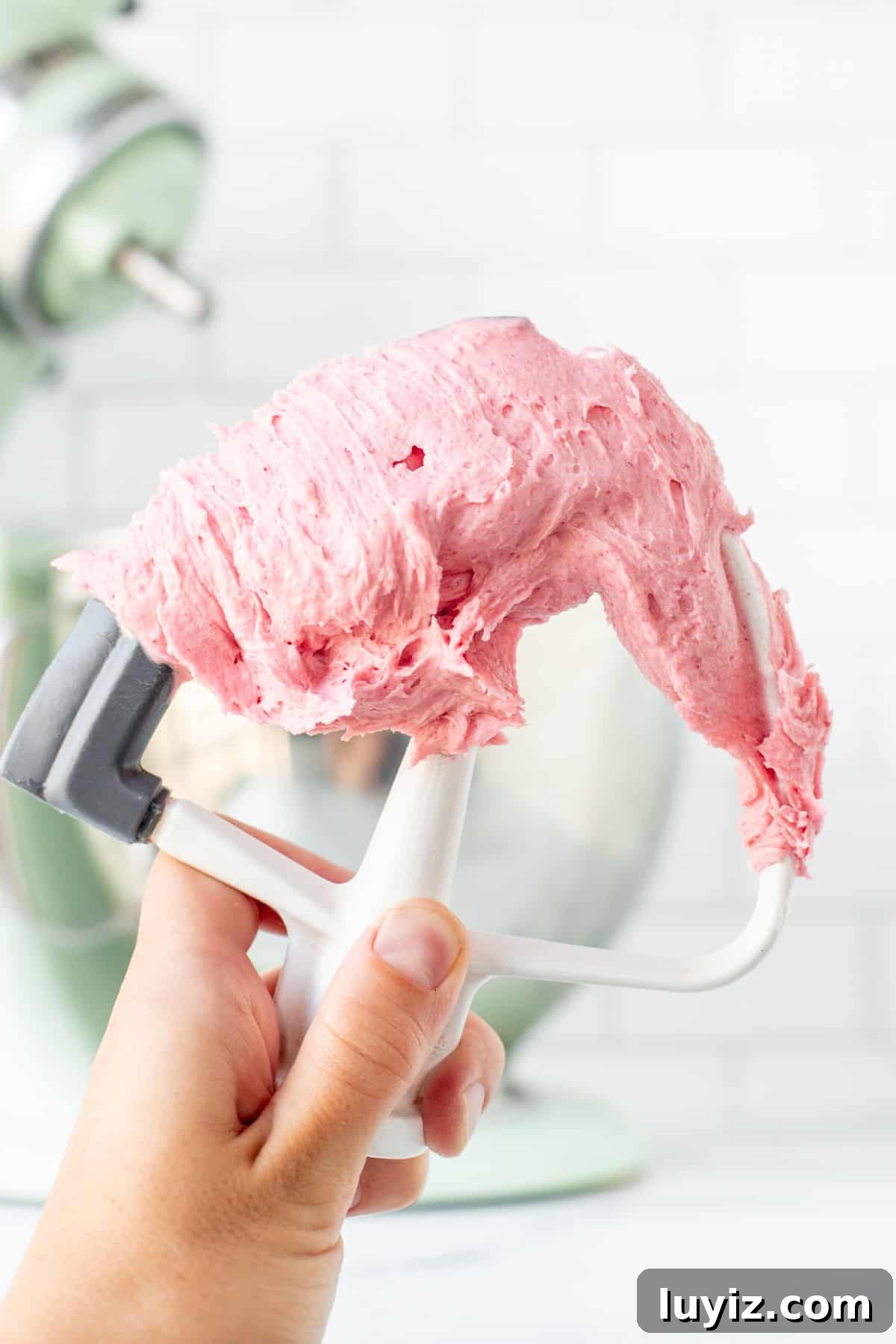
If you need to save time, seedless raspberry preserves can be used—look for a high-fruit product without pectin for the best texture. Still, homemade reduced puree offers the best flavor.
Frosting Tips, Tricks and Troubleshooting
- Always boil down the raspberry puree to concentrate flavor and remove excess liquid. Adding unreduced puree will make the frosting watery and weak in flavor.
- Reduce the puree until it is very thick. The thicker it is, the more you can add without thinning the buttercream.
- Make sure the reduced puree is at room temperature or fully chilled before mixing into butter; otherwise the buttercream may separate.
- Use butter that is softened but not melting—pressing a finger should leave an indent but not let your finger sink through.
- Sift the powdered sugar to avoid lumps for a smooth frosting.
How Much Frosting Will This Make?
This raspberry buttercream works for piping or spreading. The recipe yields enough to frost:
- 12–18 cupcakes when piped
- 24 cupcakes with a thin knife-applied layer
- a 9×13 inch sheet cake with some leftover frosting
- for a three-layer round cake, double the recipe for a thick layer (multiply by 1.5 for a thinner layer)
- for a two-layer round cake, multiply the recipe by 1.5
- for an 8×8 or 9×9 pan of brownies or cake, halve the recipe
The result is creamy, dreamy, and full of real raspberry flavor—much better than just adding food coloring. This buttercream pipes beautifully on vanilla cupcakes, complements fudgy chocolate cupcakes, and pairs well with many other desserts. 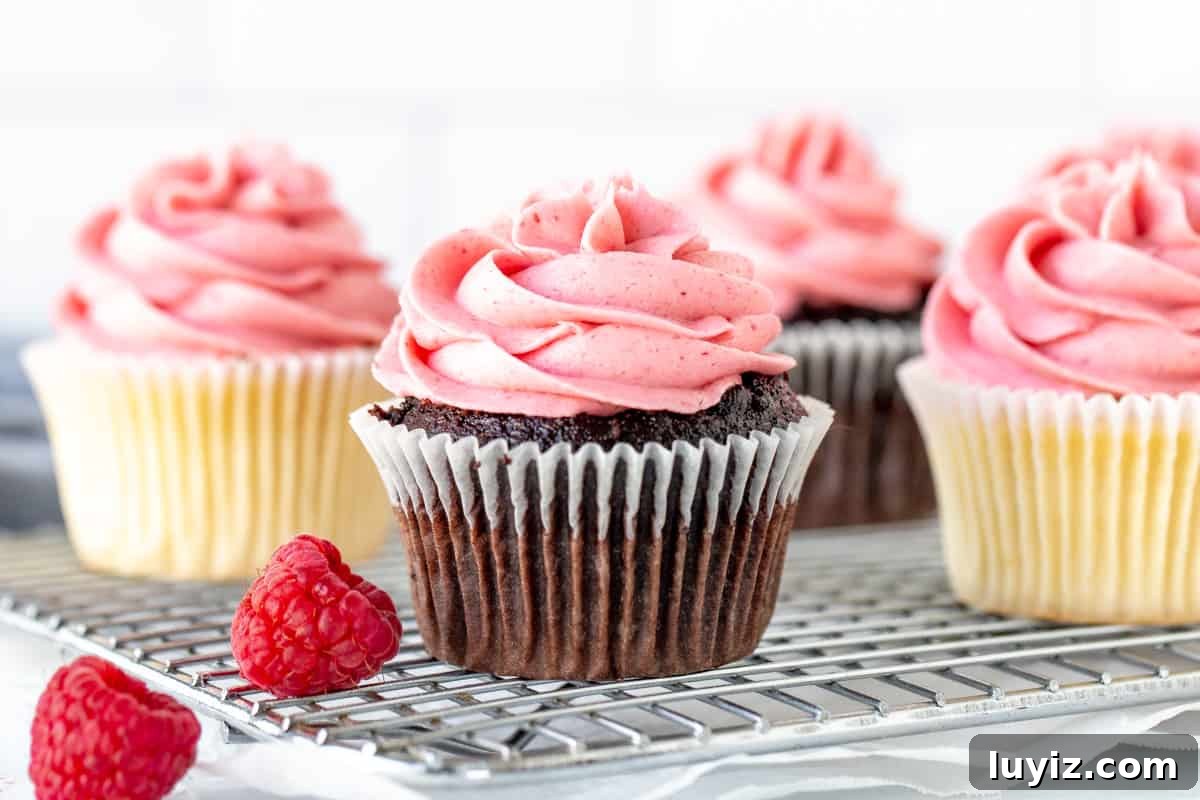
Raspberry Buttercream Frosting
Rate Recipe
Print Recipe
Ingredients
- 2 cups raspberries (about 250 grams), fresh or frozen
- 1 cup unsalted butter (226 grams), softened to room temperature
- 4-5 cups powdered sugar (440-550 grams)
- 1/4 teaspoon salt
- 1 tablespoon whipping cream (15 ml), if needed
Instructions
-
Process the raspberries in a food processor or blender until smooth.
-
Pour the puree through a metal sieve into a bowl to remove seeds, using the back of a spoon or a rubber spatula to push the fruit through. Work in batches for easier straining.
-
Add the seedless puree to a small saucepan over low–medium heat and gently simmer, stirring occasionally.
-
Boil for 20–30 minutes, or until the volume is reduced to about one-quarter to one-third and the mixture is thick like jam.
-
Remove from heat, spoon into a glass bowl, and cool completely. You can chill it in the fridge or freezer to speed this up, but avoid condensation getting into the puree.
-
In a large bowl, beat the butter until fluffy. With the mixer on low, beat in 2 1/2 cups of powdered sugar (sift first if lumpy).
-
Beat in 2–3 tablespoons of the chilled, thickened raspberry puree and the salt. The puree must be fully cooled to prevent separation.
-
Beat in the remaining powdered sugar a half cup at a time until you reach the desired sweetness and texture. Add whipping cream if needed to adjust consistency.
Notes
- Raspberries: If using frozen berries, thaw them in the fridge before processing. Frozen berries contain more water, so plan for a longer reduction time—closer to 30–40 minutes.
- Butter: If you use salted butter, omit the added salt. Unsalted butter is preferred for best control of seasoning.
- Make-Ahead: You can puree, strain, and reduce the raspberries up to 48 hours ahead and store the reduced puree in an airtight container in the fridge. Finish the frosting the day you plan to serve.
- Storage: Store frosted cakes or cupcakes at room temperature for up to 8 hours or refrigerate up to 3 days. Bring to room temperature before serving. Frosting alone can be refrigerated up to 2 days; bring to room temperature and re-whip if necessary before using.
- Makes enough for:
- 12–18 cupcakes when piped
- 24 cupcakes with a thin knife-applied layer
- 9×13 inch (23×33 cm) sheet cake with some leftover frosting
- For a three-layer 8-inch (20 cm) cake, double the recipe
- For a two-layer 8-inch (20 cm) cake, multiply by 1.5
- For an 8×8 or 9×9 inch pan of brownies or cake, halve the recipe
- Nutrition: Nutrition values are estimates based on dividing the frosting among 18 cupcakes and do not include the cupcakes themselves.
Nutrition
Like this recipe? Rate and comment below!